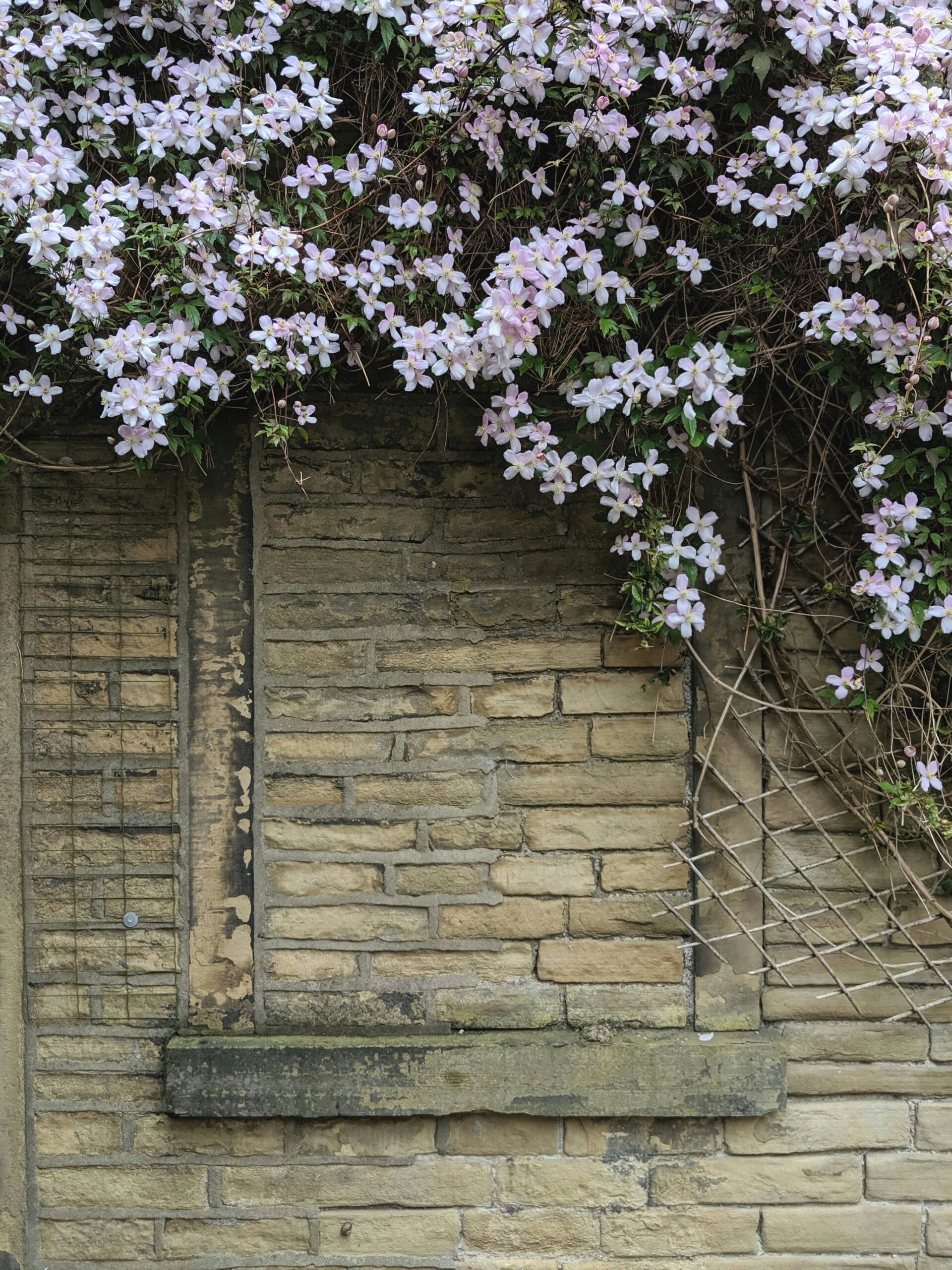
Learning how to grow clematis in the UK unlocks one of the most versatile and rewarding groups of climbing plants available to British gardeners. How to grow clematis in the UK is a question that intimidates beginners more than it should — the plant has a reputation for being fussy about pruning, prone to wilt, and difficult to establish — but the reality is that clematis is remarkably adaptable, genuinely suited to the British climate, and capable of transforming a fence, wall, pergola, or even a dull conifer into something spectacular. Get the planting right and understand the pruning group, and clematis is one of the most rewarding plants you can grow.
The range is extraordinary. Clematis flower from February to November depending on the variety — there is genuinely a clematis for every month of the growing season — in colours from white through every shade of pink, purple, blue, and deep red, in flower sizes from tiny nodding bells to enormous flat-faced blooms the size of a side plate.
Understanding Pruning Groups: The Key to Clematis Success
Before choosing a variety, understanding pruning groups is essential — it’s the piece of knowledge that prevents the most common clematis mistakes and determines your entire management approach.
Clematis are divided into three pruning groups based on when they flower and what wood they flower on. Get this wrong and you’ll prune off the year’s flowers before they bloom.
Group 1 (no pruning): These clematis flower in late winter and spring — February to April — on the previous year’s growth. Cutting them back in autumn or winter removes all the flower buds. They need only light tidying after flowering to remove dead or overcrowded stems. Examples: Clematis armandii (evergreen, fragrant white flowers in March), Clematis alpina (nodding blue bells in April), Clematis macropetala.
Group 2 (light pruning): These are the large-flowered hybrids that produce their main flush of flowers in May and June on old wood, then often a second flush in late summer on new growth. Prune lightly in late winter — cutting back to a pair of strong buds, removing dead and weak stems — to tidy the plant and promote new shoots without removing the flower buds that developed over winter. Examples: Nelly Moser, The President, Miss Bateman, Niobe.
Group 3 (hard pruning): These flower from midsummer through to autumn on the current year’s growth. All stems are cut back hard — to about 30cm above ground — in late winter, and the plant regrows from scratch each year. This is the simplest pruning of all and produces the most vigorous growth. Examples: Jackmanii, Viticella varieties, Clematis tangutica, Clematis texensis.
When you buy a clematis, the label should state the pruning group. If it doesn’t, ask or look up the variety before pruning anything.
How to Grow Clematis in the UK: Choosing a Variety
The range of clematis available in the UK is vast, but a handful of varieties consistently perform exceptionally well and are widely recommended for beginners.
For Group 1: Clematis armandii is the most dramatic early-flowering clematis — large, evergreen leaves and clusters of small, intensely vanilla-scented white flowers in March. It needs a sheltered south or west-facing wall and room to spread — it’s a vigorous plant.
Clematis alpina and its varieties are compact, hardy, and produce charming nodding flowers in April in blue, pink, or white. They’re excellent for a north-facing wall or fence, tolerating shade better than most clematis.
For Group 2: Nelly Moser — pale pink with a deeper pink central bar — is the most widely recognised large-flowered clematis and one of the most reliable. It tolerates partial shade better than most large-flowered varieties, making it versatile. The President produces rich purple-blue flowers in June and again in September; Niobe produces deep velvety red flowers.
For Group 3: The viticella varieties are some of the most disease-resistant and reliable clematis for UK gardens. Polish Spirit (rich purple), Purpurea Plena Elegans (double rosette, rosy purple), and Alba Luxurians (white with green tips) are all outstanding. Jackmanii — the classic deep purple late-summer clematis — remains one of the best garden plants available in Britain. Clematis tangutica produces cheerful yellow nodding bells from July to October followed by fluffy silver seed heads that persist through winter.
Planting Clematis: The Deep Planting Rule
Correct planting is the single most important factor in clematis success, and the key detail is depth.
Plant clematis deeper than they were growing in the pot — with the crown of the plant (where the stems emerge from the roots) buried about 5–7cm below the soil surface. This deep planting does two things: it protects the crown from clematis wilt (see below), and it allows the plant to regenerate from below ground if the stems are damaged or killed.
Dig a generous hole — at least 50cm deep and wide — and incorporate plenty of well-rotted compost or manure. Clematis are long-lived plants and good soil preparation at planting repays you for years.
Aspect: most large-flowered clematis prefer their roots in shade and their tops in sun — the classic advice to “keep the feet cool and the head in the sun.” Plant with a large stone, a tile, or a low ground-cover plant over the root zone to shade the soil, or position so a neighbouring plant naturally shades the base.
Full sun suits Group 3 viticella varieties well. Group 2 large-flowered types prefer sun to light shade. Group 1 alpinas and macropetalas are the most shade-tolerant and are excellent for north or east-facing aspects.
Avoid planting at the base of a wall where the soil is dry — rain shadow means the soil there rarely receives adequate moisture. Plant 30–45cm away from the wall and train stems inward.
Support and Training
Clematis climb by wrapping their leaf stalks around any narrow support they can find. They don’t self-cling to walls — they need a structure to grip. Horizontal wires fixed to vine eyes in masonry, trellis panels, netting, or the stems of a shrub or host plant all work well.
For wall-growing clematis, space horizontal wires about 30cm apart. As the plant grows, weave or tie stems loosely to the wires — the leaf stalks will do the rest. Avoid tying too tightly, which can damage stems as they thicken.
Growing clematis through other plants is one of the most attractive ways to use them. Group 3 viticella varieties are ideal for threading through roses, shrubs, or up into small trees — the hard pruning each winter means they never overwhelm the host, and the combination of rose and clematis in full flower together is one of the classic British garden pairings.
Watering, Feeding, and Mulching
Water newly planted clematis consistently through the first growing season while roots are establishing. Once established, clematis are reasonably drought-tolerant but benefit from watering during prolonged dry spells, particularly in summer when in active growth.
Feed in early spring with a balanced fertiliser as growth begins, then switch to a high-potassium feed monthly through the growing season to support flowering. Toprose or any rose fertiliser suits clematis well.
Mulch annually in spring — a generous layer of well-rotted compost or manure around the base, keeping it clear of the stems, retains moisture, feeds the soil, and keeps roots cool through summer.
📖 Also read: How to Grow Roses in the UK — The Beginner’s Guide to the Nation’s Favourite Flower
Clematis Wilt: What It Is and How to Handle It
Clematis wilt is a fungal disease that causes a large-flowered clematis to collapse suddenly and dramatically — one day the plant looks healthy, and within days the stems and leaves are blackened, wilted, and apparently dead. It’s alarming when it happens for the first time, but it is usually not the end of the plant.
The deep planting rule described above is the key: a clematis planted with the crown below soil level will regenerate from undamaged underground buds even if all the above-ground growth is killed. Cut the affected stems back to soil level, dispose of the material (don’t compost it), and wait. In the large majority of cases, new growth will emerge from the base within a few weeks.
Prevention includes good air circulation around the plant, avoiding overhead watering, and not planting in compacted, waterlogged soil. Modern Group 3 viticella varieties have bred-in resistance to wilt and rarely suffer from it — another reason to consider them as a first clematis choice.
Common Problems
No flowers despite healthy growth is almost always a pruning error — the flower buds have been removed at the wrong time. Check the pruning group and adjust accordingly.
Leaves yellowing at the base of a well-established plant is usually natural — the lower leaves of clematis receive poor light once the plant has climbed away, and some yellowing and leaf drop is normal. Concern is only warranted if yellowing is rapid or accompanied by stem die-back.
Slugs damage young shoots emerging in spring. Protection in the first few weeks after planting is worth the effort.
Aphids cluster on new growth in spring. A blast of water or gentle hand removal is usually sufficient for established plants.
Mildew appears on some varieties as a white dusty coating on leaves in late summer. Improve air circulation and avoid overhead watering. Viticella varieties are generally more resistant than large-flowered hybrids.
The RHS has a comprehensive guide to growing clematis with detailed pruning instructions for all three groups, a full list of recommended varieties, and advice on diagnosing and treating specific problems.
📖 Also read: Natural Slug Control That Actually Works — No Pellets, No Chemicals, No Nonsense
Clematis Through the Seasons
One of clematis’s greatest strengths as a garden plant is the way different species and varieties can be sequenced to provide interest across virtually the entire year.
February–April: Clematis armandii, alpina, and macropetala begin the season with fragrant or nodding flowers while the rest of the garden is still dormant.
May–June: The large-flowered Group 2 hybrids — Nelly Moser, The President, Niobe — produce their spectacular main flush.
July–September: The Group 3 viticella and Jackmanii types take over, filling walls and fences with colour through the heart of summer.
October–November: Clematis tangutica and Clematis orientalis produce their yellow nodding flowers and begin to develop the fluffy silver seed heads that provide winter structure.
A border or wall planted with one representative from each group will have something in flower for nine or ten months of the year — from the first warm days of late winter to the first frosts of November.
📖 Also read: The Complete UK Gardening Calendar — What to Do in Your Garden Every Month of the Year
A Few Final Thoughts
Clematis rewards the small investment of understanding it. The pruning group question, which seems like an obstacle at first, becomes second nature quickly — once you know which type you have, the management is straightforward and takes minutes each year. The planting depth rule, followed once at the beginning, protects the plant for decades.
In return, clematis gives you more colour, more season, and more versatility than almost any other climbing plant available in the UK. There are clematis for every aspect, every garden style, and every month of the growing year. It’s one of the most richly rewarding plant groups in British horticulture, and it genuinely earns its title as the queen of climbers.
Leave a Reply