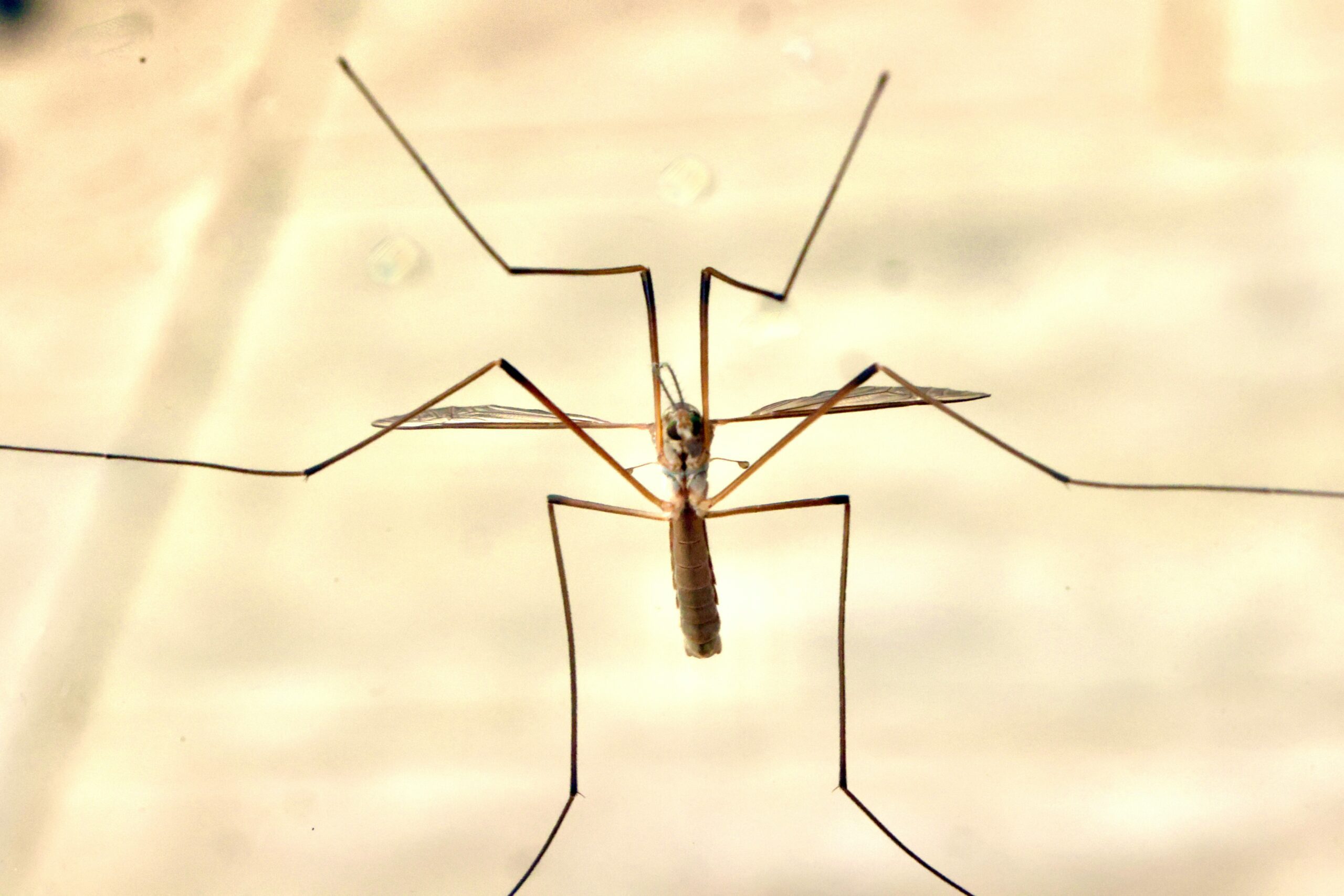
If you’ve noticed daddy long legs swarming around your garden in September, or found patches of yellowing, dying grass and wilting vegetable seedlings with no obvious cause above ground, there’s a good chance leatherjackets are involved. The connection between daddy long legs and leatherjackets in UK gardens is one that many gardeners don’t make — partly because the crane fly (the daddy long legs) and the grub it produces seem so different, and partly because the damage happens underground where it isn’t immediately visible.
Understanding daddy long legs and leatherjackets — what they are, when they’re active, and what can realistically be done about them — is one of those pieces of practical gardening knowledge that pays off every autumn in a British garden.
What Are Daddy Long Legs?
Daddy long legs is the British common name for crane flies — large, gangly flies with extraordinarily long legs that appear in gardens, on windows, and around outdoor lights from late August through October. The most common species in UK gardens is Tipula paludosa, though several related species are also common.
Despite their size and somewhat alarming appearance when they blunder indoors on warm September evenings, adult crane flies are entirely harmless. They don’t bite, they don’t sting, and they don’t damage plants. The adults live for only a few days to a couple of weeks — just long enough to mate and for females to lay eggs in the soil. It’s the larvae that cause the problems.
What Are Leatherjackets?
Leatherjackets are the larvae of crane flies — grey-brown, legless grubs up to 3cm long with a tough, leathery skin (hence the name) and no obvious head. They live in the soil and feed on the roots and stems of plants just below and at soil level.
In the UK, eggs are laid in late summer — August and September — in soil, lawns, and turf. The eggs hatch into tiny grubs that overwinter in the soil, growing and feeding through autumn, winter, and spring before pupating in late spring and emerging as adult crane flies the following summer or autumn.
The feeding damage is most severe from autumn through to May, when the grubs are largest and hungriest. By June, most leatherjackets have pupated and feeding damage stops — but by then significant harm may already have been done.
What Damage Do Leatherjackets Cause?
Lawn damage is the most visible and widespread consequence of leatherjackets in UK gardens. Patches of the lawn turn yellow and then brown, the grass dying from below as the roots are severed. The patches are irregular and expand over weeks. A reliable test: cover the affected area with black polythene or hessian overnight and check underneath in the morning — if leatherjackets are present they will have moved to the surface to escape the darkness and moisture, making them visible and countable.
Secondary lawn damage occurs when birds — particularly starlings, rooks, and crows — detect the grubs and begin probing the turf to extract them. Beak holes across a lawn, often accompanied by pulled-back turf, are a strong indicator of leatherjacket infestation even before the yellowing patches appear.
Vegetable and garden border damage is less frequently noticed but can be severe. Leatherjackets feed on the roots and stems of brassicas, lettuces, and other vegetables at soil level, causing plants to wilt and collapse despite adequate watering. Checking the soil around a wilting plant and finding grey-brown grubs confirms the diagnosis.
Newly sown lawns and seedbeds are particularly vulnerable — the fresh, loose soil is easy for egg-laying females to penetrate, and the young plants have undeveloped root systems that are quickly overwhelmed by even modest grub numbers.
How to Deal with Leatherjackets in UK Gardens
Biological control with nematodes is the most effective and environmentally sound treatment available to UK gardeners. Steinernema feltiae — a species of microscopic roundworm — is applied as a soil drench and parasitises and kills leatherjacket larvae in the soil. It’s safe for all other wildlife, pets, and humans, and has no impact on earthworms or other soil organisms.
The critical timing point is: nematodes must be applied when soil temperature is at or above 10°C and the grubs are actively feeding near the soil surface. In the UK, the window is typically September to October for newly hatched grubs, or again in spring (March to April) as overwintering grubs become active again. Applying outside these windows, particularly in cold winter soil, produces poor results.
Nematodes are available from UK garden suppliers — Nemasys Leatherjacket Killer is the most widely available brand — and arrive as a powder to be dissolved in water and watered in over the affected area. Follow the instructions precisely, particularly regarding soil moisture and temperature. Water the lawn or bed before and after application to keep the nematodes mobile in the soil.
Physical removal is labour-intensive but effective for small areas. Use the black polythene overnight method to bring grubs to the surface, then collect and dispose of them. Starlings and other ground-feeding birds will do much of this work for you if you allow them access to the lawn — a flock of starlings working over a lawn is actually one of nature’s more efficient leatherjacket management tools.
Cultivating soil in autumn exposes leatherjackets to birds and frost, reducing populations in vegetable beds. Turning over soil in October and November while robins and blackbirds are watching from a nearby perch is a satisfying and productive combination.
Improving drainage in lawns and beds reduces the attractiveness of the soil to egg-laying crane flies, which prefer moist, soft ground. Heavy clay lawns that hold water through summer are significantly more susceptible than well-drained ones.
📖 Also read: The Simple Soil Guide Every UK Gardener Needs
Leatherjackets vs. Other Common Soil Grubs
It’s worth being able to distinguish leatherjackets from other soil-dwelling grubs that may be found in UK gardens, as the management approaches differ.
Chafer grubs are the larvae of chafer beetles — white, C-shaped grubs with orange-brown heads and visible legs. They also cause lawn damage and are often confused with leatherjackets, but they’re quite distinct in appearance. They’re treated with different nematode species (Heterorhabditis bacteriophora) applied in a different seasonal window (August to September when soil is warm).
Vine weevil grubs are white, C-shaped, legless grubs with a distinct pale orange head. They primarily attack container-grown plants rather than lawns and are treated with Steinernema kraussei nematodes.
Earthworms are often encountered when digging and occasionally alarmed gardeners wonder if these are pests. They’re not — they’re among the most beneficial organisms in any UK garden soil.
The key distinguishing features of leatherjackets are: grey-brown colouring, entirely legless, tough rubbery skin, no obvious head capsule, and typically found in the top 10–15cm of soil in lawns and beds.
How Much Damage Is Too Much?
A healthy, well-established UK lawn can tolerate a modest leatherjacket population without significant visible damage. Population levels of fewer than around 25–50 grubs per square metre rarely cause the yellowing patches that prompt concern. It’s when populations exceed this — particularly in warm, wet autumns that favour egg-laying and larval survival — that intervention becomes worthwhile.
A patch of yellowing grass 20–30cm across with a handful of grubs underneath is probably best left alone — the damage is localised and the lawn will recover in spring. Spreading patches across large areas of lawn, or consistent wilting of vegetable plants in a bed, justify the cost and effort of nematode treatment.
Are Crane Flies and Leatherjackets Beneficial?
It’s worth briefly acknowledging that crane flies and their larvae are not simply garden pests. In undisturbed grassland, leatherjackets are an important food source for a wide range of UK wildlife — hedgehogs, badgers, foxes, and many bird species all eat them. The autumn crane fly emergence is a significant food source for swallows and house martins building up fat reserves before migration.
In a garden context, the balance tips toward management when populations cause genuine plant damage. But leaving some leatherjackets undisturbed — particularly in a wilder corner of the garden — supports the broader food chain that benefits the garden in other ways.
The RHS has a detailed guide to controlling leatherjackets covering identification, life cycle, and treatment options including the latest guidance on nematode application timing for UK conditions.
📖 Also read: How to Create a Wildlife-Friendly Garden — The UK Beginner’s Guide to Gardening with Nature
Repairing Leatherjacket Damage to Lawns
Once leatherjacket populations have been treated or have naturally declined in late spring, lawn repair is straightforward.
Scarify any dead patches to remove dead thatch, top-dress with a thin layer of topsoil or lawn sand, oversow with a grass seed mix appropriate to your lawn type, and keep moist until germinated. Most autumn or winter leatherjacket damage is repaired by a combination of natural lawn recovery and overseeding in April and May.
Avoid applying grass seed before populations have been treated — the seedlings are highly vulnerable to leatherjacket feeding and will simply be eaten at ground level before they establish.
📖 Also read: The Complete UK Gardening Calendar — What to Do in Your Garden Every Month of the Year
A Few Final Thoughts
Daddy long legs are one of those quintessentially British autumn experiences — finding them on the kitchen ceiling on a warm September evening, watching them tangle themselves in curtains, noticing them swarming around the patio light. The knowledge that their offspring are working through your lawn adds a layer of meaning to the annual appearance that most gardeners hadn’t previously made.
The damage they cause is real but manageable. Nematodes applied at the right time are genuinely effective. The lawn will recover. And the starlings probing the turf on a grey October morning, tugging up grubs with efficient precision, are one of the small, overlooked pleasures of the autumn British garden.
Leave a Reply