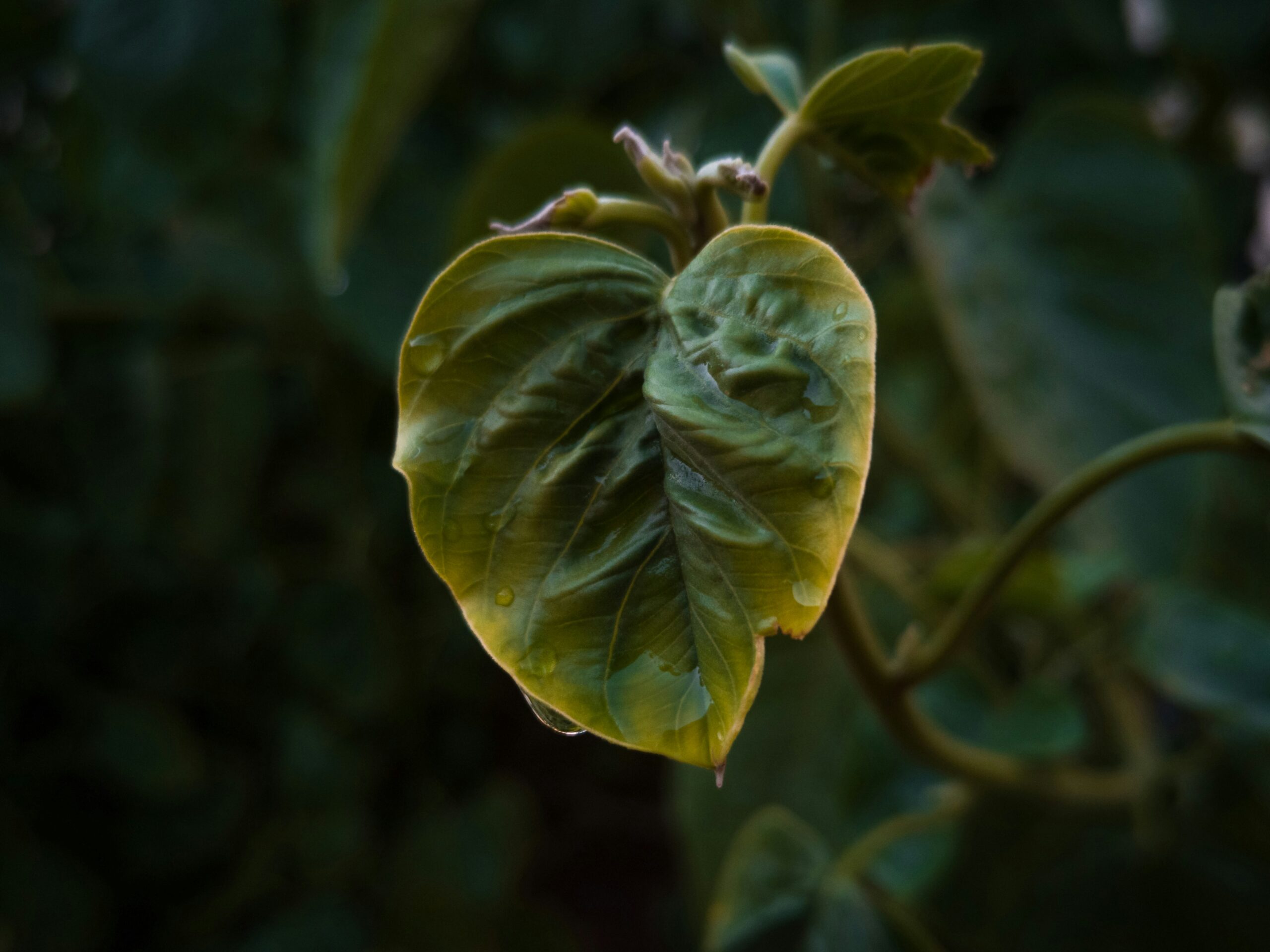
Plant leaves turning yellow UK are the most common distress signal a plant can send — and the most misdiagnosed. Most beginners see yellow leaves and immediately reach for fertiliser, assuming the plant is hungry. Sometimes that’s right. But there are nine other reasons a plant’s leaves turn yellow, and feeding a plant that doesn’t need feeding can actually make things worse. Understanding why plant leaves are turning yellow is the first step to fixing it.
This guide goes through all 10 causes in order of how commonly they appear in UK gardens and houseplants, with a clear fix for each one.
Diagnoses: Why Are Plant Leaves Turning Yellow UK? The 10 Real Causes
Before doing anything, look closely at the pattern of yellowing. Is it the oldest leaves at the bottom, or the newest growth at the tips? Is it the whole leaf or just between the veins? Is it one plant or several? These clues tell you almost everything you need to know. With plant leaves turning yellow UK being one of the most-searched plant problems, getting the diagnosis right matters.
Cause 1 — Overwatering (Most Common by Far)
This is the number one killer of plants in the UK, both indoors and out. Overwatered plants sit in waterlogged soil, which starves roots of oxygen and causes them to rot. The plant can no longer absorb water or nutrients properly, and leaves turn yellow and soft.
The fix: stop watering immediately. Remove the plant from its pot and check the roots — healthy roots are white or pale tan, rotted roots are brown and mushy. Trim any rotted roots, repot into fresh compost with added perlite, and only water when the top 2cm of soil is dry.
💡 UK CONTEXT: In our damp climate, outdoor pots need far less watering than you think. Many UK gardeners overwater out of habit during cool, cloudy weeks when plants simply don’t need it. When in doubt, don’t water.
📖 Also read: How to Make Free Liquid Fertiliser from Weeds
Cause 2 — Underwatering
Underwatered leaves turn yellow and then crispy at the edges, eventually browning and dropping. The soil will be bone dry and pulling away from the sides of the pot.
The fix: water thoroughly until it drains from the bottom. For very dry pots, place the whole container in a tray of water for 30 minutes to allow the compost to rehydrate from the bottom up, then drain completely.
Cause 3 — Nitrogen Deficiency
Nitrogen is the nutrient responsible for green, leafy growth. When a plant is short of nitrogen, it pulls the nutrient from its oldest leaves first — so you’ll see yellowing starting from the bottom of the plant and working upward, while new growth at the top stays green.
The fix: feed with a balanced general-purpose liquid fertiliser. For vegetable plants, a seaweed-based feed is excellent and widely available in UK garden centres. For lawns showing yellowing patches, a nitrogen-rich lawn feed works fast.
Cause 4 — Too Much Direct Sun (Scorching)
In the UK we don’t think of sun as a problem — we’re used to wishing for more of it. But during the increasingly common July heatwaves, direct afternoon sun through a south-facing window or on a south-facing balcony can scorch leaves. Scorched leaves turn pale yellow then white or brown in the most exposed areas.
The fix: move the plant to a spot with bright indirect light during the hottest part of the day (roughly 11am–3pm). Outdoors, a piece of shade cloth draped over plants during heatwaves protects them without blocking all light.
Cause 5 — Not Enough Light
The opposite problem. Plants kept in dark corners or north-facing rooms don’t have enough light to produce chlorophyll, and leaves turn pale yellow-green overall. The plant will also be leggy — long thin stems reaching toward the nearest light source.
The fix: move to a brighter spot. Most houseplants described as “low light” actually mean “tolerates low light” — they still prefer reasonable brightness. If you have genuinely dark rooms, a grow light left on for 12–14 hours a day makes an enormous difference and costs very little to run.
Cause 6 — Root Bound
A plant that has completely outgrown its pot has roots circling the bottom with nowhere to go. It can no longer absorb water or nutrients efficiently, and older leaves yellow and drop.
The fix: check by lifting the plant out of its pot. If roots are densely packed and circling the bottom, pot on into a container 2–3cm larger. Don’t jump to a huge pot — oversized pots hold too much moisture and cause the overwatering problems from Cause 1.
Cause 7 — Nutrient Lockout from Wrong pH
This one confuses beginners. Sometimes a plant has plenty of nutrients in the soil but can’t absorb them because the pH is wrong. Most plants absorb nutrients best at a slightly acidic pH of 6.0–6.5. UK tap water is often alkaline (pH 7.5+), and regular watering can gradually make compost too alkaline.
The fix: use a pH testing kit (available from any garden centre for around £5) to check your compost. If too alkaline, water with rainwater instead of tap water, or add a small amount of sulphur chips to the compost.
💡 UK-SPECIFIC TIP: Collecting rainwater in a water butt is one of the best things a UK gardener can do. It’s free, slightly acidic, and plants visibly prefer it to tap water. Water butts cost £30–50 and connect to your downpipe in about an hour.
Cause 8 — Pests
Several common UK pests cause yellowing leaves. Spider mites leave tiny yellow speckles across leaves and fine webbing underneath. Vine weevil grubs eat roots from below, causing sudden overall yellowing and collapse. Aphids cluster on new growth and suck sap, causing distorted yellowing tips.
The fix: inspect the undersides of leaves with a magnifying glass if needed. For spider mites, increase humidity and spray with water. For vine weevil, treat with nematodes (biological control, available online or at garden centres). For aphids, a strong jet of water or insecticidal soap spray.
📖 Also read: Natural Slug Control That Actually Works — No Pellets, No Chemicals
Cause 9 — Natural Leaf Drop
Not all yellowing is a problem. Plants naturally shed their oldest, lowest leaves as they grow — this is normal housekeeping. A single yellow leaf at the very bottom of an otherwise healthy plant is almost certainly just natural ageing.
The fix: remove the yellow leaf cleanly and don’t worry about it. Only investigate further if multiple leaves across the plant are affected.
Cause 10 — Temperature Stress or Draught
Cold draughts from open windows, doors, or air conditioning vents cause yellow or mottled leaves on houseplants. Equally, placing tropical houseplants near a cold windowsill in a UK winter — where the temperature between the glass and curtain can drop to near freezing overnight — causes leaf drop and yellowing.
The fix: move plants away from draughts and cold windows in autumn and winter. In the UK, most houseplants should be moved at least 30cm away from exterior windows between October and March.
💡 FINAL DIAGNOSIS TIP: If you’ve checked all 10 causes and still can’t work it out, take a clear photo of the affected plant and post it to the RHS community forum or the r/plantclinic subreddit. Both communities are knowledgeable, friendly, and free — and you’ll usually have an answer within a few hours.
📖 Also read: The Complete UK Gardening Calendar — What to Do Every Month of the Year
Leave a Reply