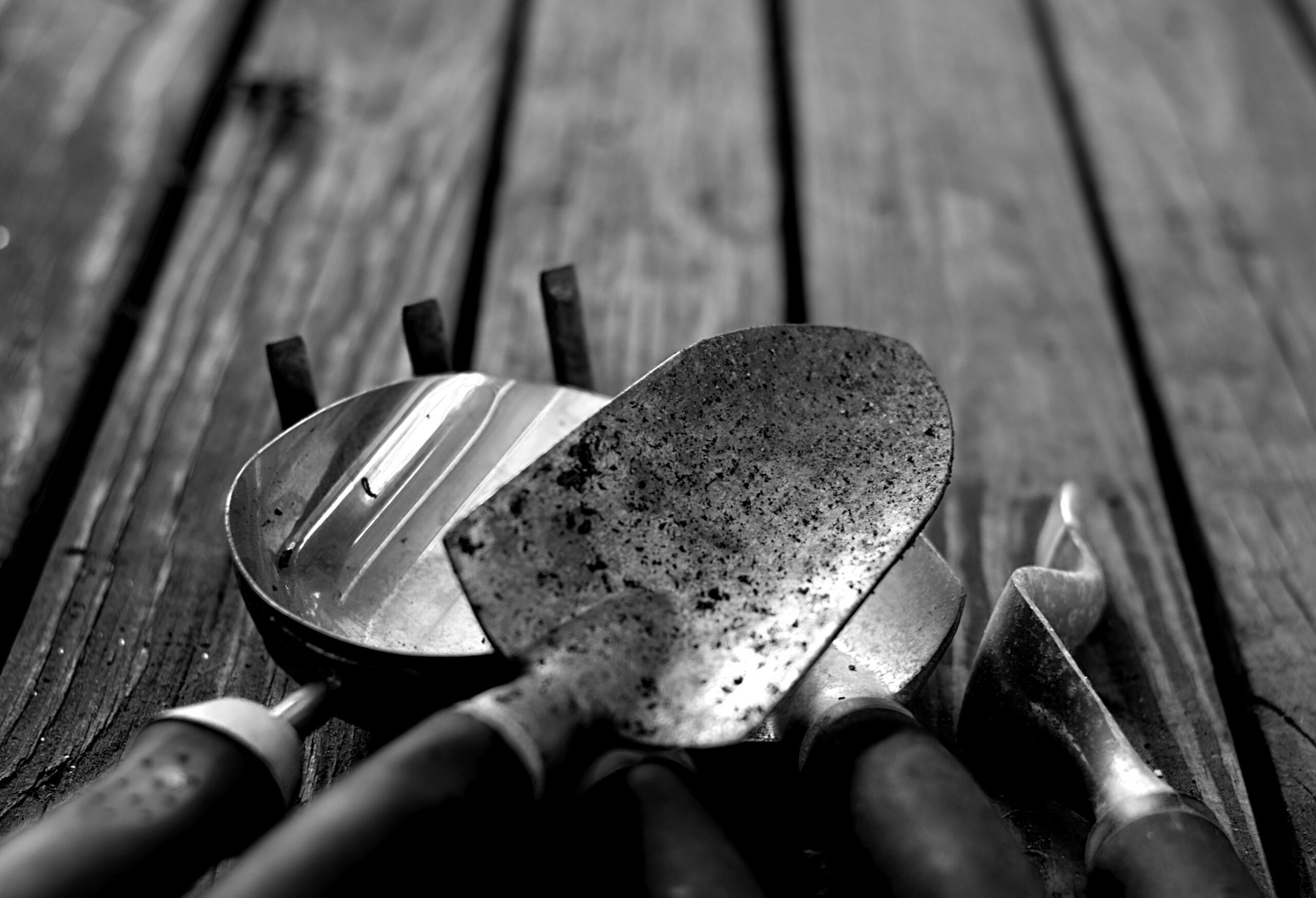
Walk into any UK garden centre and you’ll find an entire wall of tools, gadgets, and accessories that seem essential until you’ve been gardening for a year and realise you’ve used three of them. The gardening tool market is full of things you don’t need. This guide is about the things you do — the genuinely useful tools that experienced UK gardeners actually reach for every time they go outside, and the ones that sound useful but sit gathering dust in the shed.
The Tools You Actually Need
A Good Trowel — Your Most-Used Tool
A trowel is the tool you’ll use more than any other. Planting, transplanting, scooping compost, digging out weeds — a trowel does all of it. Buy one quality trowel rather than a cheap set.
What to look for: a stainless steel blade (it doesn’t rust and slides through soil more easily than painted steel), a comfortable handle that fits your hand, and a blade that’s welded or forged in one piece with the handle socket — not crimped. Crimped trowels work loose over time.
Good UK brands: Burgon and Ball, Sneeboer, or Wilkinson Sword. Expect to pay £10–20 for a trowel that lasts decades. The £2 ones from discount shops last one season.
A Border Fork
A border fork (smaller than a full-size garden fork) is more versatile than a full-size fork for most UK gardens. Use it for turning compost, loosening soil around plants, lifting root vegetables, and incorporating compost into beds.
The same quality rules apply: stainless steel, solid socket connection, comfortable handle. A border fork from a quality brand costs £25–40 and should last a lifetime.
A Hand Hoe or Dutch Hoe
Hoeing is the fastest way to deal with weeds — you skim the blade just below the surface on a dry day, severing weed roots from shoots. The weeds then wither in the sun without you needing to bend down and pull each one individually.
A Dutch hoe (push-pull style) is the most versatile for UK vegetable growing. Do this on a sunny, dry day and surface-severed weeds die quickly. Do it when rain is forecast and they’ll re-root.
Secateurs
Quality secateurs are worth every penny for pruning, deadheading, taking cuttings, harvesting, and a hundred other tasks. Look for bypass secateurs (two curved blades passing each other, like scissors) rather than anvil secateurs (one blade closing onto a flat surface) — bypass cuts are cleaner and less damaging to plant tissue.
Felco No. 2 secateurs are the benchmark in the UK — expensive at around £40–50 but they last for decades, can be sharpened, and replacement parts are widely available. Buy once, use forever.
💡 UK TIP: Dirty, blunt secateurs spread disease between plants. Clean blades with a cloth and a little methylated spirits between plants when pruning, and sharpen regularly with a small whetstone. This single habit prevents the spread of many common UK plant diseases.
A Watering Can with a Rose
For UK growing, a 9–10 litre watering can is the most useful size — large enough to be efficient, not so heavy it’s difficult to carry when full. The rose (the sprinkler head) should detach for cleaning and produce a fine, gentle spray for seedlings rather than a harsh jet that washes them out of the compost.
Haws is the UK brand most trusted by professional gardeners — their oval-headed watering can is a classic design that’s been made in England since 1886. Expect to pay £25–35. Plastic watering cans work but crack over UK winters if left outside.
Kneeling Pad
Not glamorous but genuinely important. Kneeling on UK soil — which is often hard, cold, and stony — causes knee pain that discourages gardening. A decent kneeling pad costs £5–8 and makes every ground-level task more comfortable. Buy one before your knees tell you to.
What’s Not Worth Buying (Yet)
Fancy gadgets and tools with single uses. Strawberry planters with complicated irrigation, bulb planters that don’t work in clay soil, self-watering systems that need constant adjustment. Get the basics working first.
Electric or battery tools for a small garden. A cordless leaf blower for a 20-square-metre garden is a solution looking for a problem. Physical tools work better, cost less, and don’t need charging.
Cheap tool sets. The 20-piece tool sets sold at discount shops are made from thin steel that bends and rusts. You’ll replace them within a year. Buy three good tools instead of twenty bad ones.
The Best Places to Buy UK Gardening Tools
- Aldi and Lidl — Run gardening tool promotions in spring (usually February–April) with genuinely good quality tools at very low prices. Their Gardenline range regularly gets positive reviews. Buy them when they appear because they sell out fast and don’t restock until next year.
- Car boot sales and charity shops — Older tools made by quality British brands (Spear and Jackson, Wilkinson Sword, Bulldog) were built to last. A second-hand quality tool is better than a new cheap one.
- Amazon UK — Convenient for comparing prices and reading reviews. Useful for tools you can’t find locally.
💡 FINAL ADVICE: Start with just a trowel, a border fork, and secateurs. Add tools as you identify specific needs rather than buying everything at once. After one full growing season, you’ll know exactly what your garden requires — and you won’t have a shed full of things you’ve used twice.
Leave a Reply