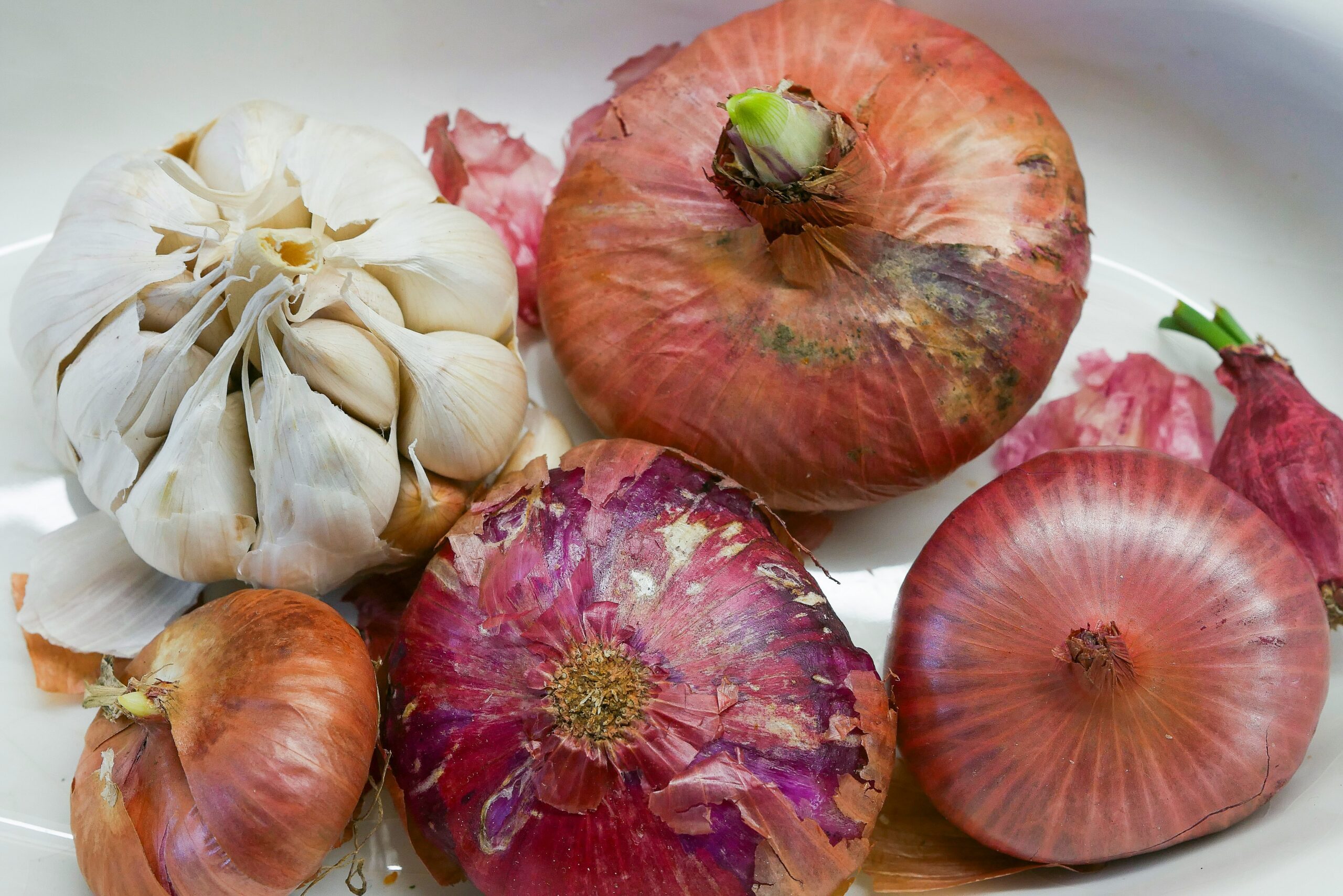
Garlic is one of the most satisfying crops you can grow in a British garden, and one of the most misunderstood. Most beginners think of it as a summer crop — something you plant in spring and harvest in summer. In fact, garlic planted in autumn produces the best results in the UK, using our cold winters to its advantage rather than fighting against them.
This guide covers everything from choosing the right variety to plaiting your harvest, with a month-by-month breakdown of exactly what to do and when.
Why Grow Your Own Garlic?
The garlic sold in most UK supermarkets is imported from China or Spain and has been in cold storage for months by the time it reaches the shelf. Homegrown garlic, harvested fresh in July, has a completely different character — juicier, more complex in flavour, and available in varieties you’ll never find in a supermarket.
It’s also one of the easiest crops to grow. Garlic needs very little attention once planted, takes up minimal space, and one bulb planted in autumn becomes a full bulb of 8–12 cloves the following summer. The maths are excellent.
Hardneck vs Softneck — Which to Grow
All garlic varieties fall into two categories, and choosing correctly matters for UK growers.
Hardneck garlic produces a rigid central stalk (the scape) and typically has fewer, larger cloves arranged around it. Hardneck varieties have superior flavour — richer, more complex, often with hints of heat or earthiness — and are better suited to UK conditions because they need a cold period (vernalisation) to develop properly. Varieties to look for: Chesnok Red, Purple Wight, Lautrec Wight.
Softneck garlic is what you typically see in supermarkets. It stores longer than hardneck (up to 12 months) and produces more cloves per bulb, but the flavour is milder and less interesting. Varieties: Solent Wight, Picardy Wight.
For a first-time UK grower, a hardneck variety like Chesnok Red or Purple Wight gives you the best eating experience and the most reliable performance in our climate.
💡 UK SOURCING TIP: Never plant supermarket garlic. It’s often treated to prevent sprouting and may carry disease. Buy certified UK-grown seed garlic from the RHS, Marshalls, or Suttons Seeds. Isle of Wight Garlic (Wight Garlic Ltd) produces excellent UK-grown seed garlic and ships nationwide. Expect to pay £4–7 for a bulb that will give you 8–12 planting cloves.
Month-by-Month Growing Guide
October — Plant Your Garlic
This is the main planting window for most of the UK. Planting in October gives garlic time to establish roots before the ground freezes and ensures it gets the cold period it needs to develop properly.
Prepare your bed: garlic needs free-draining soil and full sun. On clay soil, raise the bed or add plenty of grit before planting — waterlogged garlic rots over winter. Avoid planting where onions or garlic grew last year to prevent disease buildup.
Break your bulb into individual cloves. Plant each clove pointed end up, 10–15cm apart in rows 30cm apart, at a depth of 5–8cm (roughly twice the length of the clove). The tip should sit just below the surface.
Water in gently. That’s it for now.
November — Shoots Appear
Small green shoots will push through within 2–4 weeks. This is completely normal — the shoots will survive frost. Don’t be alarmed when they get frosted back; they’ll recover as the weather warms in spring.
No action needed. Don’t water unless the weather is unusually dry.
December and January — Leave It Alone
The plant is dormant above ground but the root system is developing underground. This cold period is essential for bulb development — garlic that doesn’t experience sufficient cold produces single undivided bulbs (called rounds) rather than proper multi-clove bulbs.
No action needed. The frost is your friend.
February — Check for Frost Heave
Repeated freezing and thawing can push garlic cloves out of the ground. Walk along your rows and press back any that have lifted to the surface. Left exposed, they’ll dry out and fail.
March — Weeding Begins
As temperatures rise, weeds start competing. Keep the area around your garlic weed-free — garlic does not compete well with weeds and a weedy plot will significantly reduce bulb size at harvest.
Give a light feed with a nitrogen-rich fertiliser to encourage leafy growth. Chicken pellet fertiliser (widely available in UK garden centres) works well — scatter along the rows and let rain water it in.
April and May — Active Growth
Your garlic plants will be visibly growing, producing tall green leaves. Keep weeding. Water during dry spells — May can be surprisingly dry in many parts of the UK.
June — Harvest the Scapes (Hardneck Only)
Hardneck varieties produce a scape — a curling flower stem that emerges from the centre of the plant. Cut this off when it has made one complete curl. This redirects the plant’s energy from flowering into bulb development, producing larger bulbs at harvest.
Don’t discard scapes. They have a mild garlicky flavour and are delicious sautéed in butter, added to stir-fries, or blended into pesto. They’re a chef’s ingredient that you’ll only have if you grow your own.
July — Harvest Time
The signal to harvest: the lower leaves have turned yellow and dried, but there are still 4–5 green leaves remaining on the plant. Each green leaf represents one layer of papery wrapper on the bulb — harvest too late and the wrappers have all died back, leaving bulbs that don’t store well.
Loosen the soil with a fork before lifting — don’t pull by the stem as it can snap, separating the bulb from its wrapper. Lift gently and shake off excess soil.
July–August — Drying and Curing
Freshly lifted garlic needs to dry before storage. Lay bulbs in a single layer in a warm, airy place — a greenhouse, polytunnel, or sunny shed works perfectly. Leave for 3–4 weeks until the outer skins are fully papery and dry.
Once cured, trim roots and stems and store in a cool, dry, dark place. Hardneck varieties keep for 4–6 months. Softneck varieties keep up to 12 months.
💡 PLAITING TIP: Softneck garlic can be plaited into the traditional rope-style braids while the stems are still flexible after harvest. This is practical (keeps bulbs well-ventilated during storage), decorative, and makes an impressive kitchen display. YouTube has many clear tutorials for garlic plaiting — it’s easier than it looks.
Leave a Reply