If you only grow one vegetable this year, make it a courgette. Learning how to grow courgettes in the UK is about as straightforward as vegetable growing gets — a single plant in a sunny spot will feed a family through the summer, ask for relatively little in return, and teach you more about growing your own food than almost any other crop. How to grow courgettes in the UK is also one of those questions where the honest answer is: it’s much easier than you think, and the hardest part is keeping up with the harvest.
The courgette’s reputation for abundance is entirely deserved. There’s a reason the classic British gardening joke is about leaving them on neighbours’ doorsteps in the middle of the night — in a good July, two plants produce more than most households can get through. This guide will get you from seed to harvest and help you avoid the handful of mistakes that trip beginners up.
How to Grow Courgettes in the UK: Choosing a Variety
There are more courgette varieties than most people realise, and the choice genuinely affects the experience.
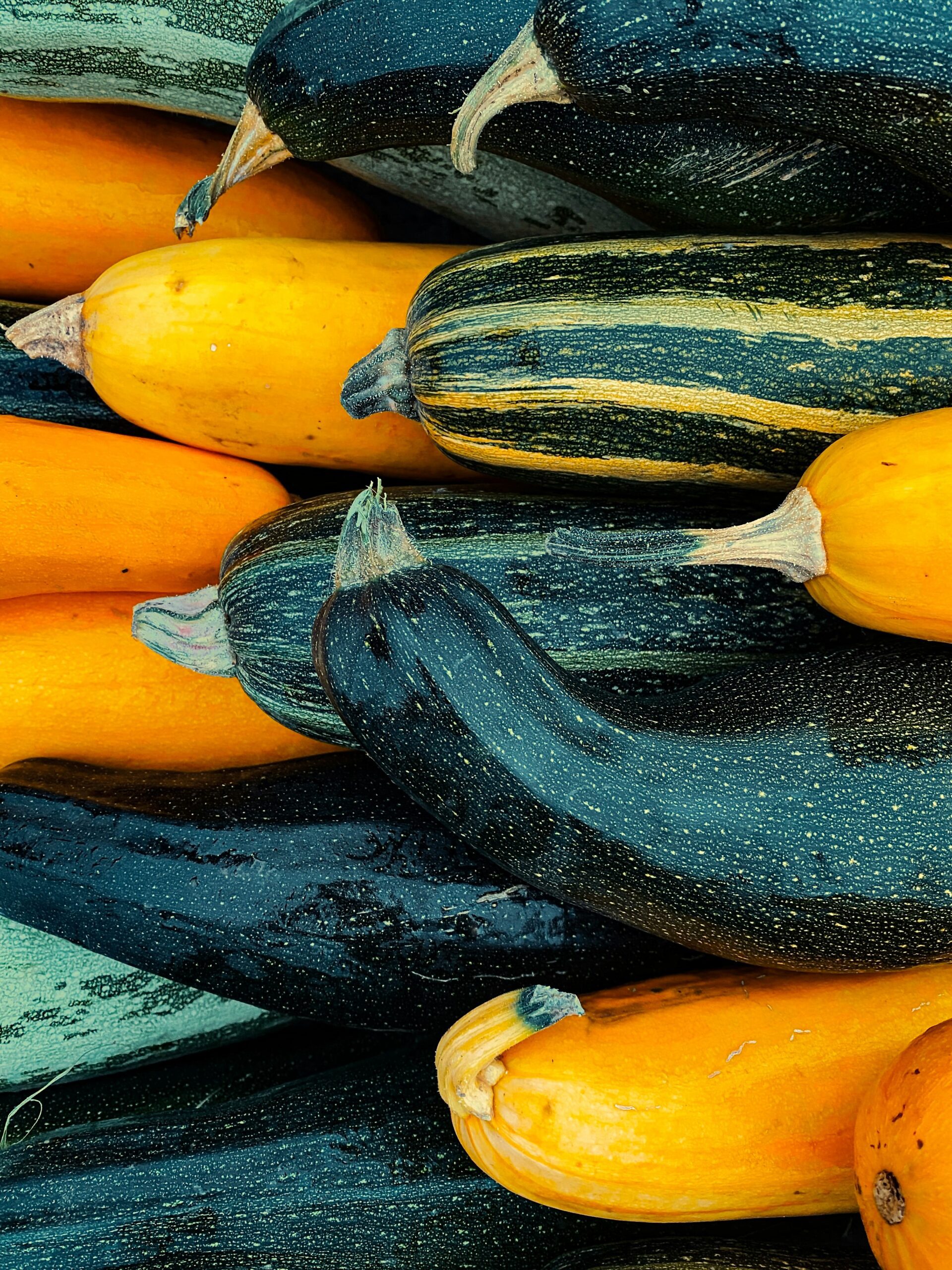
Green courgettes are the classic. Defender F1 is the standard recommendation for UK growing — it’s reliable, disease-resistant, produces well even in cooler summers, and is widely available from garden centres and seed suppliers. All Green Bush is another solid performer.
Yellow courgettes such as Soleil F1 or Sunstripe are increasingly popular and have a slight edge in one specific way: they’re more visible on the plant. Courgettes that grow unnoticed for a few days become marrows, and yellow fruits are simply easier to spot against the foliage than green ones. Yellow varieties also tend to have slightly thinner skin and a more delicate flavour.
Round courgettes — Rond de Nice is the most common variety — are excellent for stuffing and have a denser flesh than the elongated types. They’re no harder to grow but are a little harder to find as seed.
Climbing or trailing varieties like Shooting Star grow upward with support, which is useful if ground space is limited — a courgette on a trellis takes up far less horizontal space than a sprawling bush type.
For a first season, Defender or any yellow F1 variety is the safest starting point.
Sowing Courgette Seeds
Courgettes are frost-tender and need warmth to germinate, so they’re started indoors in the UK rather than sown directly outside.
Sow from late April to mid-May, one seed per 9cm pot. The key detail most guides omit: sow the seed on its side, not flat or point-down. A courgette seed lying on its edge drains better and is far less prone to rotting before it germinates. It sounds like a small thing and it genuinely makes a difference.
Sow at a depth of about 2cm in peat-free multipurpose compost. Place on a warm windowsill or in a heated propagator — courgettes want around 20°C to germinate well. They’re fast: expect shoots within five to seven days.
Keep the compost moist but not soggy. Overwatering at the seedling stage is one of the most common causes of failure — the seedlings are more robust than they look but will rot at the base if the compost is constantly wet.
Once seedlings are up and growing strongly, move them to a bright position to prevent them getting leggy in low light. A south-facing windowsill is ideal. If seedlings start stretching toward the light and becoming tall and weak, they need more brightness.
Hardening Off and Planting Out
Courgettes should not go outside until the risk of frost has genuinely passed. In most of England and Wales that means from mid-May onwards; in Scotland, the north of England, and exposed upland gardens, wait until late May or even early June.
Before planting outside, harden the plants off over one to two weeks — leave them outside in a sheltered spot during the day, bring them in at night. This acclimatises them to outdoor temperatures, wind, and UV levels and prevents the check in growth that comes from moving straight from a warm indoors to a cool garden.
Plant into the ground or into a large container — at least 40–50cm diameter — with plenty of well-rotted compost or manure worked into the planting hole. Courgettes are hungry plants and they respond immediately and visibly to rich soil. A courgette planted into bare, unimproved soil and one planted into compost-enriched ground will look completely different within a fortnight.
Space plants at least 90cm apart if growing more than one — courgette plants sprawl considerably once established, and crowded plants have poor air circulation, which encourages mildew.
Water in well after planting and add a mulch around the base to retain moisture.
📖 Also read: Stop Buying Compost — You’re Literally Throwing Away the Best Stuff in Your Bin
Growing On: Watering, Feeding, and Pollination
Once established in a warm, sunny spot, courgettes grow with remarkable speed. A healthy plant in July can produce visibly larger fruits overnight — if you’ve never grown one before, the pace of growth is genuinely surprising.
Watering is the most important ongoing task. Courgettes need consistent, deep watering — particularly once they’re fruiting. The large leaves lose a lot of water through transpiration, and in warm weather a plant can wilt dramatically in a single afternoon if the soil dries out. Water at the base of the plant rather than over the leaves, which helps prevent mildew.
Feeding makes a real difference once flowers start to appear. A high-potassium liquid feed — tomato feed is ideal — applied every week from the first flower onwards encourages continuous fruiting rather than a single flush.
Pollination is worth understanding because it’s the source of a common beginner mystery: fruits that start to develop and then shrivel and drop off before reaching any size. This happens when a female flower hasn’t been pollinated. Courgette plants produce both male and female flowers — female flowers have a tiny proto-fruit at the base of the petal, male flowers sit on a plain stem. Bees do most of the pollination work, but in cold, wet weather when fewer bees are flying, you may need to help.
Hand pollination is easy: pick a male flower, peel back the petals to expose the pollen-covered stamen, and brush it gently against the centre of an open female flower. Do this on a dry morning when both flowers are fully open. One male flower can pollinate two or three female flowers.
Harvesting — The Most Important Skill
Courgettes should be picked small and often. This is the single most important thing to understand about growing them, and it’s the area where most beginners go wrong.
Pick fruits when they’re 15–20cm long and the skin still has a slight gloss. At this size they’re tender, the seeds are tiny and barely noticeable, and the flavour is at its best. Left to grow, they pass through a phase of being technically edible but increasingly watery and seedy, before becoming full marrows with tough skins and flavourless flesh.
More importantly: every fruit left on the plant signals to the plant that it has achieved its reproductive goal. The plant slows down. Pick consistently and you’re constantly telling it that it hasn’t finished yet — so it keeps producing. A courgette plant that is picked every two to three days through July and August can produce thirty to forty fruits over the season. Left to produce marrows, the same plant might give you four or five.
Check plants every two to three days without fail. Courgettes in full production can go from 15cm to 40cm in seventy-two hours in warm weather.
📖 Also read: How to Make Free Liquid Fertiliser from Weeds (And Why It Works Better Than You’d Think)
Common Problems
Powdery mildew is the most common disease of courgettes in the UK, appearing as a white dusty coating on the leaves, usually from mid-July onwards. It rarely kills the plant but looks poor and can reduce vigour and yield in the final weeks of the season. Improve air circulation by removing a few of the older outer leaves, water at the base rather than overhead, and choose mildew-resistant varieties like Defender if it’s been a problem before.
Poor fruit set or fruit drop is almost always a pollination issue — see above. In consistently wet or cold summers, hand pollination becomes necessary rather than optional.
Slug damage on young plants is common in spring. Seedlings and newly planted-out courgettes are vulnerable. Protection measures — copper tape around pot rims, wool pellets, or nightly checks — are worth maintaining for the first few weeks.
Wilting despite adequate water can indicate vine weevil in containers or, less commonly, cucumber mosaic virus, which causes mottled yellow leaves and distorted fruits. Affected plants can’t be saved — remove and dispose of them (not on the compost heap) to prevent spread.
A glut is perhaps the most universal courgette problem in Britain. If you find yourself overwhelmed — and you probably will — courgette soup freezes brilliantly, courgettes grate well into fritters and bakes, and flowers stuffed with ricotta and fried are one of the genuine pleasures of a productive kitchen garden.
📖 Also read: Natural Slug Control That Actually Works — No Pellets, No Chemicals, No Nonsense
Growing Courgettes in Containers
Courgettes grow very well in large containers on a patio or balcony, making them accessible even without a garden border. The key word is large — a pot of at least 50cm diameter and depth, filled with rich compost and with good drainage holes, is the minimum. Anything smaller will restrict the root system and significantly reduce yield.
A compact bush variety works better in a container than a trailing type. Water daily in warm weather — containers dry out fast and a water-stressed courgette drops its flowers and stops producing. Feed weekly with tomato feed once in flower.
The RHS recommends growing courgettes in grow bags or large containers as a reliable method for gardeners without borders, and their growing guide covers spacing, watering, and harvesting in useful detail.
A Few Final Thoughts
Courgettes are one of those crops that convert people to growing their own food in a single season. They’re fast, forgiving, and visibly rewarding in a way that slower crops like parsnips or leeks aren’t. A courgette picked at exactly the right size and eaten the same day tastes genuinely different to anything bought in a shop — denser, less watery, more flavourful.
If you’ve been meaning to try growing vegetables but haven’t yet found the right starting point, this is it. One plant. A sunny spot. Keep it watered and keep picking. That’s really all there is to it.
Leave a Reply