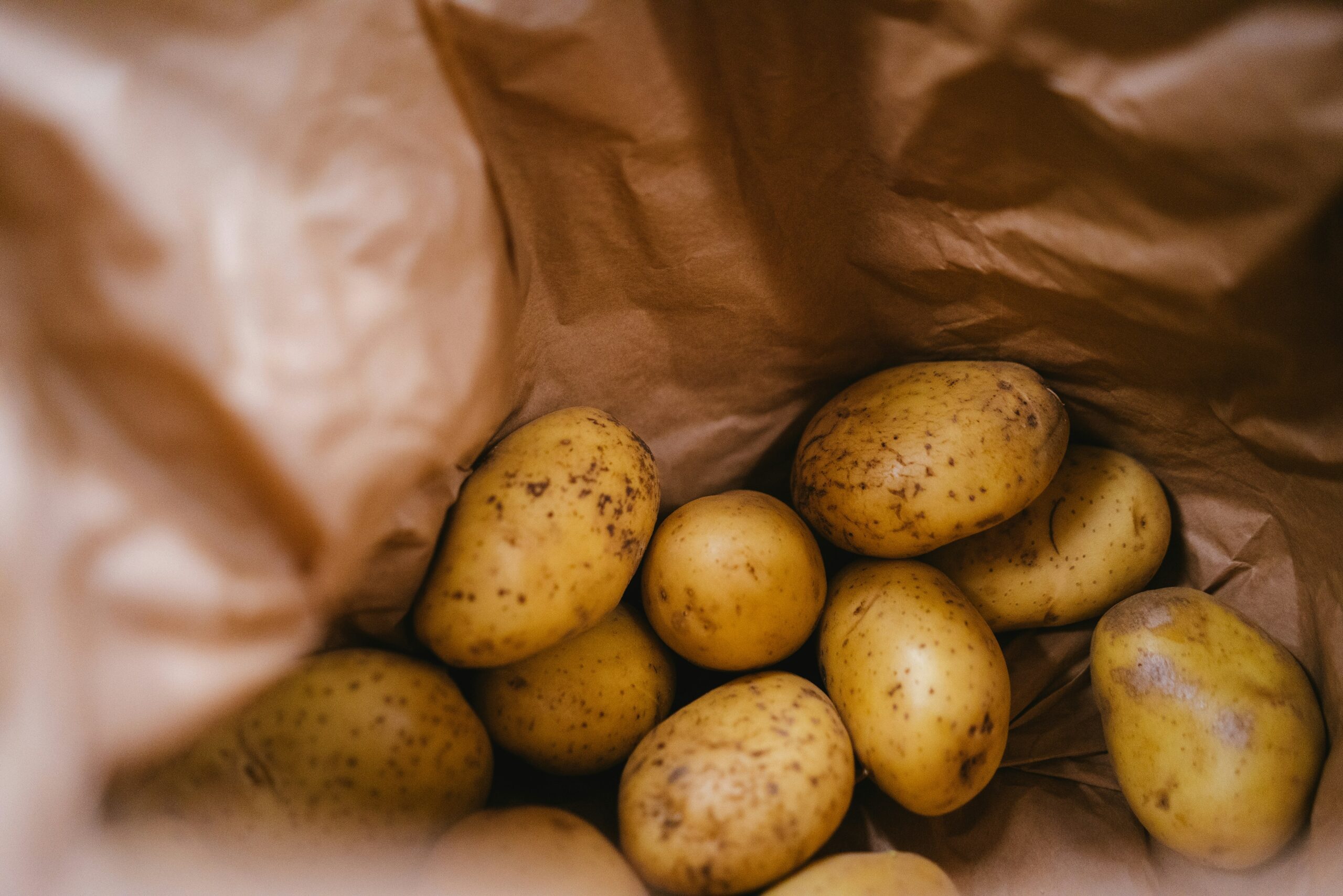
How to Grow Potatoes in Bags — The UK Beginner’s Guide to a Brilliant Harvest on Any Patio
Growing potatoes in bags is one of the most satisfying kitchen garden projects a UK beginner can take on. If you’ve always assumed you needed a dedicated vegetable plot to grow your own spuds, growing potatoes in bags proves otherwise — a couple of potato grow bags on a patio, balcony, or driveway is all the space you need. Growing potatoes in bags in the UK produces genuinely impressive yields, requires no digging, and turns harvesting into something that feels more like a lucky dip than a chore.
The bag method also sidesteps the two most common problems with growing potatoes in the ground — blight spreading through a permanent bed, and the difficulty of harvesting without damaging tubers in heavy clay soil. In a bag, you control the growing medium, you can move the bag into shelter if blight weather threatens, and harvesting means simply tipping the whole thing out onto the ground.
Choosing Your Potato Variety
Potatoes divide into three categories based on their season, and the choice affects everything from when you plant to how you use the harvest.
First earlies are the fastest and most rewarding for bag growing in the UK. Varieties like Rocket, Swift, Pentland Javelin, and the beloved Charlotte are ready to harvest from late May to July — often in as little as ten to twelve weeks from planting. First earlies are waxy, flavoursome, and at their best eaten straight from the bag with butter. They’re also harvested before potato blight typically arrives in the UK, which removes the most significant disease risk.
Second earlies — Kestrel, Maris Peer, and Nicola — take a few weeks longer than first earlies but still finish before the main crop varieties. They’re a good choice if you want a slightly larger harvest and are happy to wait until July or early August.
Maincrop varieties — Maris Piper, King Edward, Desiree — are the large, floury, all-purpose potatoes most people think of. They take longer (up to twenty weeks), take up more space, and are more susceptible to blight. They can be grown in bags but first and second earlies are better suited to the method.
For a first season of bag growing, a first early variety like Charlotte or Rocket gives the fastest, most reliable, and most satisfying result.
How to Grow Potatoes in Bags: What You Need
Grow bags or containers: Dedicated potato grow bags — the woven black polypropylene sacks widely available from UK garden centres and online — hold around 40–50 litres and are ideal. A standard size holds three seed potatoes comfortably. Old compost bags turned inside out, large builders’ buckets, or any container of at least 30–40 litres depth also work well. Depth matters more than width — potatoes need room to form tubers below the plant.
Compost: Peat-free multipurpose compost is fine. You can mix in a handful of general-purpose fertiliser granules at planting time, but it’s not essential if you plan to liquid feed later in the season.
Seed potatoes: These are certified disease-free potatoes sold specifically for planting, available from garden centres from January onwards and online from specialist suppliers. Don’t plant supermarket potatoes — they’re often treated to suppress sprouting and may carry disease.
A sunny spot: Potatoes need sun to grow and produce well. A south or west-facing patio or driveway is ideal.
Chitting: The Optional Step Worth Doing
Chitting means allowing seed potatoes to sprout before planting — placing them in a cool, bright, frost-free spot (an egg box on a windowsill works perfectly) with the end that has the most eyes facing upward, and leaving them for four to six weeks until short, stubby shoots develop.
For first earlies especially, chitting gives the plant a head start and brings the harvest date forward by a couple of weeks. It also lets you check the health of each tuber before committing it to a bag of compost.
Start chitting from late January for the earliest possible planting, or from February for a standard early spring start.
Planting
Plant first earlies from mid-March to April in most parts of England and Wales — earlier in sheltered southern gardens, later in Scotland and northern England where late frosts remain a risk into May.
Half-fill the bag with compost to about 15cm depth. Place two or three chitted seed potatoes on the surface, shoots facing up, spacing them evenly. Cover with another 10–15cm of compost — the seed potato should be about 10–15cm below the surface. Water well.
Keep the bag in a frost-free spot for the first few weeks if late frosts are forecast. A light frost can be managed by moving the bag under cover or draping fleece over emerging shoots overnight.
Earthing Up — The Key to a Big Harvest
As shoots emerge and grow to about 10–15cm above the compost surface, add more compost to the bag to cover all but the top few centimetres of the shoots. This is called earthing up, and it’s the most important technique in bag potato growing.
Each buried stem produces more tubers along its length. The more stem you bury, the more tubers you get. Keep adding compost as the plant grows until the bag is full to the top — this process, done two or three times over the growing season, can double the harvest from the same number of seed potatoes.
Water thoroughly after earthing up and keep the compost consistently moist throughout the growing season. Potatoes in bags dry out faster than those in the ground and need checking every day or two in warm weather.
📖 Also read: Stop Buying Compost — You’re Literally Throwing Away the Best Stuff in Your Bin
Feeding and Watering
Once the bag is full and the plant is in active growth, feed every fortnight with a high-potassium liquid fertiliser — tomato feed is ideal. This supports tuber development rather than excessive leafy growth.
Consistent watering is essential. Irregular moisture — particularly the cycle of drying out then sudden heavy watering — causes a condition called hollow heart, where tubers develop cavities inside, and can trigger secondary tuber growth that produces knobbly, misshapen potatoes. Keep the compost evenly moist rather than alternating between dry and waterlogged.
In a hot summer, bags in full sun may need watering daily. A finger pushed 5cm into the compost gives you the most reliable indication of whether water is needed.
Harvesting
First earlies are ready to harvest when the flowers open — or for varieties that don’t flower reliably, when the foliage begins to look lush and full, usually ten to twelve weeks after planting.
To check without committing to a full harvest, push your hand into the side of the bag and feel around for tubers — if they’re marble-sized, give it another week or two. When they feel egg-sized, it’s time.
To harvest, simply tip the entire bag out onto the ground or a tarpaulin and work through the compost by hand. There’s no digging, no risk of spearing tubers with a fork, and the reveal of how many potatoes have formed is genuinely exciting every time.
Eat first earlies as fresh as possible — they don’t store well and their flavour is best within a day or two of harvest. Maincrop varieties, if you’ve grown them, can be stored in paper sacks in a cool, dark, frost-free place for several months.
📖 Also read: How to Make Free Liquid Fertiliser from Weeds (And Why It Works Better Than You’d Think)
Common Problems
Blight is the most serious potato disease in the UK — a fungal infection that spreads rapidly in warm, wet weather, typically arriving in July or August. It causes brown patches on leaves that spread quickly, and infected tubers rot in storage. First earlies planted in March and harvested by late June or July are usually finished before blight season begins, which is one of the strongest arguments for choosing them over maincrop varieties in bags.
If you see brown patches spreading across leaves in summer, harvest immediately — the tubers below are likely still sound even if the foliage is affected. Don’t compost blighted material.
Waterlogging causes tubers to rot in the bag. Ensure your grow bag has drainage holes at the base — most purpose-made potato bags do, but check before planting.
Green tubers form when potatoes are exposed to light. Keep compost earthed up over all developing tubers and harvest promptly once ready. Green potatoes contain solanine and should not be eaten.
Slugs can damage tubers underground, particularly in wet summers. Growing in bags with proprietary compost rather than garden soil significantly reduces slug pressure compared to ground growing.
The RHS has a comprehensive guide to growing potatoes in containers with further advice on variety selection, blight management, and storage.
📖 Also read: Natural Slug Control That Actually Works — No Pellets, No Chemicals, No Nonsense
A Few Final Thoughts
Growing potatoes in bags strips one of Britain’s most beloved vegetables back to its essentials — a seed potato, some compost, some water, and a few weeks of patience. The harvest, when you tip the bag out and sift through the compost to find tubers you grew yourself, has a disproportionate satisfaction to it. A potato fresh from your own bag, boiled and eaten with butter, genuinely tastes different to anything you’ll buy in a shop.
Start with three bags, a first early variety, and a sunny spot. That’s all you need for a harvest worth talking about.
Leave a Reply