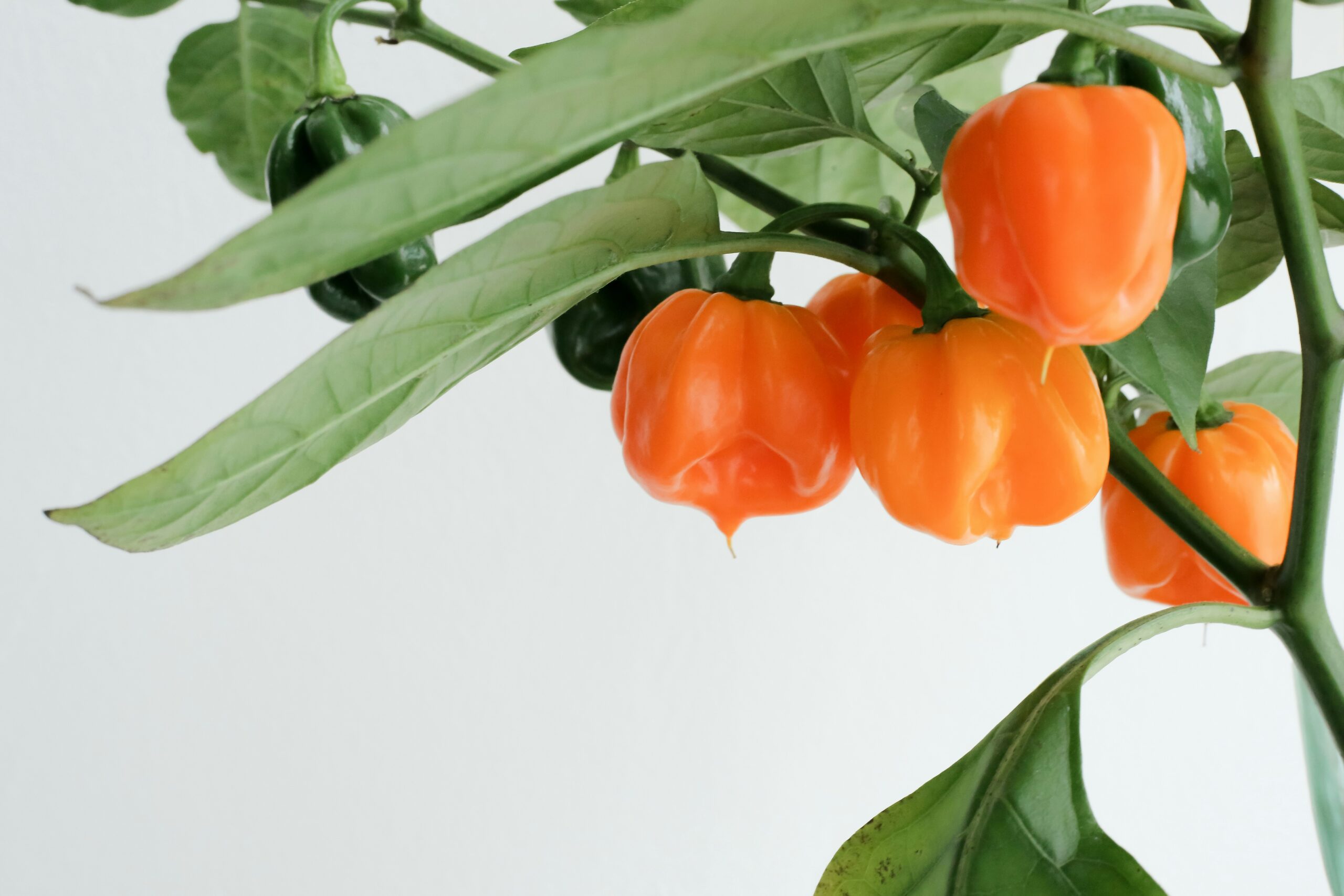
Learning how to grow peppers in the UK is one of those projects that rewards a little extra effort with genuinely impressive results. How to grow peppers in the UK requires more warmth than most kitchen garden vegetables — peppers are natives of Central and South America and they know it — but with an early start, a sunny spot or a greenhouse, and consistent care through summer, a homegrown pepper is something altogether different to the waxy, flavourless specimens in most supermarkets. How to grow peppers in the UK successfully comes down to starting early, keeping them warm, and understanding that patience through the long growing season is the single most important quality a UK pepper grower can have.
Both sweet peppers (also called bell peppers or capsicums) and hot peppers (chillies) are grown using the same basic method. This guide covers both, noting where they differ.
Sweet Peppers vs Hot Peppers: What’s the Difference for UK Growers?
From a cultivation perspective, sweet peppers and hot peppers are very similar plants. Both are Capsicum species, both need warmth and a long season, and both respond to the same care regime. The practical differences are:
Sweet peppers produce large, blocky fruits that are mild and sweet — the red, yellow, orange, and green peppers of everyday cooking. They take slightly longer to ripen than many chilli varieties and genuinely benefit from a greenhouse in most parts of the UK. Grown to red, yellow, or orange ripeness (which is simply green peppers left to mature fully), they’re significantly sweeter and more nutritious than green.
Hot peppers range from mildly spicy to eye-wateringly hot depending on variety. Many hot pepper varieties are slightly more compact, earlier maturing, and more tolerant of outdoor conditions than sweet peppers — making them more accessible for UK gardeners without a greenhouse. Apache F1, Ring of Fire, and Cayenne varieties will produce in a warm, sheltered outdoor position in southern England in a reasonable summer.
For guaranteed results in the UK, both types do best under glass — in a greenhouse, polytunnel, or large conservatory.
How to Grow Peppers in the UK: Starting from Seed
Peppers need the longest growing season of any UK kitchen garden crop — from sowing to ripe fruit can be five to six months — which means starting seeds early is essential.
Sow from late January to mid-February for the best results. This sounds very early, but peppers sown in March or April rarely ripen fully in the UK before temperatures drop in autumn, particularly the larger sweet pepper varieties.
Sow seeds in small pots or modules at a depth of about 5mm in peat-free multipurpose compost. Peppers need warmth to germinate well — soil temperature of 20–25°C is ideal. A heated propagator is genuinely useful for peppers, more so than for most other vegetables — germination at lower temperatures is slow and erratic. Without a propagator, the warmest windowsill in the house (above a radiator, or on a south-facing windowsill with a clear polythene bag over the pot to retain heat) can work.
Germination takes ten to twenty-one days depending on temperature and variety. Sweet peppers and some larger chilli varieties can be slow starters.
Once seedlings have their first true leaves, pot up into individual 9cm pots. Keep in the warmest, brightest position available — a south-facing windowsill or a heated greenhouse. Peppers at the seedling stage are particularly vulnerable to cold and draughts. A single cold night can set them back by weeks.
Growing On: Light, Warmth, and Potting
Peppers are hungrier for light and warmth than most UK kitchen garden crops, and the quality of their growing conditions through spring directly affects the harvest in summer.
Light: peppers need as much bright light as possible from the moment they germinate. On a windowsill, turn the pot a quarter turn every two or three days to prevent the plant leaning toward the light and becoming one-sided. If seedlings are becoming pale and leggy despite a south-facing position, a supplementary grow light for a few hours in the morning extends the effective day length significantly.
Temperature: keep above 15°C at all times during the seedling and young plant stages. Below 10°C at night, growth slows to almost nothing. Peppers in a cold frame or unheated greenhouse in March and April will sit doing very little until temperatures warm up — they’re better kept inside until late April or May.
Potting on: as plants grow, pot on progressively — from 9cm to a 13cm pot, then to a final container of 20–30cm diameter or a growing bag (two plants per bag). Do this when roots begin to show at the drainage holes rather than on a fixed schedule. Pot-bound peppers flower but don’t set fruit well.
Planting in the Greenhouse or Outside
Greenhouse planting: move peppers into their final greenhouse position from late April onwards, once the greenhouse temperature stays above 15°C reliably at night. In growing bags or large containers in the greenhouse border, peppers produce prolifically from July to October in a good year.
Outside: sweet peppers and larger chilli varieties are risky outside in all but the warmest, most sheltered UK gardens. If growing outside, wait until early June when night temperatures are consistently above 12°C, choose the warmest south-facing wall or corner available, and accept that the harvest will be smaller and later than from a greenhouse plant.
Compact outdoor chilli varieties — Apache F1, Prairie Fire, Hungarian Hot Wax — are significantly more reliable outside than sweet peppers and are worth prioritising if you’re gardening without glass.
Hardening off: whether going to a greenhouse or outside, harden plants off over two weeks by leaving them outside during the day and bringing in at night. Peppers are more sensitive to transplant shock than most vegetables and benefit from a gradual acclimatisation.
Support each plant with a cane as it grows — peppers become top-heavy when fruiting and a laden plant can snap at the base without support. Tie loosely with soft garden twine.
Watering, Feeding, and Pollination
Watering: peppers need consistent moisture — more than tomatoes but less than cucumbers. Water when the top 2–3cm of compost feels dry, then water thoroughly. In a greenhouse in July and August, this typically means every two to three days. Inconsistent watering — particularly the cycle of drying out then sudden drenching — causes blossom drop and can trigger blossom end rot in developing fruits.
Feeding: from the moment the first flowers appear, feed weekly with a high-potassium liquid fertiliser — tomato feed is ideal. Before flowering, a balanced liquid feed every fortnight supports strong plant development. Avoid high-nitrogen feeds throughout, which produce large, lush plants that flower poorly.
Pollination: peppers are self-pollinating but benefit from assistance indoors, where fewer pollinators are present. Give plants a gentle shake when flowers are fully open — on dry, warm mornings — to distribute pollen. Alternatively, use a small dry paintbrush to transfer pollen between flowers. Cold, wet weather that reduces bee activity is the main cause of poor fruit set in outdoor plants.
Pinching out: when the plant reaches about 30cm tall, pinch out the growing tip to encourage bushy growth with more side shoots and consequently more fruiting sites. Some growers also remove the first flower that appears (often before the plant has branched well) to redirect the plant’s energy into developing more stems first — this pays off in total yield later.
📖 Also read: I Wasted Three Summers Growing Tomatoes Wrong. Here’s What Actually Works in the UK
Harvesting Peppers
Sweet peppers can be harvested green — when full sized but still unripe — or left to ripen fully to red, yellow, or orange depending on the variety. Green peppers are less sweet and slightly more bitter than ripe ones; ripe peppers are sweeter, higher in vitamin C, and considerably more flavourful. The trade-off is time — each fruit takes four to eight weeks to ripen fully from its green stage.
In the UK, where the growing season is limited by autumn temperature drops, harvesting some fruits green from August onwards encourages the plant to continue producing new fruits that may have time to ripen before the season ends.
For hot peppers, harvest at whatever stage suits your heat and flavour preference. Most varieties are milder when green and develop full heat and complexity as they ripen.
Use scissors or a sharp knife to cut fruits from the plant — never pull, which can snap whole branches from a laden plant.
At the end of the season, when temperatures drop and the first frost threatens, bring outdoor plants inside or into a greenhouse. Fruits already on the plant will continue to ripen slowly on the windowsill even after the plant has been cut from the garden — hang the whole plant upside down in a warm room and the remaining fruits will ripen over several weeks.
Overwintering Pepper Plants
Like chillies, sweet and hot peppers are perennial plants that can be overwintered and brought back the following year, when they’ll produce earlier and more abundantly than a first-year plant.
In October, cut plants back by about half, reduce watering to once a fortnight, and move to a cool but frost-free location — an unheated bedroom, conservatory, or greenhouse with frost protection. The plant will drop most of its leaves and look dormant through winter. In February or March, move to a bright, warm position, begin watering again, and growth will resume. An overwintered pepper plant often starts flowering in May rather than July, significantly extending the productive season.
Overwintering is particularly worthwhile for varieties that were exceptional producers, or for superhot chilli varieties that need every possible growing day to ripen.
📖 Also read: How to Grow Chillies in the UK — The Beginner’s Guide to Homegrown Heat
Common Problems
Blossom drop — flowers falling without setting fruit — is the most common pepper problem in UK growing. Causes in order of likelihood: cold nights (below 15°C), inconsistent watering, insufficient pollination, or draughts. Address these in sequence before assuming the problem is more complex.
Blossom end rot appears as a dark, sunken patch at the base of developing fruits. It’s a calcium uptake disorder caused by inconsistent watering rather than a lack of calcium in the compost. Consistent moisture is the fix.
Aphids target soft new growth and flower buds. Regular checks and water blasting dislodge most infestations before they establish.
Whitefly is common in greenhouses — the tiny white flies rise in a cloud when the plant is disturbed. Yellow sticky traps catch adults, and introducing the parasitic wasp Encarsia formosa (available from biological control suppliers) is highly effective for greenhouse infestations.
Slow ripening in late summer as temperatures drop is common in UK greenhouse growing. Remove some foliage to allow more light to reach the fruits, and keep the greenhouse as warm as possible through September by closing vents earlier in the evening.
The RHS provides detailed guidance on growing peppers and sweet peppers covering variety selection, greenhouse management, and common problems in more depth.
📖 Also read: Plant These Next to Your Tomatoes and Watch What Happens (UK Companion Planting Guide)
A Few Final Thoughts
Peppers are not the easiest crop in the UK kitchen garden — they need more warmth, more patience, and a longer season than most things you’ll grow. But they’re also one of the most rewarding, because the gap between a homegrown ripe sweet pepper and a supermarket one is enormous. The flavour, the freshness, and the satisfaction of growing something that the UK climate makes genuinely challenging are all disproportionate to the effort involved.
Start early, keep them warm, feed consistently, and don’t harvest too soon. The rest is largely patience — which, in a British growing season, is always the most important ingredient.
Leave a Reply