Growing chillies in the UK is one of the most satisfying things a beginner can do, and the results genuinely surprise people who’ve only ever bought them in a supermarket. Learning how to grow chillies in the UK does require a slightly longer growing season than most vegetables — chillies need an early start and a warm summer to perform — but the range of varieties you can grow at home dwarfs anything available in a UK supermarket, and a pot of homegrown chillies on a sunny patio or windowsill is both productive and genuinely beautiful. How to grow chillies in the UK successfully comes down to starting early, giving them warmth, and understanding a few key differences from other kitchen garden crops.
This guide covers the full process: choosing varieties, sowing, growing on, feeding, and harvesting, along with the common mistakes that trip UK beginners up in their first season.
Choosing Your Chilli Variety
The world of chillies is enormous — there are thousands of named varieties, ranging from mild and sweet to eye-wateringly, dangerously hot — and choosing sensibly for UK conditions makes a significant difference to success.
Mild and medium varieties are the most beginner-friendly and also the most useful in the kitchen. Cayenne, Serrano, and Hungarian Hot Wax are reliable performers in the UK, producing abundantly even in cooler summers. Apache F1 is one of the most widely recommended compact varieties for UK beginners — it stays small (perfect for a windowsill or pot), crops heavily, and produces reliably in less-than-ideal British summers.
Jalapeños are probably the most popular home-grow chilli in the UK. They’re versatile in the kitchen, the plants are robust, and they produce well in containers. Jalapeño M is the standard variety; Craig’s Grande Jalapeño produces larger fruits.
Hot to very hot varieties like Cayenne Long Slim, Piri Piri, and Thai varieties such as Bird’s Eye are well suited to UK growing conditions — they’re not the hottest end of the scale but they’re genuinely fiery and the plants are compact and productive.
Superhot varieties — Carolina Reaper, Trinidad Moruga Scorpion, Bhut Jolokia (Ghost Pepper) — are absolutely growable in the UK but require the most warmth, the longest season, and the most attention. In a wet, cool British summer without a greenhouse, they’ll often disappoint. They’re more rewarding once you have a season or two of chilli growing behind you.
For a first season, Apache F1, a standard jalapeño, or a cayenne variety gives you the best balance of reliability and reward.
How to Grow Chillies in the UK: Sowing Early
Chillies need a long growing season — significantly longer than most UK vegetables — and that means starting seeds early. In the UK, sow chilli seeds from late January through to March at the latest. Seeds sown in April or later simply won’t have enough warm growing days to produce a good crop before the frosts arrive.
Chilli seeds need warmth to germinate — a soil temperature of at least 20°C, ideally 25–28°C. A heated propagator is the most reliable method, and for chillies it’s genuinely worth the small investment if you’re serious about growing them. A warm windowsill above a radiator works for many people, but temperature consistency matters — seeds on a windowsill that gets cold at night when the radiator turns off will germinate erratically.
Sow seeds in small pots or a seed tray at a depth of about 5mm. Cover with a propagator lid or a clear plastic bag to retain moisture and warmth. Germination can take anything from one to three weeks depending on variety and temperature — some superhot varieties take even longer. Don’t give up on a pot after two weeks; keep it warm and check regularly.
Once seedlings emerge and have their first true leaves (the second pair, after the initial round seed leaves), pot up into individual 9cm pots of peat-free multipurpose compost. Handle seedlings by the leaves rather than the stem — a damaged leaf is recoverable, a damaged stem often isn’t.
Growing On: Warmth Is Everything
Chillies are frost-tender and temperature-sensitive in a way that most other UK kitchen garden crops aren’t. They want warmth consistently — not just at germination but throughout the growing season.
Under glass — in a greenhouse, polytunnel, or heated conservatory — is the most reliable way to grow chillies in the UK. Plants in a greenhouse in a good summer will produce abundantly and the crop will extend well into October. In a poor, cool summer, greenhouse-grown chillies will still outperform outdoor plants significantly.
On a sunny windowsill indoors is a completely viable alternative, particularly for compact varieties like Apache. A south-facing windowsill in a warm room produces decent crops and has the advantage of requiring no garden space at all. The limitation is light — turn the pot a quarter turn every few days to prevent the plant leaning toward the window, and consider a grow light if your windowsill gets fewer than six hours of direct sun in spring.
Outside on a sheltered patio works well in southern and central England from June onwards, once night temperatures are consistently above 10°C. In Scotland, the north of England, and exposed or coastal positions, outdoor chillies are more of a gamble unless you choose early-maturing varieties and start them as early as possible.
Move plants outside gradually — harden them off over two weeks just as you would any other tender plant, leaving them outside for progressively longer periods before leaving them out overnight.
📖 Also read: Your Balcony Can Grow Strawberries — Here’s Exactly How to Do It in the UK
Potting, Feeding, and Watering
Chillies do best in containers rather than planted directly into the ground in the UK. A 20–30cm pot of multipurpose compost gives the roots enough room while keeping the growing medium warm — chillies in the ground in a cool British summer can struggle because soil temperatures are lower than pot temperatures.
Pot up progressively as the plant grows — from a 9cm pot to a 1 litre pot, then to a final 2–3 litre pot for most compact varieties, or up to 5 litres for larger plants. Chillies in too-large pots early on can sit in wet compost that chills the roots.
Feeding is important once the plant is in its final pot and beginning to flower. Use a high-potassium liquid feed — tomato feed works perfectly — every week once flowers appear. Before flowering, a balanced fertiliser every fortnight encourages strong plant growth. Avoid overfeeding with nitrogen-rich fertilisers throughout the season, which produces large, lush plants with few flowers and poor fruit set.
Watering requires a little more care with chillies than with many plants. They dislike both waterlogging and drought — both cause leaf drop and flower drop. Water when the surface of the compost feels dry, water thoroughly, then wait until it’s dry again before the next watering. In hot summer weather in a south-facing position, this may mean daily watering; in cooler conditions, every three to four days.
Flowers, Pollination, and Fruit Set
Chilli plants produce small white flowers from midsummer onwards — earlier if started in January and grown in a warm environment. Each flower has the potential to become a chilli fruit, but pollination needs to occur first.
Outdoors or in an open greenhouse with insects present, pollination happens naturally. On a windowsill indoors, you need to assist. Give the plant a gentle shake when flowers are open — this releases pollen and self-pollinates the flowers. Alternatively, use a small, dry paintbrush to transfer pollen from one flower to another. Do this on dry days when flowers are fully open, ideally around midday.
A common source of frustration for beginners is flowers dropping off without setting fruit. This is almost always caused by one of three things: temperatures that are too low (below 15°C at night), inconsistent watering, or poor pollination indoors. Review all three before concluding there’s a more complex problem.
Harvesting Chillies
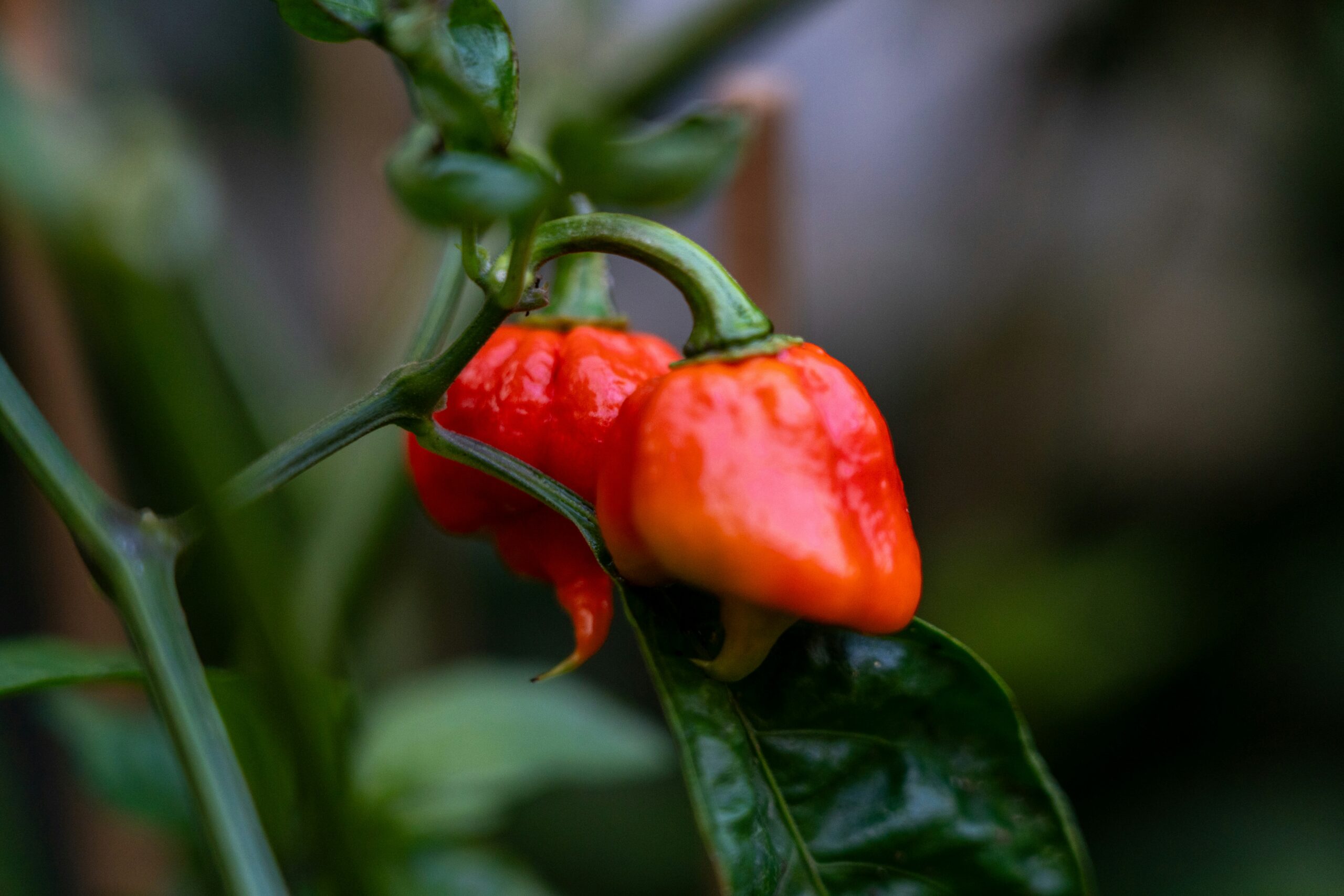
Most chillies can be harvested at two stages: green (unripe) or red, orange, yellow, or purple (fully ripe, depending on variety). Green chillies tend to be slightly less hot and more vegetal in flavour; ripe chillies are sweeter, more complex, and often hotter.
Harvesting green chillies encourages the plant to produce more fruit — like most fruiting crops, removing fruit signals the plant to keep producing. Leaving all fruits to ripen fully gives you better flavour but at slightly lower total yield.
Use scissors or a sharp knife to cut chillies from the plant rather than pulling them — pulling can damage branches and even uproot a plant in a small pot. Leave a short length of stem attached to each fruit.
Chillies freeze exceptionally well — whole, sliced, or chopped — which makes them ideal for preserving a glut. They also dry well hung in bunches in a warm room, which produces the classic dried chilli strings that are both practical and decorative.
📖 Also read: Stop Throwing Away Seeds — How to Save Them from Your Garden and Grow for Free Next Year
Common Problems
Leggy seedlings with long, weak stems are almost always a light problem. Move to a brighter position or supplement with a grow light. A leggy seedling can be planted slightly deeper than it was growing — the buried stem will develop roots — but prevention is better than cure.
Leaf drop can be caused by cold temperatures, overwatering, underwatering, or draughts. In most UK homes the culprit is an autumn temperature drop — as the heating comes on and windows close, the microclimate around a windowsill plant changes suddenly.
Aphids target new growth and flower buds in spring and summer. A regular check and a blast of water dislodges most infestations before they establish. Indoors, a neem oil spray is effective without the concerns about harm to outdoor wildlife.
Poor fruit set is covered above — temperature, watering consistency, and pollination are the three things to check in that order.
Blossom end rot — dark, sunken patches on the base of developing fruits — is a calcium deficiency caused by irregular watering rather than a lack of calcium in the compost. The fix is consistent moisture, not a calcium supplement.
The RHS has a detailed guide to growing chillies that covers variety selection and specific growing conditions in more depth, and is a good reference for anyone wanting to go beyond the basics.
📖 Also read: Plant These Next to Your Tomatoes and Watch What Happens (UK Companion Planting Guide)
Overwintering Chilli Plants
One significant advantage of chillies over annual vegetables is that they’re actually perennial plants — they die back in cold conditions but can be kept alive and brought back the following year, when they’ll produce earlier and more abundantly than a first-year plant.
In October, before the first frost, bring container-grown plants inside to a cool but frost-free spot — an unheated bedroom, garage, or conservatory. Cut the plant back by about half, reduce watering to almost nothing, and let it rest. It will drop most of its leaves and look rather miserable, but it’s dormant rather than dead.
In February or March, move it back to a bright, warm windowsill, begin watering again, and give it a light feed. New growth will appear within a couple of weeks. An overwintered chilli plant typically starts flowering a month or more earlier than a seedling started in the same year, producing a significantly longer and more productive season.
A Few Final Thoughts
Chillies reward the patience required by their long growing season with a crop that is genuinely exciting — the variety of flavours, colours, and heat levels available to a home grower in the UK bears no resemblance to the handful of options on a supermarket shelf. Growing your own also gives you complete control over what goes into the soil and onto the plant.
Start early, keep them warm, and don’t let them dry out or sit in cold, wet compost. Those three things cover most of what you need to get right. Everything else is detail that you’ll refine with experience — and chillies are forgiving enough that the learning curve is enjoyable rather than frustrating.
Leave a Reply