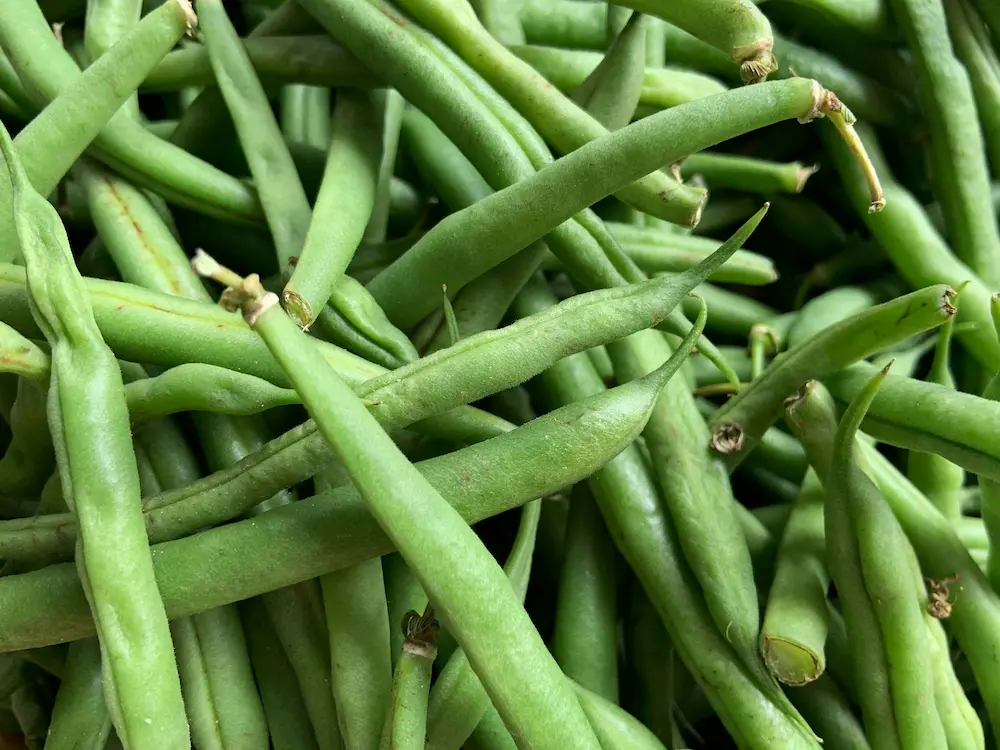
How to grow French beans in the UK is one of the most rewarding questions in the kitchen garden, because French beans deliver more fresh produce per square metre than almost any other vegetable you can grow. How to grow French beans in the UK is also genuinely straightforward — they’re faster from sowing to harvest than runner beans, they don’t need a huge support structure, and as long as you keep picking, they keep producing with a generosity that feels almost disproportionate to the effort involved.
If you’ve been growing runner beans but haven’t tried French beans, you’re missing something. The flavour is different — lighter, more delicate, without the slight stringiness that runner beans develop when left too long — and the range of varieties available goes far beyond the standard green pod. Yellow wax beans, purple-podded varieties, flat romano types, and the fine-podded filet beans beloved of French restaurants are all French beans, and all grow readily in a UK kitchen garden.
French Beans vs Runner Beans: What’s the Difference?
Both are members of the same species (Phaseolus vulgaris in the case of French beans, Phaseolus coccineus for runners), but they behave quite differently in the garden.
French beans are more tender and less tolerant of cold than runners — they need warmer soil to germinate and will be killed by frost at any stage. But they’re faster — many varieties are ready to pick within 8–10 weeks of sowing, compared to 12–14 weeks for runner beans. They’re also more compact (especially dwarf varieties), making them better suited to smaller gardens and containers.
Runner beans produce pods over a longer period and are generally more familiar to British gardeners, but French beans produce a larger proportion of tender, string-free pods and are arguably more versatile in the kitchen — eaten whole when young, or shelled as borlotti or haricot beans when mature.
Types and Varieties
Dwarf French beans are compact, bushy plants reaching 40–50cm tall that need little or no support. They’re ideal for smaller gardens, containers, and raised beds. Most varieties produce a concentrated crop over 3–4 weeks.
Climbing French beans grow to 1.5–2 metres and produce pods over a much longer period than dwarfs — often 6–8 weeks of continuous cropping. They need the same support as runner beans but the pods are generally more tender and the season is longer.
Green-podded varieties:
- ‘The Prince’ — the classic flat-podded dwarf variety, reliable and widely grown in UK gardens for generations
- ‘Cobra’ — an excellent climbing variety with round, stringless pods and a very long cropping season
- ‘Blue Lake’ — another reliable climbing variety, producing round, fleshy pods with excellent flavour
Yellow (wax) beans:
- ‘Sonesta’ — a dwarf yellow-podded variety, eye-catching in the kitchen and slightly sweeter than green types
- ‘Neckargold’ — a reliable climbing yellow variety
Purple-podded varieties:
- ‘Violet Podded’ — a climbing variety with striking deep purple pods that turn green when cooked. The colour makes them easy to spot when harvesting
- ‘Purple Teepee’ — a dwarf purple variety, compact and very productive
Filet beans (haricots verts):
- ‘Aramis’ — produces very fine, pencil-thin pods in the French style. Must be picked young and frequently for best quality
- ‘Ferrari’ — another excellent filet type, very productive and elegant
Borlotti beans:
- ‘Lingua di Fuoco’ — grown for the stunning pink and red mottled beans inside the pods. Can be eaten fresh (shell beans) or dried for winter use
📖 Also read: How to Grow Runner Beans in the UK
When to Sow French Beans in the UK
French beans are tender — they need soil temperatures of at least 12°C to germinate, and 15°C for quick, reliable germination. Cold, wet soil causes seeds to rot rather than sprout.
Sowing indoors (April to early May): Start seeds in individual pots or deep modules on a warm windowsill from mid-April. This gives you plants ready to go outside after the last frost (late May in most of the UK) and a head start on the season.
Sowing outdoors (late May to early July): Direct sow outside from late May when soil has warmed. Make successive sowings every 3–4 weeks until early July for a continuous harvest through summer and into autumn. A July sowing of a fast-maturing dwarf variety will often still produce a crop before the first autumn frosts.
Avoiding the cold: If you’re direct sowing and a cold snap is forecast after planting, cover with fleece until the weather improves. Once established, young plants are reasonably resilient — but seeds and seedlings in cold, wet soil are vulnerable.
Sowing and Growing
How to sow: Push seeds about 5cm deep, 15cm apart. For dwarf varieties, sow in blocks rather than rows — this helps the plants support each other and makes efficient use of space. For climbing varieties, sow at the base of your support structure.
Starting indoors: Sow one seed per 9cm pot or large module cell. Germination takes 7–10 days in warm conditions. Harden off for 10 days before planting outside — French beans are more sensitive to cold than many vegetables and benefit from a gradual introduction to outdoor temperatures.
Soil: French beans prefer a well-drained, reasonably fertile soil. Unlike brassicas, they don’t need a heavily manured bed — in fact, too much nitrogen (from fresh manure) produces masses of foliage and few pods. A bed that had heavy organic matter added for a previous crop is ideal. Good drainage is important — waterlogged soil causes root rot.
Watering: Keep the soil consistently moist once plants are establishing and when flowers are forming and pods are swelling. Irregular watering at the flowering stage can cause flowers to drop without setting pods. A mulch of compost or straw around the base conserves moisture and reduces watering frequency.
Support for climbing varieties: The same approach as runner beans — a wigwam of canes or a double row of canes with cross-bracing. Climbing French beans are slightly lighter than runners but still need secure support. They climb by twining and will find their own way up once started.
📖 Also read: How to Grow Peas in the UK
Feeding French Beans
French beans, like all legumes, fix nitrogen from the air through bacteria in their root nodules — so they don’t need nitrogen fertiliser. Over-feeding with a general fertiliser produces leafy plants with few pods.
Once flowering begins, a weekly liquid feed with a high-potassium fertiliser (tomato feed) encourages pod development. This is the same approach used for tomatoes and courgettes — once the plant shifts from vegetative growth to flowering and fruiting, potassium drives the process.
Pests and Problems
Black bean aphid is the main pest — the same species that attacks broad beans. It congregates on growing tips and can quickly colonise the whole plant. Pinching out the growing tips once plants are established (a good practice anyway for dwarfs) removes the most attractive feeding sites. A jet of water or insecticidal soap spray deals with established colonies.
Slugs are a serious threat to seedlings, particularly in the first few weeks after germination or transplanting. Protection for the first fortnight is important.
Halo blight is a bacterial disease that causes water-soaked spots with yellow halos on leaves — it’s seed-borne, so buying good quality seed from a reputable supplier reduces the risk significantly. Remove and dispose of (not compost) any infected plant material.
Mexican bean beetle and vine weevil are less common but worth knowing about. The RHS has detailed guidance on growing French beans including full pest and disease identification.
Root rot in cold, wet soil is the most common cultural problem — always wait for the soil to warm before direct sowing and ensure good drainage.
Harvesting — The Key to Non-Stop Production
This is where most French bean growers either get it very right or very wrong. The single most important thing to understand is: pick constantly and the plant keeps producing. Stop picking and production stops.
French beans are triggered to produce more pods by the removal of existing ones — it’s the plant’s survival mechanism, attempting to set seed before it’s harvested again. A plant that’s regularly picked will often produce for 6–8 weeks. A plant left unpicked for two weeks while beans mature and develop seeds will slow down dramatically and often stop.
Pick when pods are young and tender — when they snap cleanly and the seeds inside are just barely detectable as small bumps. For standard varieties this is typically at 10–15cm length. For filet types, pick at 8–10cm or even smaller.
Check plants every two to three days at peak season. In warm weather, pods can go from perfect to overblown in 4–5 days. Pick everything that’s ready, even if you have more than you can eat — give them away, blanch and freeze them, or compost them. Never leave mature pods on the plant.
Harvesting for dried beans: If you want to save seeds or harvest borlotti beans for drying, leave selected pods on the plant until they’ve dried and gone papery. Shell them out and dry further in a warm room before storing.
📖 Also read: The Easiest Vegetables to Grow for UK Beginners
Getting the Most from a Small Space
If space is limited, climbing French beans give you by far the best return per square metre. A single 2-metre row of climbing beans on a support of canes produces an extraordinary quantity of pods over 6–8 weeks — far more than the same length of row planted with a dwarf variety.
French beans also grow well in large containers — a 30cm pot will support 3–4 dwarf plants or the base of a climbing wigwam. Use a good quality multipurpose or John Innes No. 3 compost, feed weekly once flowering begins, and water daily in warm weather.
For the highest yields from succession sowing, make three sowings: indoors in late April for a July harvest, outdoors in late May for an August harvest, and outdoors again in late June for a September harvest. This gives you fresh beans across nearly three months from a relatively small growing area.
In the Kitchen
Fresh French beans need very little — blanched for 3–4 minutes in boiling salted water, dressed with good olive oil and a little garlic, they’re one of the finest vegetables the summer garden produces. Yellow and purple varieties make a beautiful mixed salad. Filet beans need barely two minutes of cooking and are best eaten simply.
The step up from shop-bought to home-grown is less dramatic than for peas — French beans travel reasonably well — but the flavour of a bean picked an hour before eating is still noticeably fresher and more vivid than anything from a supermarket shelf.
Leave a Reply