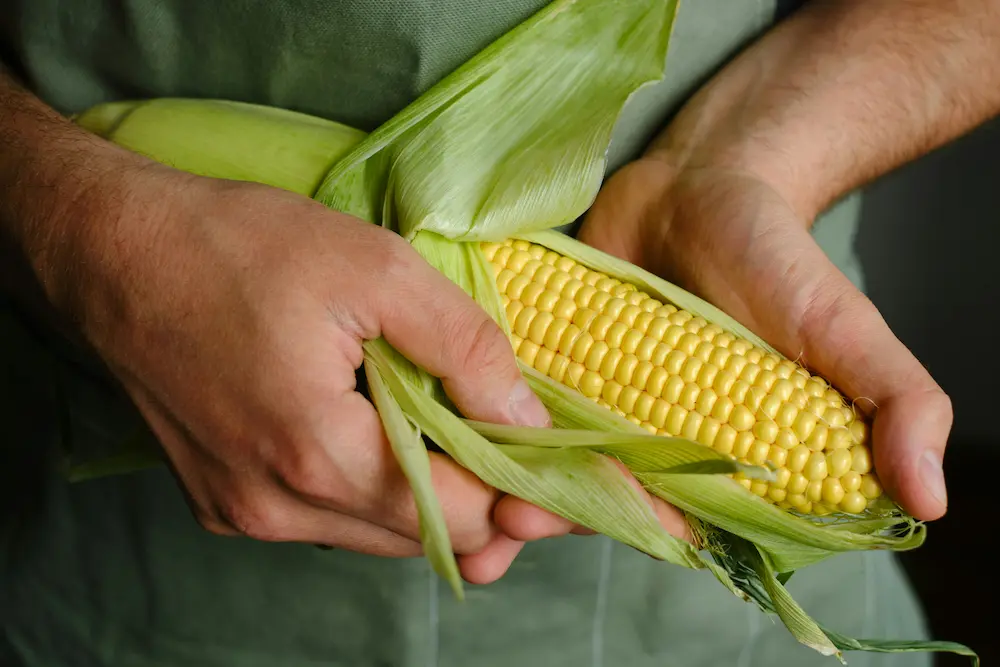
Sweetcorn has a reputation in the UK as a warm-climate crop that’s more trouble than it’s worth — something you grow successfully in Cornwall or the warmest pockets of Kent, but that the rest of us gloomily watch turn brown and unripe as October arrives. That reputation is out of date. The decision to grow sweetcorn in the UK has become dramatically more achievable over the past twenty years, thanks entirely to the development of modern early-ripening varieties bred specifically for our cooler, shorter summers. Pick the right variety, start it off correctly, and plant it in a block rather than a row, and you’ll be eating your own freshly-picked sweetcorn — still warm from the garden, at its sweetest, with the kind of flavour that a supermarket cob can’t come close to — from August onwards.
The flavour argument is the compelling one. Sweetcorn begins converting its sugars to starch the moment it’s picked, which is why shop-bought corn tastes progressively more floury and less sweet the older it gets. Growing your own and cooking it within minutes of harvest is a genuinely different experience — one that, once you’ve had it, makes all the effort feel obviously worthwhile.
📖 Also read: The Easiest Vegetables to Grow for UK Beginners — Start Here
The Best Sweetcorn Varieties to Grow in the UK
Variety choice matters more with sweetcorn than with almost any other vegetable you’ll grow in the UK, because the difference between an early-ripening variety and a late one can be the difference between a full harvest and a disappointing row of unripe cobs. For most UK gardens — particularly anything north of the Midlands — an early or early-to-mid-season variety is the only sensible choice.
Among the RHS Award of Garden Merit winners, ‘Earlibird’ AGM stands out as one of the most reliable early supersweet varieties for British conditions, producing one or two well-filled 20cm cobs per plant. ‘Swift’ AGM is another excellent option — an extra tendersweet type that’s fast-growing and dependably productive in a typical UK summer. For those in the south of England or in a particularly warm, sheltered garden, ‘Ovation’ AGM gives slightly larger cobs and a longer season. The RHS recommends choosing early-ripening varieties in cold locations, and it’s advice worth taking seriously — a late-season variety sown in a Yorkshire garden is a gamble that the British weather usually wins.
One technical note worth understanding: most modern varieties are ‘supersweet’ (sometimes labelled F1 hybrids with ‘sh2’ in the name), which are sweeter and hold their sugar content for longer after picking than older varieties. The catch is that supersweet varieties must not be planted near standard sweetcorn types, as cross-pollination dramatically reduces sweetness. If you’re growing sweetcorn for the first time, stick to one variety and you won’t need to worry about this at all.
How to Sow Sweetcorn in the UK — Starting Off Indoors
Sweetcorn is a tender crop that needs warmth to germinate and cannot tolerate frost, which means starting it off indoors is almost always the right approach in the UK. Sow from mid to late April — sowing earlier than this gives you seedlings that outgrow their indoor space before it’s safe to plant out, while sowing much later shortens the already tight UK growing season. Use deep pots or modular trays filled with peat-free seed compost, sowing one seed per module at a depth of about 2.5cm. Sweetcorn seeds germinate best at 18–21°C, so a warm windowsill, heated propagator or the top of a boiler cupboard works well. Expect germination within ten to fourteen days.
Keep seedlings in the brightest spot available once they’ve germinated — sweetcorn grows fast and will quickly become leggy and weak in poor light. By late May or early June, once plants are 8–15cm tall and all risk of frost has passed, they’re ready to go outside. Hardening off for ten days to two weeks before planting — placing them outside in a sheltered spot during the day and bringing them in at night — is essential. Sweetcorn resents transplant shock, so handle the root balls gently and water in well after planting.
📖 Also read: How to Grow Courgettes in the UK — The Beginner’s Guide to the Most Productive Vegetable
The Block Planting Rule — Why It’s Non-Negotiable
This is the single most important thing to understand when you grow sweetcorn in the UK, and it’s the reason many beginners get disappointing results: sweetcorn is wind-pollinated, and it must be planted in a block or grid rather than a long single row. The male flowers (tassels) form at the top of each plant and shed pollen, which falls down onto the female flowers (silks) lower on the same or neighbouring plants. In a single row, pollen blows sideways away from the silks and pollination is poor, resulting in cobs with missing or undeveloped kernels — sparsely filled ears that look and taste wrong.
A block planting means that each plant is surrounded by others on all sides, so pollen from any direction can reach the silks. Even a modest block of twelve plants — arranged four by three — pollinates far more reliably than a single row of twelve. Space plants 35–45cm apart in each direction. If your garden is small and you can only fit a single row, you can improve pollination by tapping the tassels gently when they open to release pollen directly over the plants below, though a proper block remains the most reliable solution.
📖 Also read: 10 Flowers That Attract Bees to Your UK Garden — and Why It Matters
Growing Sweetcorn in the UK — Watering, Feeding and Support
Once planted out, sweetcorn grows rapidly in warm weather and is surprisingly low-maintenance, but a few things will make a significant difference to your harvest. Water young plants regularly until they’re established, and then again when the plants begin to flower and when the cobs are swelling — these are the two critical periods when water stress affects yield most directly. In a dry summer, weekly watering during flowering and cob development will noticeably improve both the size and flavour of your harvest. A thick mulch of garden compost around the base of plants in June helps retain moisture and suppresses weeds, which sweetcorn dislikes competing with in the early weeks.
Sweetcorn can grow to 2 metres or more in a good summer, and tall plants in exposed positions are vulnerable to wind rock — where the plant is repeatedly pushed back and forth by wind, loosening the roots. If your plot is at all exposed, earth up the plants by mounding soil around the base of each stem once they’re about 60cm tall. This encourages additional roots to form in the mounded soil and provides extra stability. Alternatively, place bamboo canes around the outside of the block and link them with garden twine to create a corral effect that holds the whole planting together.
How to Know When Sweetcorn Is Ready to Harvest
This is the question every first-time sweetcorn grower asks, and the answer is a simple test that takes about ten seconds. Once the silks at the end of each cob have turned brown and dried out, peel back a small section of the outer husk and press your fingernail into one of the kernels. If a watery, colourless liquid comes out, the cob isn’t quite ready. If a creamy, milky liquid comes out, the cob is at peak ripeness — pick it immediately. If the liquid is thick and paste-like, it’s over-mature. You’ll probably find that the first time you do this test you get it slightly wrong in one direction or the other, but by the second or third cob you’ll have it absolutely calibrated.
To harvest, grip the cob firmly and twist it sharply downwards and away from the main stem — it should come away cleanly. Then, famously, run to the kitchen. The sugar-to-starch conversion that starts the moment a cob is picked is genuinely rapid, and the difference between corn cooked within five minutes of picking and corn that’s sat on the kitchen counter for three hours is measurable and real. Drop the whole cob into already-boiling water for four to five minutes — no more — and eat it immediately with butter and salt. If that doesn’t convince you to grow sweetcorn in the UK every year from this point forward, nothing will.
📖 Also read: How to Grow French Beans in the UK — The Most Productive Pod Vegetable
Common Problems and How to Avoid Them
Sweetcorn has fewer pest and disease problems than many vegetables, but a handful of issues are worth knowing about. Mice are the most consistent nuisance at sowing time — they find sweetcorn seeds irresistible and will dig up a whole tray of modules if given the opportunity. Sowing indoors in a space mice can’t access solves this entirely. Once plants are in the ground, birds, squirrels and badgers all take a keen interest in ripening cobs — netting individual cobs with old tights or small mesh bags, or netting the whole block as harvest approaches, is the most effective deterrent.
Slugs can damage young plants in the first few weeks after planting out — a scatter of slug pellets or a ring of sharp grit around each plant when first transplanting gives them the protection they need during this vulnerable period. Beyond these issues, sweetcorn is generally healthy and trouble-free, and the main factors that determine success or failure are the ones already covered: variety choice, block planting, good drainage, and getting the plants in the ground early enough to make the most of the UK’s relatively short warm season.
📖 Also read: How to Grow Runner Beans in the UK — The Most Generous Crop in the Kitchen Garden
Leave a Reply