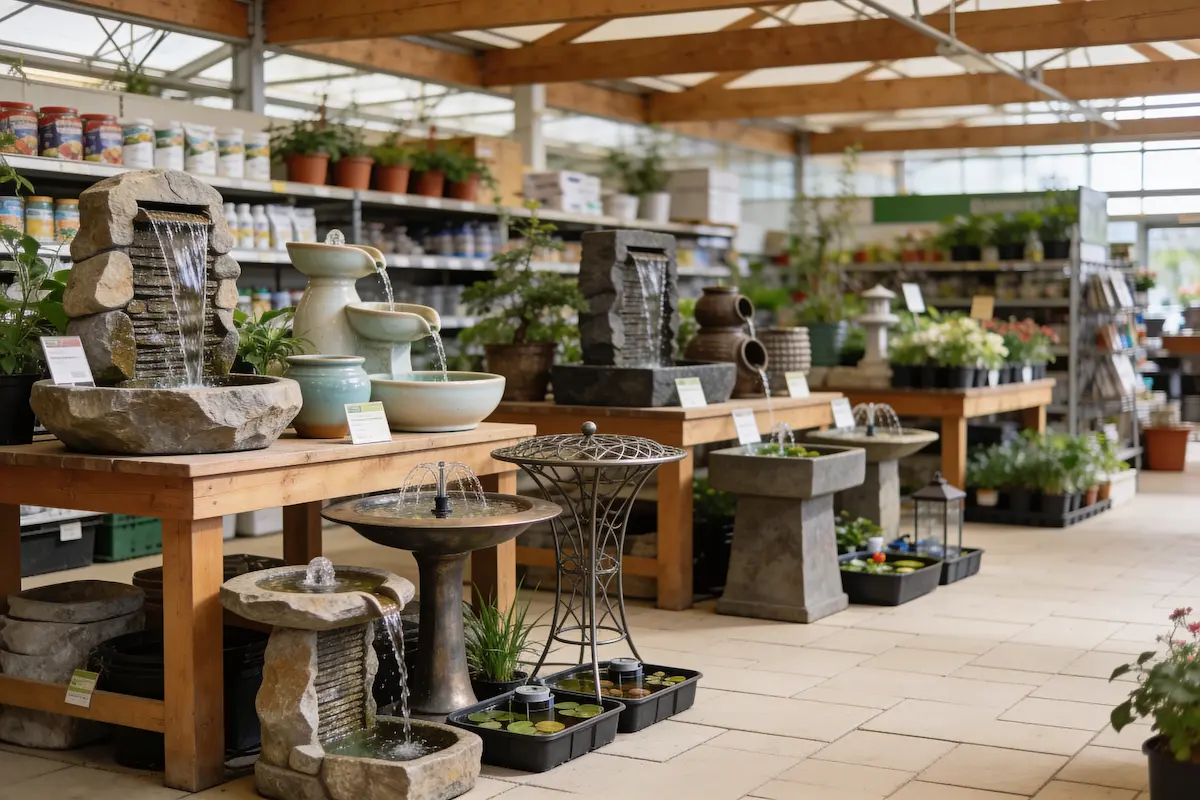
Solar garden fountains have come a long way in the last few years. What used to mean a feeble trickle on a sunny day, stopping the moment a cloud appeared, has evolved into a genuinely practical and attractive garden feature — with battery backup, decent pump pressure, and designs that look at home in everything from a cottage garden to a sleek contemporary terrace. If you’ve been thinking about adding moving water to your outdoor space without the hassle of mains wiring, solar garden fountains in the UK are now a very realistic option. This guide covers everything you need to make a good choice and keep it working well.
The appeal is obvious: no electrician, no cable trenching, no running costs. You position the fountain, fill it with water, and let the sun do the rest. In practice, a few decisions made at the outset — placement, pump capacity, battery or no battery — make the difference between a feature that delights you all summer and one that sits frustratingly still on every overcast afternoon.
📖 Also read: Garden Lighting — How to Highlight Your Plants and Create the Right Atmosphere
How Solar Garden Fountains Work
A solar garden fountain runs on a small photovoltaic (PV) panel that converts sunlight into electricity to power a submersible pump. The pump circulates water from a reservoir — either a self-contained basin, a standalone bowl, or a larger pond — up through a nozzle or decorative feature, creating the movement and sound of running water.
The key variable is whether the system has a battery. Panel-only fountains run only when the sun is shining directly on the panel — they stop in shade and on overcast days, which in the UK means they can be maddeningly intermittent. Battery-backup models (sometimes called solar fountains with a reservoir) charge the battery during sunny periods and draw on it when light levels drop, giving you several hours of running time even on grey days or after sunset. For a UK garden, battery backup is not a luxury — it’s the feature that determines whether you actually enjoy the fountain or spend the summer watching it sit still.
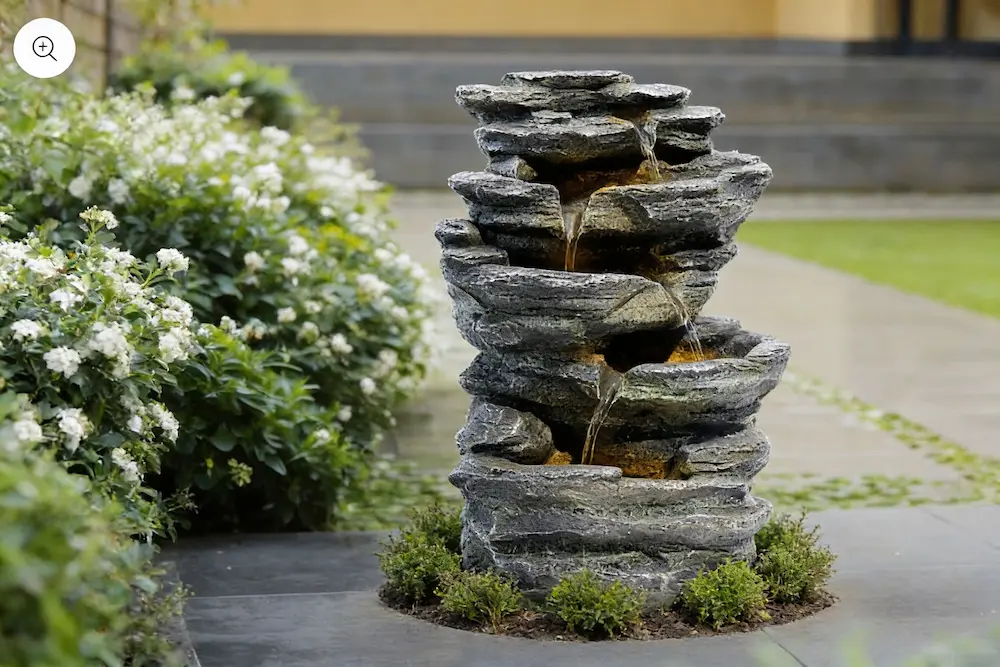
Choosing the Right Solar Garden Fountain for a UK Garden
The most important spec to check is pump flow rate, measured in litres per hour (L/h). For a small decorative feature — a millstone, a pebble fountain, or a small bird bath — a pump rated at 200–400 L/h is perfectly adequate. For a larger tiered fountain or a feature feeding into a pond, look for 600 L/h or more. Underpowered pumps produce a pathetic dribble rather than an attractive flow; slightly overpowered pumps can usually be turned down with an adjuster valve.
Panel size matters too. A larger panel charges the battery faster and keeps the pump running at full pressure for longer — look for a panel of at least 3–5W for a basic feature, and 6–10W for anything requiring sustained pressure. Check whether the panel is integrated into the fountain itself (convenient but limits positioning options) or on a separate cable (more flexible placement, which is especially useful in partially shaded UK gardens).
Build quality varies enormously at the lower end of the market. Look for a pump with an IP68 waterproof rating (fully submersible), UV-resistant materials on the panel and housing, and stainless steel or ceramic components in the pump head rather than cheap plastic that degrades quickly. UK brands and retailers like Hozelock, Oase, and Good Directions tend to offer better build quality and replacement parts than unbranded imports.
📖 Also read: Pergolas — How to Choose the Right One, Where to Put It, and What to Grow Over It
Where to Place a Solar Garden Fountain in the UK
Placement is the single most critical decision, and in a UK garden it often involves a compromise between where you want the water feature and where the sun actually falls. The solar panel needs direct, unobstructed sunlight for as many hours as possible — ideally south or south-west facing, away from the shadow of fences, trees, and buildings. Even partial shading of a small panel significantly reduces output.
The good news with separate-panel models is that the fountain itself can sit in the shade while the panel sits in full sun nearby, connected by a cable of typically 3–5 metres. This opens up placement options considerably — a shady courtyard corner, a spot beneath a tree, or a north-facing wall can all host a water feature if the panel can be positioned in the sun elsewhere.
For pebble fountains and millstone features with a buried reservoir, place them on a level surface and consider the surroundings carefully — the sound of moving water carries, which is usually a pleasure near a seating area but can be intrusive near a boundary shared with neighbours. A position that you can see from a main window or the most-used seating spot maximises your enjoyment of both the visual movement and the sound.
Avoid placing the fountain directly under deciduous trees if you can — falling leaves clog the pump filter and the basket around the reservoir constantly, requiring much more frequent cleaning. Even a metre or two away from the drip line of a tree makes a significant difference to maintenance frequency.
Self-Contained Fountains vs Pond Fountains
Self-contained solar fountains — millstones, pebble features, tiered bowls, and ornamental figures — have their own integral reservoir, making them genuinely portable and installation-free. Fill with water, position the panel, switch on. They’re ideal for patios, balconies, and smaller gardens where digging a pond isn’t practical, and their self-contained nature means no pond liner, no excavation, and no safety concerns about open water around small children.
Pond fountains are submersible pumps with solar panels, dropped directly into an existing pond to circulate and aerate the water. Beyond the aesthetic benefit, oxygenation is genuinely valuable — a solar fountain pump running through summer significantly improves water quality, reduces algae growth, and supports fish and wildlife health in a way that a still pond cannot. If you already have a garden pond, a solar pump is one of the best single improvements you can make to it.
📖 Also read: How to Create a Garden That Attracts Butterflies in the UK
Solar Fountains and Wildlife
Moving water is one of the most effective ways to attract wildlife to a UK garden. Birds are drawn to the sound and movement of running water far more reliably than to still birdbaths — the ripple and glint of a solar fountain makes it visible and audible from a distance, and robins, blackbirds, sparrows, and even thrushes will use it daily once they’ve discovered it. Position it with a clear sightline from a tree or hedge nearby so birds can perch and observe before coming down to drink and bathe.
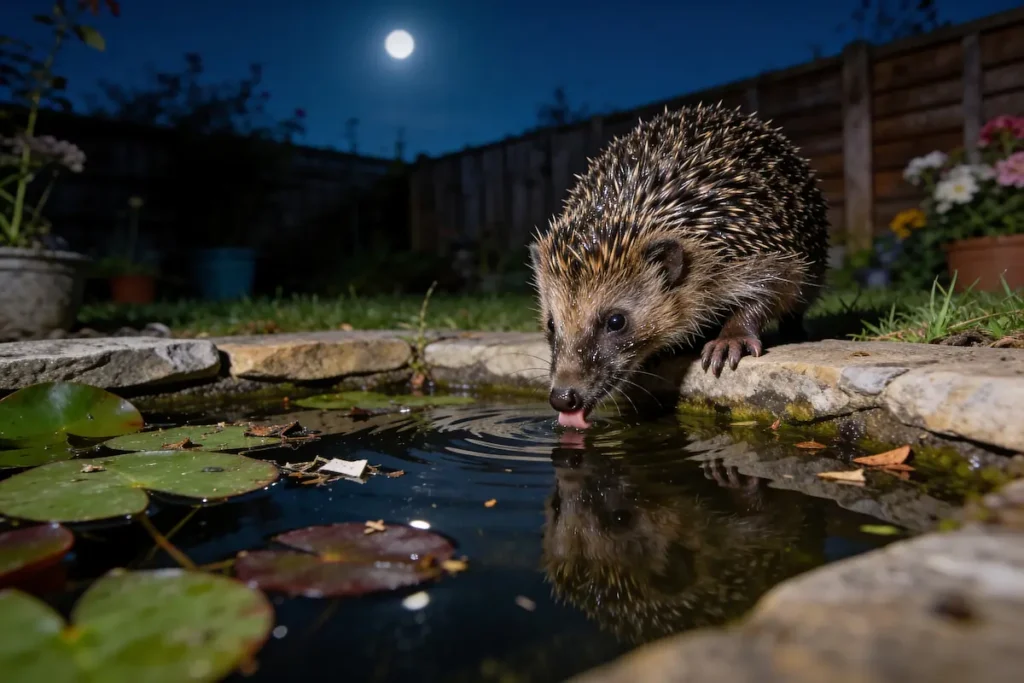
For a pond fountain, the aeration and oxygenation benefit invertebrates, amphibians, and if you have fish, their health directly. Dragonflies and damselflies will investigate any garden pond with good water movement. Even hedgehogs visit garden ponds to drink at night — ensure there’s a shallow ramp or gently sloping edge to allow any animal that falls in to climb out safely.
How to Maintain a Solar Garden Fountain
Maintenance is straightforward but regular attention keeps the pump running efficiently and extends its life considerably. The most frequent job is cleaning the filter — a small foam or mesh screen that prevents debris from entering the pump. In a garden with nearby trees or plants, check and rinse this every one to two weeks through the growing season. A blocked filter is the most common reason a fountain stops or loses pressure, and it takes less than two minutes to fix.
Every month or so, lift the pump out and wipe the impeller (the small spinning part inside the pump housing) with a soft cloth. Calcium and algae deposits build up on the impeller over time and reduce efficiency. A short soak in a solution of white vinegar and water dissolves limescale effectively without damaging the pump components — particularly useful in hard water areas of southern and eastern England.
At the end of the season (October in most of the UK), drain and store the pump indoors. Leaving a pump in water that freezes solid will crack the housing and destroy the impeller — a few minutes of winterisation in autumn saves the cost of a replacement in spring. Clean the solar panel with a damp cloth to remove any accumulated grime, which reduces its output more than most people realise, and store it somewhere dry and frost-free until April.
📖 Also read: How to Plan Your Garden
Is a Solar Garden Fountain Worth It in the UK?
For most UK gardens, yes — with the caveat that you choose a battery-backup model rather than a panel-only one. The UK’s reliably cloudy summers mean that a panel-only fountain will disappoint; a battery-backup model with a decent panel gives you consistent water movement from April through to October, no running costs, and none of the installation complexity of mains-powered alternatives.
Budget for a quality product from a reputable brand rather than the cheapest option available — the difference in pump longevity and consistent performance between a £40 import and a £120 branded unit is significant and becomes apparent within the first season. Treat it as a one-off investment rather than a consumable, maintain it properly at the end of each season, and a good solar garden fountain in the UK will give you five or more years of reliable, zero-cost water movement with very little effort in return.
Leave a Reply