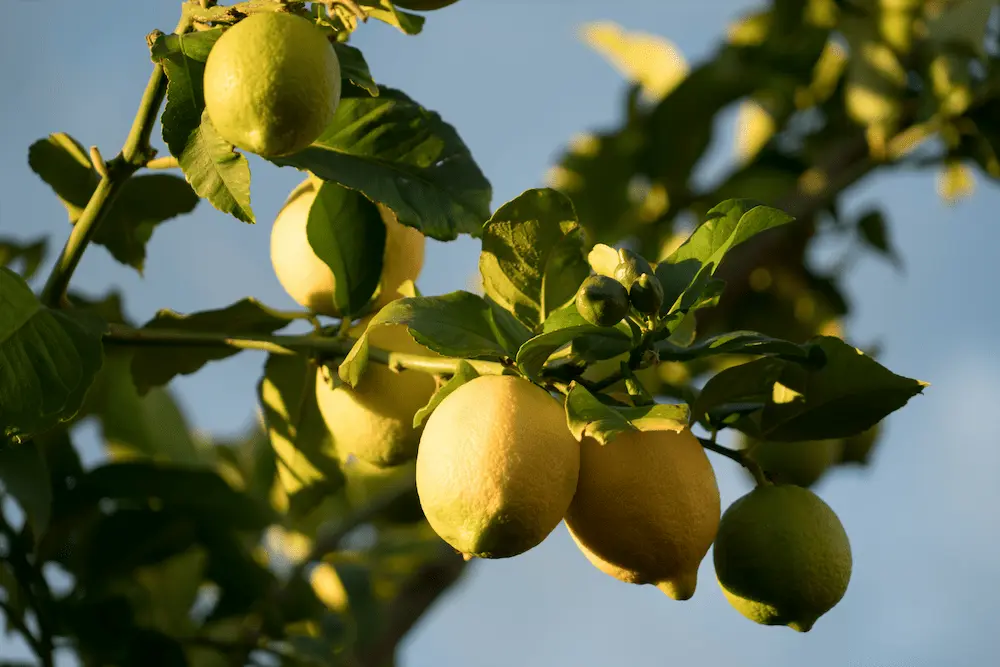
There’s something almost absurdly satisfying about growing your own lemons in the UK. It shouldn’t work — we’re not the Mediterranean, our summers are short, and the winters are definitely not what citrus trees had in mind. And yet, with a container, a sunny spot, and a proper understanding of what a lemon tree actually needs, it works remarkably well. Grow lemon trees in the UK correctly and you’ll have fragrant white blossom in winter, glossy evergreen foliage year-round, and real, usable lemons ripening slowly on the tree through autumn and into the following spring.
The key to success is understanding that a lemon tree in the UK spends two quite different lives: outdoors in full sun from late spring to early autumn, and indoors — in a cool, bright, humid space — through the winter months. Get the transition between these two environments right, and the rest is relatively straightforward.
📖 Also read: How to Grow Cherry Tomatoes on a Windowsill — No Garden Needed
Choosing the Right Lemon Tree Variety for the UK
Not all lemons are equally well-suited to UK conditions. The most widely grown and most forgiving variety for British gardeners is Citrus × limon ‘Eureka’ — a reliable, heavy-cropping lemon with excellent flavour that tolerates temperatures as low as 5°C (42°F), making it one of the hardiest options available. ‘Garey’s Eureka’ holds an RHS Award of Garden Merit and is widely sold at garden centres and specialist online citrus nurseries.
‘Meyer’ lemon is another popular choice — slightly more compact than ‘Eureka’, with thinner-skinned fruit and a sweeter, less acidic flavour. It’s a good option for a conservatory or kitchen windowsill where space is limited. ‘Quattro Stagioni’ (Four Seasons) flowers and fruits almost continuously, which makes it particularly rewarding for indoor growing.
Wherever you buy, choose a grafted plant rather than one grown from seed. Grafted plants fruit within a year or two of purchase; seed-raised plants can take up to ten years to produce fruit, and the quality is unpredictable. Buy a plant that is already in flower or carrying fruit if you want certainty — specialist UK citrus suppliers like Citrus Centre in West Sussex or Keepers Nursery in Kent offer excellent quality grafted trees with reliable provenance.
Growing Lemon Trees in Pots — The Container Essentials
Container growing is the standard approach for lemon trees in the UK, and it’s the right one — it allows you to move the tree indoors for winter, which is non-negotiable in most parts of the country. Choose a pot that is only slightly larger than the rootball; lemon trees dislike being overpotted into a container much larger than their roots, as excess compost stays wet and encourages root rot.
Use a specialist peat-free citrus compost, or mix John Innes No. 2 with approximately 20% sharp sand or fine grit for drainage. The critical requirement is that the pot drains freely — lemons sitting in waterlogged compost will drop their leaves and deteriorate rapidly. Terracotta pots are excellent for drainage and breathability but are heavy once filled; a quality plastic or fibreglass pot with multiple drainage holes is a practical alternative if you’re moving the tree regularly between indoors and out.
Repot every two to three years in spring, moving up only one pot size at a time. In years between repotting, top-dress by scraping away the top 5cm of compost and replacing with fresh mixed with a little slow-release citrus fertiliser.
📖 Also read: Greenhouses vs Polytunnels — Which Is Right for You?
The Outdoor Season — Sun, Position, and Summer Care
From late May or early June (once night temperatures are consistently above 10°C), move your lemon tree outdoors to the sunniest, most sheltered spot available — ideally against a south or south-west facing wall, which radiates stored warmth and provides some protection from wind. A warm brick wall in a sheltered courtyard is genuinely transformative for citrus growth; the microclimate it creates mimics Mediterranean conditions far better than an exposed patio position.
Don’t rush the move outdoors. Citrus trees that go from a heated conservatory to cool April air in one step suffer cold shock — leaves yellow and drop, growth stalls, and the tree can take weeks to recover. Harden off gradually over ten days or so, moving the pot outside for a few hours on mild days and bringing it back in at night, before leaving it out permanently once conditions are reliably warm.
Through summer, water regularly — daily in hot weather — using rainwater wherever possible. Lemons are sensitive to the chlorine and fluoride in mains tap water, which can cause leaf yellowing over time. If you must use tap water, leave it to stand overnight in a watering can before use. Feed weekly with a nitrogen-rich summer citrus fertiliser from April through to October to support the vigorous growth of the warm season.
Growing Lemon Trees Against a Sunny Wall
In the mildest parts of the UK — coastal Cornwall, Devon, and some sheltered urban gardens in London and the south-east — lemon trees can be grown in the ground against a sheltered, south-facing wall and left outside year-round, with protection during cold snaps. This is a more permanent and ultimately more productive approach than container growing, since the tree can develop a proper root system and grow to full size.
Plant into well-drained soil enriched with plenty of grit and garden compost, with the base of the stem slightly proud of the surrounding soil level to prevent water pooling at the crown. Fan-train the branches against the wall using vine eyes and horizontal wires, and wrap the whole plant in two or three layers of horticultural fleece during any forecast frost below -2°C. With this level of protection, a well-established tree against a warm wall in a favourable location will survive most UK winters and grow into something genuinely impressive within five or six years.
📖 Also read: How to Create a Cottage Garden in the UK
Winter Care — Bringing Lemon Trees Indoors
This is where most UK lemon tree failures happen. The tree needs to come indoors before the first frost — usually October in most of England — but the environment it comes into is critical. The worst place for a lemon tree in winter is a warm, centrally heated living room: the air is too dry, the temperature too consistent (lemons benefit from a cool winter rest), and the light usually insufficient.
The ideal winter home is a frost-free greenhouse, conservatory, or glazed porch that stays cool — between 5°C and 10°C — and bright. At these temperatures, the tree slows its growth significantly, reducing its water and nutrient requirements, and the cool rest actually improves flowering and fruiting the following season. Many lemons flower in late winter at exactly these temperatures, filling the space with an extraordinary fragrance.
Reduce watering significantly in winter — allow the top 2–3cm of compost to dry out between waterings, and use tepid water rather than cold. Switch from summer citrus feed to a balanced winter citrus fertiliser from November to mid-March. Maintain humidity by standing the pot on a tray of damp gravel, and mist the foliage occasionally on dry days. The RHS guide to growing citrus covers winter care requirements in detail for different varieties.
Feeding, Pruning, and Getting Fruit to Set
Lemons are hungry plants and year-round feeding is essential — not just in summer. Use a specialist citrus fertiliser that provides the correct ratio of nitrogen, potassium, and trace elements including iron and magnesium, which lemons deplete quickly. Yellow leaves between the veins (interveinal chlorosis) usually indicate magnesium or iron deficiency and respond well to a foliar spray of Epsom salts (magnesium sulphate) or a dedicated citrus tonic.
Pruning is minimal — lemons need only light shaping in February, removing any crossing branches, weak or wayward growth, and reducing leggy stems by up to two-thirds to encourage bushing. Avoid heavy pruning as lemons flower on the tips of new sideshoots; an overpruned tree produces masses of foliage and little fruit. If the tree sets more fruit than it can carry to full size (more than around 20 fruits on a 1m tree), thin the smallest fruits in early summer to concentrate the plant’s energy on the remainder.
📖 Also read: Vertical Gardening in the UK
Common Problems and How to Solve Them
Leaf drop is the most alarming symptom and almost always caused by one of four things: overwatering in winter, a sudden change in temperature or environment (moving the tree indoors or outdoors too abruptly), cold draughts, or dry air. Identify which applies and correct it — the tree will usually recover and produce new leaves within a few weeks once conditions improve.
Scale insects and red spider mite are the main pests, both typically appearing when plants are indoors in dry conditions. Scale shows as brown waxy bumps on stems and the undersides of leaves; wipe off with a damp cloth and treat with a neem oil spray. Red spider mite causes pale, mottled, dusty-looking foliage — increase humidity immediately and use a miticide if the infestation is heavy. Both pests are far less of a problem once the tree is outdoors in summer with good airflow and natural predators around it.
The Patience and the Payoff
Growing lemon trees in the UK requires more attention than most garden plants — the seasonal moves, the careful watering, the year-round feeding. But the payoff is proportionate to the effort. A well-grown lemon tree is one of the most beautiful container plants you can own: architectural, evergreen, fragrant in flower, and genuinely productive. When you cut a lemon from your own tree and squeeze it into a glass of water on a grey November morning, it feels quietly extraordinary — a small Mediterranean miracle in a British garden.
📖 Also read: How to Grow Aubergines in the UK
Leave a Reply