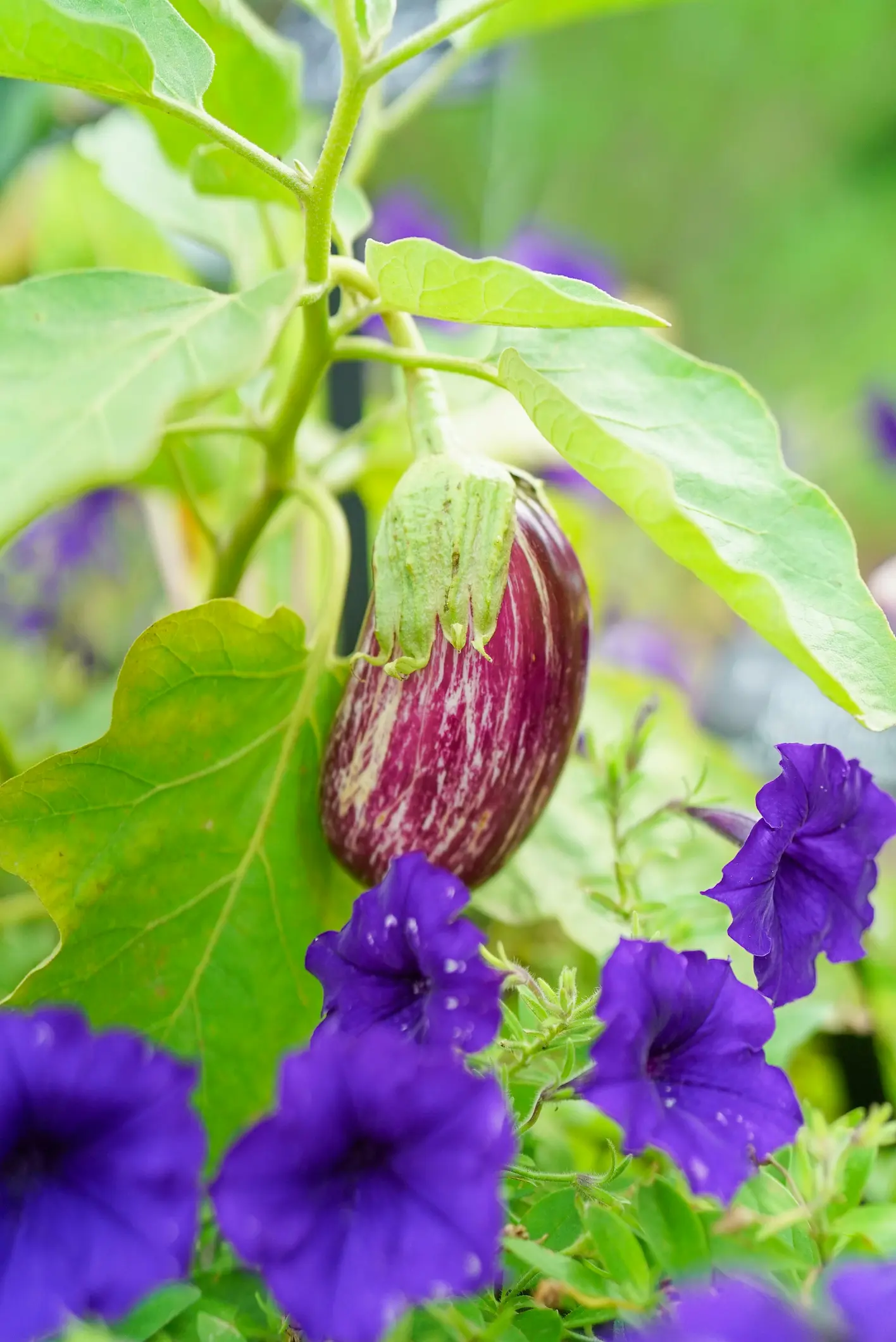
How to grow aubergines in the UK is a question that separates the casually curious from the genuinely committed kitchen gardener. How to grow aubergines in the UK is not impossible — far from it — but it does require more patience, more warmth, and more attention than most other vegetables. Aubergines want a long, hot growing season that the British climate doesn’t naturally provide, which means you have to create the conditions for them rather than just relying on the weather. Get it right, though, and you’ll harvest deep purple, glossy fruits from your own garden that taste completely different from anything in a supermarket — richer, less bitter, with a depth of flavour that makes the effort worthwhile.
If you’ve successfully grown tomatoes and peppers, you’re ready for aubergines. If you haven’t, start with those first.
Why Aubergines Are Challenging in the UK
Understanding the challenge helps you meet it. Aubergines (Solanum melongena) are natives of tropical Asia — they evolved in conditions of intense heat, high humidity, and a growing season that lasts most of the year. In India, Sri Lanka, and much of Southeast Asia, aubergine plants are perennials that fruit for years. In the UK, we grow them as annuals and have roughly five to six months to achieve what the plant would naturally do over a much longer period.
The specific problems in the UK are: insufficient warmth for germination and early growth (they need soil temperatures of at least 21°C to germinate reliably), a growing season that’s too short for outdoor cultivation in most parts of the country, and a tendency for cool, cloudy summers to delay fruiting until it’s almost too late. In Scotland and the north of England, growing aubergines outside is essentially not viable. In the south of England, outdoor growing in a very warm, sheltered spot is possible in a good summer — but a greenhouse or polytunnel is the realistic route to a reliable harvest.
Choosing Varieties
Variety choice matters more for aubergines in the UK than for almost any other crop. You need varieties that are compact enough for container growing under cover, that fruit reliably in less-than-tropical conditions, and that mature quickly enough to produce a harvest before October.
‘Moneymaker’ is the standard variety sold in most UK garden centres — reliable, producing medium-sized dark purple fruits, well-suited to greenhouse growing.
‘Black Beauty’ is a classic open-pollinated variety with large, deep purple fruits and good flavour. Slightly slower to mature than F1 hybrids.
‘Bonica F1’ is one of the best choices for UK conditions — a compact, early-maturing variety that produces good-sized fruits reliably even in a cooler summer. Widely recommended by UK growers.
‘Ophelia F1’ is worth seeking out — it produces small to medium fruits prolifically and is one of the most reliable in UK greenhouses.
‘Listada de Gandia’ is a beautiful Italian heritage variety with striking purple and white striped skin and excellent flavour. Slightly more demanding than modern F1 hybrids but produces fruits of real character.
‘Patio Baby F1’ is an excellent choice for containers — compact, productive, and one of the earliest to mature, which is a significant advantage in the UK.
For a first attempt, choose an F1 hybrid specifically bred for early maturity. The slight extra cost of F1 seeds is worth it for the reliability improvement.
Sowing and Propagation
Aubergines need the longest possible growing season, which means sowing early — but not so early that plants sit in cold conditions and sulk.
When to sow: Late January to mid-February is ideal. This sounds very early, but aubergines need 16–20 weeks from sowing to first fruit, and you want those fruits to ripen before the autumn weather deteriorates. Sowing in early February gives you plants ready to go into their final containers in late April or May, with the main fruiting period in August and September.
Temperature: This is the most critical factor. Aubergine seeds will not germinate reliably below 21°C and prefer 24–28°C. A heated propagator is almost essential for reliable UK germination — a temperature-controlled model set to 24°C will give you germination in 10–14 days. Without supplementary heat, germination is erratic and slow.
How to sow: Sow one seed per small pot or module cell, about 1cm deep, in good quality seed compost. Keep in the propagator until germination, then move to a very bright, warm position — a south-facing windowsill above a radiator is reasonable, though a heated greenhouse is better.
Potting on: Once seedlings have their first true leaves (the second pair after the seed leaves), pot on into 9cm pots. When roots fill those pots, move into 12cm pots. Handle roots carefully — aubergines dislike root disturbance more than most vegetables.
📖 Also read: How to Grow Peppers in the UK
Growing Under Cover
Unless you’re in a particularly warm, sheltered part of southern England with a very hot summer ahead, grow aubergines under cover. A greenhouse, polytunnel, or large cold frame gives you the warmth and protection they need.
Final containers: Aubergines do well in large containers — at least 30–35cm diameter, filled with a good quality potting compost such as John Innes No. 3 mixed with some multipurpose. They can also be grown in grow bags (two plants per standard grow bag), though pots give more flexibility.
Move plants into their final containers in late April or early May, keeping them under cover until all risk of cold nights has passed. Even under cover, a cold snap in early May can set plants back significantly.
Temperature management: Keep the greenhouse or polytunnel well-ventilated on warm days — aubergines enjoy warmth but suffer in stagnant, overheated air. Open vents and doors from mid-morning on sunny days. In cooler weather, keep them closed to maintain warmth.
Support: Aubergine plants become surprisingly heavy when laden with fruit and need support. Push a sturdy cane into the compost beside each plant and tie the main stem loosely as it grows. For spreading plants, a simple cage of canes and twine keeps the whole plant upright.
📖 Also read: Greenhouses vs Polytunnels for UK Beginners
Feeding and Watering
Aubergines are hungry, thirsty plants during the growing season and respond dramatically to good feeding.
Watering: Keep the compost consistently moist — not waterlogged, but never allowed to dry out completely. Irregular watering causes the fruits to develop poorly and can lead to blossom end rot (similar to the same condition in tomatoes). In a warm greenhouse in midsummer, daily watering is often necessary.
Feeding: Once the first flowers appear, begin feeding every week with a high-potassium liquid fertiliser — tomato feed is ideal. This drives fruit development and significantly improves both yield and quality. Continue feeding right through the fruiting period.
Pollination: Unlike tomatoes, aubergine flowers don’t always self-pollinate reliably under cover. Give each plant a gentle shake every day or two when flowers are open, or use a small paintbrush to transfer pollen between flowers. Poor pollination results in flowers dropping without setting fruit, which is one of the most common frustrations for UK aubergine growers.
Pinching Out and Plant Management
When plants reach about 30cm tall, pinch out the growing tip to encourage branching and a more compact, productive plant. This is similar to the pinching-out technique used with fuchsias and sweet peas.
Limit each plant to five or six developing fruits at any one time — remove any additional flowers or very small fruitlets to direct the plant’s energy into the fruits that are already developing. This sounds counterintuitive but produces significantly better results than letting every flower attempt to set fruit. In the UK’s relatively short season, five good-sized fruits are worth far more than a dozen that never fully develop.
Remove any yellowing or damaged leaves to maintain air circulation and reduce the risk of fungal problems.
Pests and Problems
Red spider mite is the most troublesome pest for aubergines under cover — tiny mites that colonise the undersides of leaves in hot, dry conditions, causing a characteristic pale mottling on the upper surface. The best prevention is maintaining adequate humidity (misting leaves in hot weather) and good ventilation. Biological control using the predatory mite Phytoseiulus persimilis is available from specialist suppliers and is very effective once established.
Aphids — particularly glasshouse aphid — colonise growing tips and flower clusters. A strong jet of water dislodges them; insecticidal soap spray deals with heavier infestations.
Whitefly is another common glasshouse pest. Yellow sticky traps help monitor and reduce populations; biological control with Encarsia formosa parasitic wasps is the most effective organic solution.
Poor fruit set — flowers dropping without setting fruit — is usually due to insufficient pollination, low temperatures, or allowing plants to get too dry. Address all three and fruit set improves significantly.
The RHS has comprehensive guidance on growing aubergines including detailed identification of pests and problems specific to UK conditions.
📖 Also read: How to Deal with Blight on Tomatoes and Potatoes
Harvesting Aubergines
Aubergines are ready to harvest when the skin is deep, glossy, and taut — not dull or wrinkled. The fruit should feel firm and heavy. Cut rather than pull the fruit from the plant, leaving a short section of stem attached.
The most important harvesting tip: don’t wait too long. Overripe aubergines develop a bitter, seedy flesh and dull skin. Pick fruits when they’re around two-thirds of the expected full size for the variety — they’ll be at their best flavour and the plant will direct energy into developing the remaining fruits more quickly.
Once you start harvesting, check plants every two to three days. In a warm August or September, fruits can go from perfect to overripe surprisingly quickly.
Is It Worth It?
Honestly, for most UK gardeners, the answer depends on how much you enjoy the challenge and how much you value homegrown produce. Aubergines are never going to be as easy or as productive as tomatoes, courgettes, or beans in our climate.
But there’s something genuinely satisfying about pulling a deep purple, glossy aubergine from a plant you grew from a seed in February. And the flavour — roasted, grilled, or made into a proper moussaka or baba ganoush with fruit still warm from the greenhouse — is worth every careful watering and weekly feed. If you’re the kind of gardener who enjoys a project, aubergines are one of the most rewarding challenges the British kitchen garden offers.
Leave a Reply