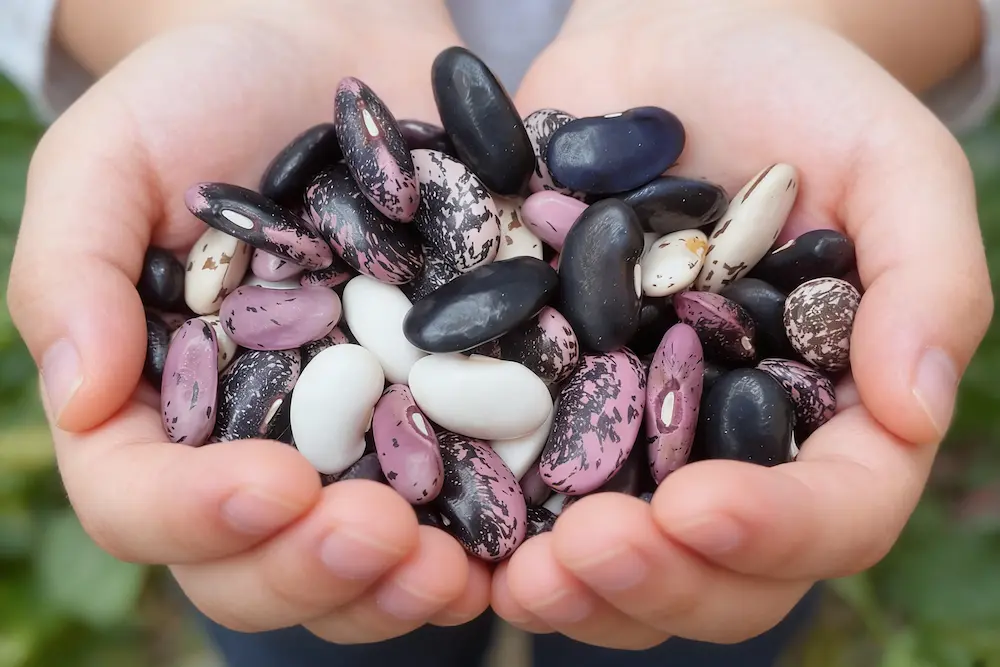
The secret to getting children hooked on gardening is almost embarrassingly simple: choose plants that do something interesting quickly. The best plants to grow with children are not the most beautiful or the most useful — they’re the ones that germinate fast, grow visibly, and deliver something the child can touch, eat, or show off within days or weeks rather than months. Once a child has experienced the genuine surprise of a seed becoming a plant becoming food, the interest tends to look after itself.
This list is built around that principle. Every plant here has been chosen because it works reliably in UK conditions, requires no special equipment, and delivers the kind of fast, tangible feedback that keeps young gardeners engaged through a whole season rather than losing them after the first fortnight.
📖 Also read: Kids and Gardening — Tools, Safety, and How to Get Children Genuinely Interested
Radishes — From Seed to Plate in 25 Days
If you only grow one thing with a young child, make it a radish. The seed is large enough for small fingers to handle, germination happens within five to seven days (fast enough to feel almost magical to a five-year-old), and the whole journey from sowing to harvest takes as little as three to four weeks. Pull one out of the ground, rinse it, and eat it on the spot — that moment of eating something you’ve just grown yourself is the foundation of every future gardener.
‘Cherry Belle’ and ‘French Breakfast’ are the most reliable UK varieties for children. Sow directly into the ground or into a pot of compost from March through to September, keep moist, and harvest when the top of the root is visible at the soil surface. One packet of seed provides enough for multiple sowings throughout the summer — a continuous supply of fast results that keeps younger children engaged through the whole growing season.
Sunflowers — The Height Competition Plant
Sunflowers have been getting children into gardens for generations, and the reason is obvious: they grow so fast and so dramatically that the progress is visible almost day to day. Sow a seed in April — large enough that even a toddler can handle it — and by August you have a plant taller than most adults, with a flower the size of a dinner plate. The sheer scale of what emerges from something that small is genuinely astonishing to children.
A height competition is the simplest and most effective way to sustain engagement through the whole season. Each child (or each family member) grows one plant, and the tallest at the end of summer wins. Children check on their plant daily when there’s a competition involved, which means they’re also noticing how it grows, what it needs, and what happens when it doesn’t get enough water. ‘Giant Single’ or ‘Russian Giant’ are the varieties to use — capable of reaching 3m or more in a warm UK summer.
📖 Also read: How to Grow Cosmos in the UK
Cherry Tomatoes — The Eat-Straight-From-the-Plant Crop
There is something uniquely compelling about picking a tomato warm from the vine and eating it immediately. Cherry tomatoes are the ideal children’s crop because the fruits are small, sweet, arrive in abundance, and can be eaten without any preparation whatsoever — important when your gardener is seven and has the patience of a seven-year-old. The harvest period, from July through to October, is long enough to maintain engagement through most of the summer holidays.
Grow in a pot on a sunny patio, windowsill, or in a greenhouse. ‘Tumbling Tom’ is the best variety for children — it’s a trailing type that needs no staking, produces masses of sweet red fruits, and works beautifully in a hanging basket or a large pot where children can see the fruits ripening from below. ‘Sungold’ is another excellent choice, with intensely sweet orange fruits that children invariably prefer to the sharper red varieties.
Peas — The Pod-Popping Vegetable
Growing peas with children works on multiple levels. The seed is big and satisfying to push into the soil. The plants grow quickly and visibly, producing tendrils that curl around supports in a way children find endlessly fascinating. The flowers are pretty. And then the pods arrive, and children discover that fresh raw peas eaten straight from the pod are completely different from the frozen ones they know — sweeter, crunchier, and far more interesting.
Building a simple wigwam of bamboo canes for the peas to climb gives children a construction project that runs alongside the growing project, and the structure itself becomes a kind of den once the plants cover it — another source of engagement that has nothing to do with conventional gardening. ‘Kelvedon Wonder’ and ‘Hurst Green Shaft’ are reliable, sweet varieties well-suited to UK conditions. Sow from March to June directly into the ground or a deep container, support with canes or netting, and harvest when the pods are plump and the peas are clearly visible through the skin.
📖 Also read: How to Grow Peas in the UK
Strawberries — The Instant Gratification Fruit
Strawberries are arguably the most child-friendly fruit you can grow. The plants are compact enough for a single pot, the fruits are recognisable and beloved, and picking and eating a warm strawberry straight from the plant on a sunny afternoon is a near-perfect childhood moment. Plant in April or May in a pot of multipurpose compost, keep on a sunny windowsill or patio, water regularly, and the first fruits arrive in June — quick enough to maintain interest from planting to harvest within a single season.
‘Cambridge Favourite’ is reliable and widely available. For something more dramatic, ‘Mara des Bois’ produces small, intensely fragrant fruits that taste almost like wild strawberries — children who try them rarely forget them. Runners produced by the parent plants can be potted up in late summer, giving children a propagation project and a new plant to tend through the following year.