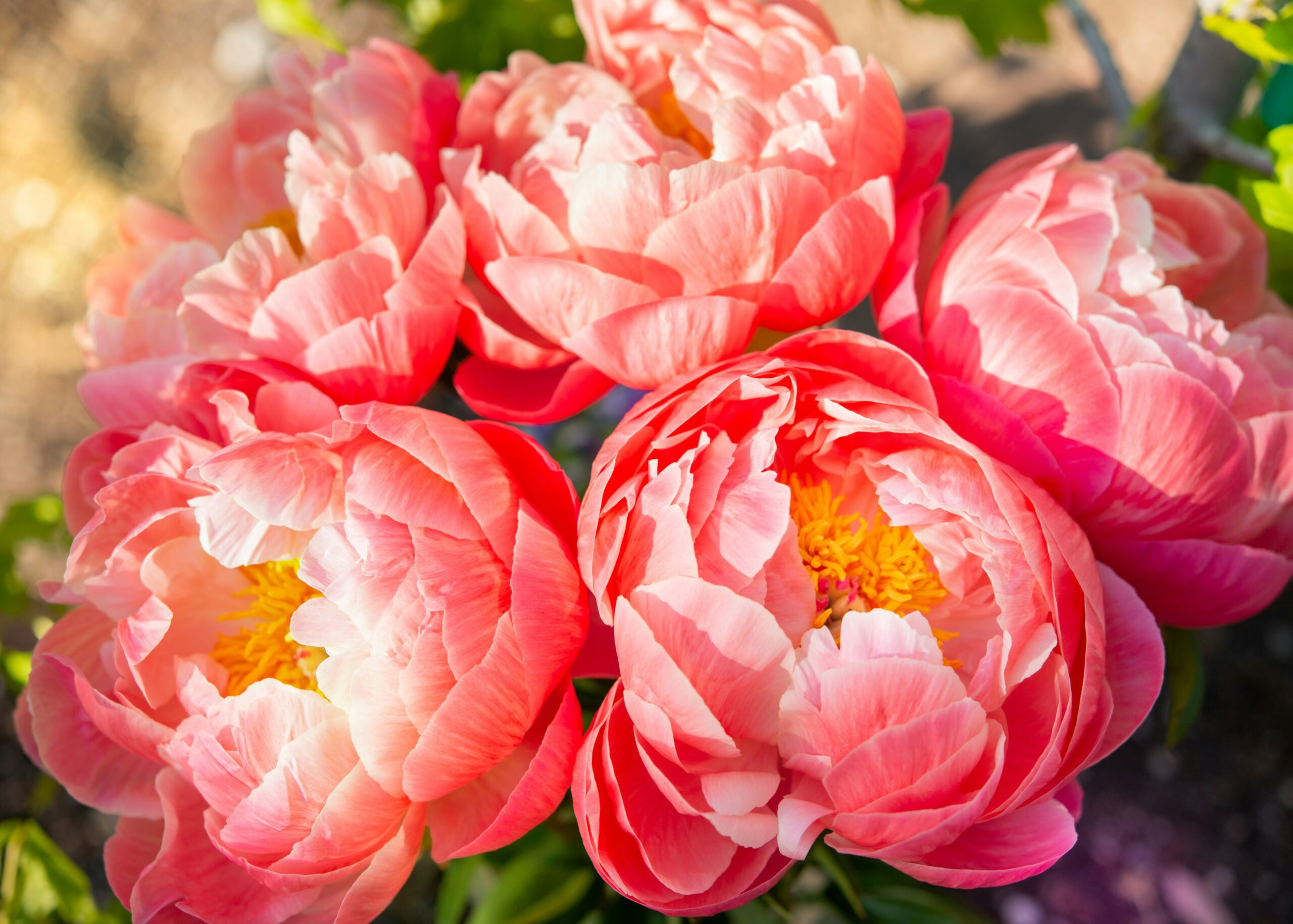
If you want to know how to grow peonies in the UK, you’ve chosen one of the most rewarding perennials a British garden can hold. Few flowering plants produce anything as extravagant as a peony in full bloom — those enormous, billowing flowers in shades of white, pink, coral, and deep crimson, often intensely fragrant, arriving in May and June when the garden is just hitting its stride. How to grow peonies in the UK is also, reassuringly, far simpler than the flowers’ opulence implies. Plant them correctly once, in the right spot, and a peony will reward you with flowers every June for decades. Some of the oldest peonies in British gardens have been flowering in the same spot for fifty years or more.
The reputation for difficulty mostly comes from one specific mistake that beginners make at planting — a mistake this guide will make sure you don’t repeat.
Understanding Peonies: The Two Main Types
Before choosing a variety, it’s worth knowing that garden peonies come in two distinct types that behave very differently.
Herbaceous peonies (Paeonia lactiflora and related species) are the classic garden peony. They die back completely to ground level every autumn, disappear over winter, and re-emerge in spring as the distinctive deep red shoots that push through the soil in March and April. They flower in May and June, then spend the rest of the growing season as a mound of attractive foliage before dying back again. They’re fully hardy throughout the UK, long-lived, and the most beginner-friendly choice.
Tree peonies (Paeonia suffruticosa and related types) are shrubby and woody — they don’t die back in winter but retain a permanent framework of stems like any other shrub. They flower slightly earlier than herbaceous types, produce even larger individual flowers, and can eventually reach 1.5–2m. They’re also more expensive, slower to establish, and slightly less tolerant of hard winters in exposed northern gardens. Beautiful, but better suited to gardeners with some experience.
For a first peony, a herbaceous variety is the right choice — reliable, available, and forgiving.
Choosing a Herbaceous Peony Variety
The range of herbaceous peony varieties available in the UK is enormous, and most are excellent. A few stand out for reliability and outstanding flower quality.
Sarah Bernhardt is the most widely grown peony in British gardens — large, fully double, apple-blossom pink flowers with a sweet fragrance. It’s reliable, long-lived, and available from virtually every garden centre in the UK. If you grow nothing else, this is the one.
Bowl of Beauty produces distinctive flowers with deep pink outer petals surrounding a central boss of cream-white petaloids. It’s less double than Sarah Bernhardt, more accessible to bees, and one of the most elegant peonies available.
Festiva Maxima is a classic white double peony with occasional red flecks on the inner petals. It’s fragrant, early to flower, and exceptionally long-lived — there are documented specimens that have been flowering for over a century.
Karl Rosenfield produces deep crimson-red fully double flowers on strong stems. It’s one of the best red peonies for cutting and performs very well in the UK climate.
Jan van Leeuwen is a white single-flowered variety with a central boss of yellow stamens. Single and semi-double forms like this are significantly more valuable for bees than the fully double types, whose complex petals prevent pollinators from accessing the centre.
How to Grow Peonies in the UK: The Most Important Rule
Here it is — the one thing that most beginner guides bury in the middle of a paragraph and that is responsible for the majority of failed peonies in British gardens:
Plant the crown with the eyes (buds) no more than 2–5cm below the soil surface.
That’s it. That’s the rule. Peonies planted too deeply — with eyes 10cm or more underground — will produce lush, healthy foliage every year and flower very little or not at all. This can continue for years, with the gardener assuming the plant is failing when actually it just needs to be dug up and replanted at the correct depth. The eyes need to be close to the surface to receive the cold period they require to initiate flowering.
When you buy a bare-root peony in autumn or a container-grown peony from a garden centre, check where the eyes are and plant accordingly. A depth of 2.5cm is a reliable target for most UK conditions — slightly deeper in very light, free-draining soils, but never more than 5cm in any soil type.
Choosing the Right Spot
Peonies want full sun or very light, partial shade. A position with at least four to five hours of direct sun daily produces the strongest plants and the most flowers. In too much shade, peonies survive but flower poorly and become more susceptible to botrytis (grey mould), their main fungal enemy.
Good drainage is essential. Peonies will not tolerate waterlogged soil, particularly over winter when the crown is dormant. Heavy clay that holds water is the most common cause of peony failure in the UK after incorrect planting depth. If your soil is heavy, either improve it with grit and compost before planting or grow in a raised bed where drainage is controlled.
Shelter from strong wind is worth providing where possible. The large, heavy flower heads of fully double varieties are susceptible to wind damage, particularly in the north and west of England, Wales, and Scotland where summer storms are more frequent. A position with a fence, wall, or hedge to the windward side makes a real difference to how the flowers last.
Avoid planting peonies near the roots of large trees or shrubs — root competition significantly reduces their vigour and flowering.
Planting Peonies
Autumn (September to November) is the ideal planting time for bare-root peonies, which are sold by specialist nurseries and mail-order suppliers from late summer onwards. The plant is dormant, root disturbance is minimal, and it has several months to establish before spring growth begins.
Container-grown peonies can be planted any time of year, though spring and autumn are preferable. Avoid planting in midsummer heat if possible — a newly planted peony in July needs consistent watering to establish without stress.
Dig a hole about 30cm deep and wide. Fork in a generous amount of well-rotted compost or manure — peonies are long-lived and this preparation pays dividends for decades. Set the crown at the correct depth, backfill, firm gently, and water in well.
Don’t expect flowers in the first year. Peonies typically take two to three years from planting to flower well — they spend their early energy establishing the root system that will support decades of flowering. A plant that produces one or two small flowers in year two and a full display in year three is performing exactly as it should.
📖 Also read: How to Build a Raised Bed Garden from Scratch — Everything a UK Beginner Needs to Know
Ongoing Care: What Peonies Need (and Don’t Need)
Once established, peonies are remarkably low-maintenance. They don’t need regular dividing like many perennials — in fact, disturbing the roots sets them back and should only be done if absolutely necessary (to move an established plant or to propagate). An undisturbed peony in the right conditions simply gets better every year.
Feeding in early spring, as the red shoots emerge, with a balanced granular fertiliser or a top-dressing of well-rotted compost gives established plants the nutrients for a strong flowering season. Avoid high-nitrogen feeds, which push leafy growth at the expense of flowers.
Watering is most important in the first one to two growing seasons while the plant establishes. Mature peonies are reasonably drought-tolerant but benefit from watering during dry spells in spring when flower buds are developing.
Staking is worth doing for fully double varieties, whose heavy blooms can cause stems to flop — particularly after rain has added weight to already large flowers. Purpose-made peony rings or circular metal supports placed around the plant in April, as growth emerges, give stems something to grow through and hold them upright by flowering time.
Deadheading spent flowers keeps the plant looking tidy and prevents energy going into seed production. Cut back to a healthy leaf below the spent flower head.
Autumn cut-back: once the foliage has died back in October or November, cut the old stems down to ground level and dispose of the material rather than composting it — this removes any overwintering botrytis spores.
Common Problems
Failure to flower is by far the most common peony problem in the UK, and as discussed above, planting too deeply is the most common cause. Other reasons include: too much shade, plants that are too young (under two years), recent root disturbance, or very late spring frosts that damage emerging buds.
Botrytis (peony wilt) is a fungal disease that causes stems and buds to collapse suddenly, with a grey mould visible at the base. It’s most common in cool, wet springs and in overcrowded or poorly ventilated positions. Cut out and dispose of affected stems immediately, improve air circulation around the plant, and avoid overhead watering. Established plants usually recover fully the following year.
Ants on peony buds are a perennial source of concern for beginners but are entirely harmless. Ants are attracted to the sugary nectar secreted by peony buds and do not damage the flowers. They’re visitors, not pests.
Leaf blotch causes reddish-brown spots on leaves in summer. It’s unsightly but rarely serious — tidy up affected foliage at the end of the season and it won’t recur the following year.
The RHS provides comprehensive guidance on growing peonies including variety recommendations and detailed advice on both herbaceous and tree types, and is worth reading if you want to explore beyond the herbaceous types covered here.
📖 Also read: Why Are My Plant Leaves Turning Yellow? (10 Real Causes and How to Fix Each One)
Peonies as Cut Flowers
Peonies are among the best cut flowers you can grow in a British garden, and cutting them at the right stage makes an enormous difference to vase life.
Cut stems when the buds are showing colour but not yet open — at the “marshmallow” stage, where the bud feels soft when gently squeezed but is still closed. At this stage, the flowers will open fully indoors over two to three days and last a week or more in water. Cut in the morning with a sharp, clean knife, strip the lower leaves, and put straight into deep, cool water.
If you want to store cut peonies for a few days before using — for an event or celebration — cut at the marshmallow stage and wrap loosely in newspaper and refrigerate. They’ll keep for up to a week and open normally when brought back to room temperature and placed in water.
📖 Also read: Stop Throwing Away Seeds — How to Save Them from Your Garden and Grow for Free Next Year
A Few Final Thoughts
Peonies reward the patience that their first few years require with decades of almost effortless performance. Once established in the right spot, at the right depth, they simply flower every June without asking for much in return. No other plant in the early summer British garden produces anything quite so extravagant from quite so little ongoing effort.
Plant one this autumn. Put it somewhere sunny, with good drainage, and remember the 2.5cm rule. In three years you’ll have a plant that will still be flowering long after you’ve forgotten planting it.
Leave a Reply