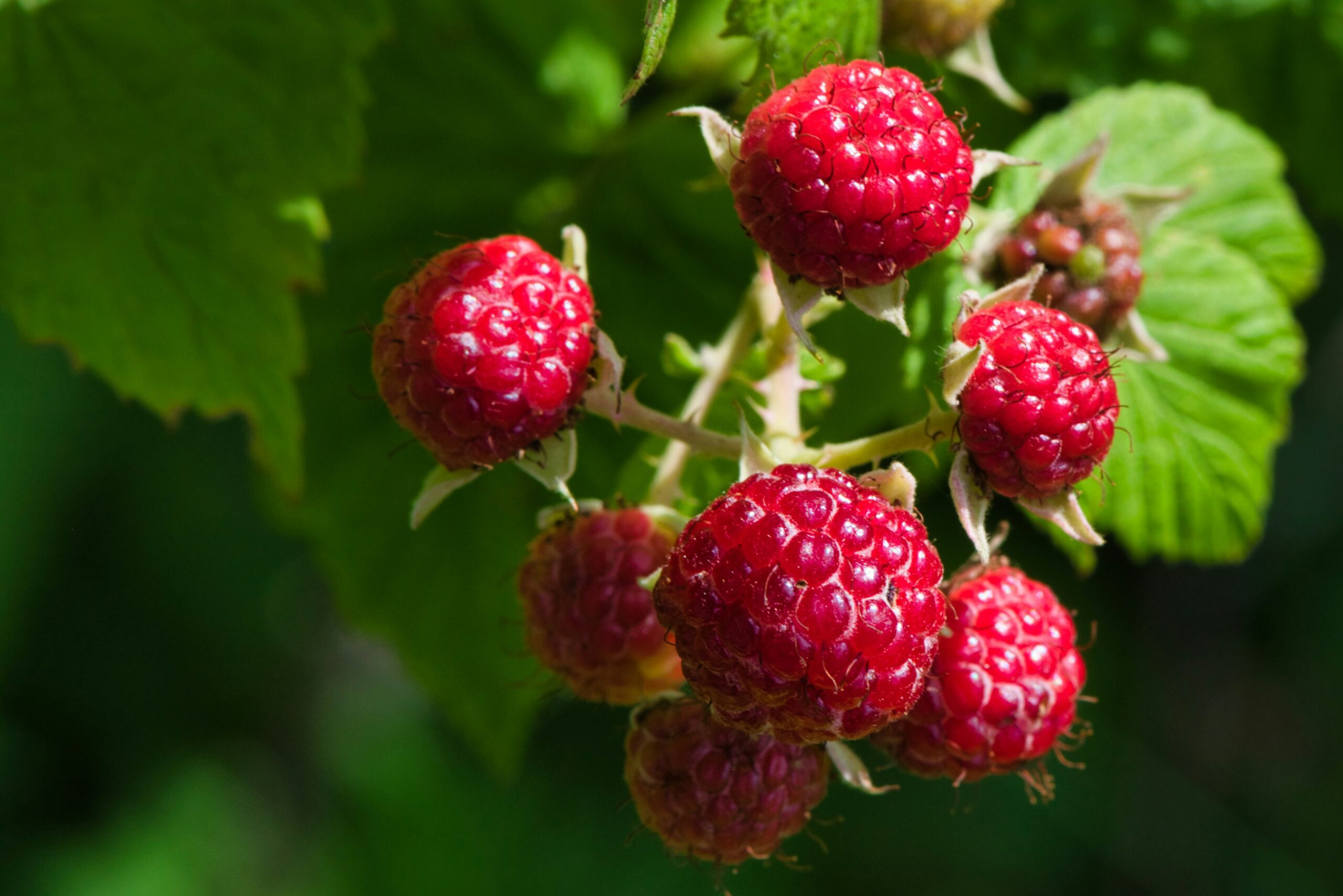
If you want to know how to grow raspberries in the UK, you’ve picked one of the most satisfying fruit crops a British garden can produce. Raspberries are perfectly suited to the UK climate — they actually prefer the cool, moist conditions that make growing more heat-loving fruit a struggle — and once established, a well-managed row will produce fruit every summer for fifteen to twenty years with relatively little effort. How to grow raspberries in the UK is also one of those questions where the gap between homegrown and supermarket is most dramatic: a raspberry picked ripe from your own canes and eaten warm in the afternoon sun tastes nothing like the chilled, slightly watery fruit in a plastic punnet.
The investment required is modest — a few bare-root canes in autumn, a simple post-and-wire support, and a sunny spot — and the returns compound year on year as the plants establish and spread.
Understanding Raspberries: Summer and Autumn Types
Before buying canes, it’s worth understanding that raspberries come in two fundamentally different types that fruit at different times and are pruned completely differently.
Summer-fruiting raspberries produce fruit on canes that grew the previous year (called floricanes). They crop in June and July, producing the main summer harvest. After fruiting, those canes die and are cut out, while new canes that grew during the current season are tied in to fruit the following year. They require a two-year wait from planting for the first full harvest, but produce abundantly once established.
Autumn-fruiting raspberries (also called primocanes) produce fruit on the current year’s canes, cropping from August through to October — sometimes right up to the first frosts. They’re simpler to manage because all canes are cut to ground level in February each year, with no need to distinguish between old and new growth. They’re the better choice for beginners who want a quicker and simpler experience.
Many UK gardeners grow both types to extend the raspberry season from June to October.
Choosing a Variety
Summer varieties:
Glen Ample is the most widely recommended summer raspberry for UK home gardens — large, firm, sweet berries on nearly spine-free canes, heavy crops, and good disease resistance. It’s the standard against which other summer types are often judged.
Malling Jewel is an older variety that remains popular for its exceptional flavour, early ripening, and compact habit. The berries are smaller than Glen Ample but the taste is outstanding.
Tulameen produces very large, long berries with excellent flavour. It’s a later-cropping summer variety, extending the summer harvest into August, and is particularly good for freezing.
Autumn varieties:
Autumn Bliss is the classic British autumn raspberry — reliable, heavy-cropping, self-supporting (canes don’t need tying), and widely available. It crops from August to October and has been the standard autumn variety in UK gardens for decades.
Joan J produces larger berries than Autumn Bliss on nearly spine-free canes, making picking more comfortable. Flavour is excellent and crops are heavy.
Polka is an early autumn variety that begins fruiting in July and continues to October, partially bridging the gap between summer and autumn types.
How to Grow Raspberries in the UK: Choosing the Right Spot
Raspberries need a sunny or lightly shaded position with at least four to five hours of direct sun daily. Full sun produces the sweetest fruit; partial shade is tolerated but reduces both yield and flavour.
Shelter from strong wind matters more for raspberries than for most fruit crops. The tall, slender canes are vulnerable in exposed positions, and strong winds in July and August — when canes are laden with fruit — can cause significant damage. A position sheltered by a fence, hedge, or wall to the prevailing wind direction is ideal.
Well-drained, slightly acidic soil is what raspberries prefer — a pH of around 6.0 to 6.5 is optimal. They perform poorly in waterlogged conditions and on thin, chalky, very alkaline soils. If your soil is heavy clay, improving it with plenty of compost and grit before planting, or growing in a raised bed, makes a significant difference to establishment and long-term productivity.
Avoid positions where potatoes, tomatoes, or other Solanaceae have recently been grown — these crops share some of the same soil-borne diseases as raspberries.
Planting Raspberries
Bare-root canes are the most cost-effective way to buy raspberries and are available from specialist fruit nurseries and garden centres from October through to March. They’re dormant when planted and establish quickly — far faster than container-grown plants.
Plant bare-root canes from October to February while the soil is workable. Dig a trench about 30cm deep and wide, work in generous quantities of well-rotted compost or manure, and plant canes at 40–50cm spacing (60cm for more vigorous varieties). Set each cane so the old soil mark on the stem is at ground level — don’t plant too deeply.
After planting bare-root summer-fruiting canes, cut them back to about 25cm above ground. This looks brutal but it’s correct — it prevents the plant trying to fruit in its first year and directs energy into root establishment. Autumn-fruiting canes are treated the same way.
Container-grown plants can go in any time of year but need consistent watering until established. They’re more expensive than bare-root canes but give you a slightly earlier start.
Building the Support Structure
Summer-fruiting raspberries need support — the canes reach 1.5–2m and lean heavily when laden with fruit. Autumn varieties like Autumn Bliss are more self-supporting but still benefit from basic structure.
The standard support is a post-and-wire system: drive sturdy posts (treated timber or metal fence posts) into the ground at 3–4m intervals along the row, and run horizontal wires between them at heights of approximately 60cm, 1m, and 1.5m. Tie canes to the wires with soft garden twine as they grow.
For a small garden or a short row, a simpler approach works: two posts at each end of the row with three horizontal runs of twine, keeping the canes upright without individual tying.
The support needs to be in place before or at planting time — trying to retrofit posts around established canes in July is awkward and risks root damage.
📖 Also read: How to Build a Raised Bed Garden from Scratch — Everything a UK Beginner Needs to Know
Ongoing Care: Feeding, Watering, and Mulching
Mulching is one of the most beneficial things you can do for raspberries and should be done every spring. Apply a 7–10cm layer of well-rotted manure, compost, or bark chippings along the row, keeping the mulch away from the base of the canes. This retains moisture, suppresses weeds (which compete strongly with the shallow raspberry roots), and feeds the soil as it breaks down.
Feeding with a balanced fertiliser in early spring as growth begins, followed by a high-potassium feed in late spring as fruit develops, supports both cane growth and fruit production. Toprose or any dedicated fruit fertiliser works well.
Watering is most critical during fruit development in June and July for summer varieties, and August and September for autumn types. Inconsistent moisture during fruiting causes small, dry berries and can trigger root problems in the longer term. Water deeply at the base of the canes rather than overhead.
Thinning new canes in summer — removing the weakest new shoots to leave five or six strong ones per metre of row — improves airflow, reduces disease pressure, and produces better fruit the following year on summer-fruiting types.
📖 Also read: Stop Buying Compost — You’re Literally Throwing Away the Best Stuff in Your Bin
Pruning: The Essential Difference Between Types
Getting pruning right is the single most important maintenance task for summer-fruiting raspberries, and confusing the two types is the most common mistake.
Summer-fruiting raspberries: after the harvest in July, cut all the canes that have just fruited (they’ll be brown and woody at the base, and the leaves will be yellowing) down to ground level. Leave all the green, current-season canes standing — these are the ones that will fruit next year. Tie these new canes to the support wires, spacing them about 10cm apart. In late winter, tip the canes back to about 15cm above the top wire.
Autumn-fruiting raspberries: in February, cut every single cane down to ground level. All of them. New canes will emerge in spring and fruit later the same year. This is much simpler than managing summer types and is one reason autumn raspberries are often recommended as the first choice for beginners.
Harvesting and Using Raspberries
Raspberries are ready to pick when they come away from the central plug — the white core — easily and without resistance. A raspberry that needs pulling isn’t quite ready; a ripe one slides off with the lightest touch.
Pick every two to three days at the height of the season — left on the cane too long, berries go soft and are quickly taken by birds. Harvest in the early morning when fruit is cool and firm.
Raspberries don’t keep well — even refrigerated, they’re best eaten within two days of picking. For longer storage, freeze them: spread on a baking tray until solid, then transfer to bags. Frozen raspberries retain their flavour exceptionally well and are excellent for smoothies, crumbles, sauces, and jam through the winter months.
Bird netting draped over the canes during the fruiting period is the most reliable protection. A fruit cage — permanent netting on a frame — is the gold standard if you’re growing a significant quantity.
Common Problems
Raspberry beetle is the most common pest in UK raspberry crops. The small white grubs are found inside fruits at harvest time — unpleasant to find but harmless. Adult beetles lay eggs on flowers in June and July. Cultivating soil around the base of canes in winter exposes overwintering pupae to birds and frost.
Cane blight and spur blight are fungal diseases causing cane dieback and dark spots on stems. Remove and dispose of affected canes promptly, improve airflow by thinning, and avoid overhead watering.
Raspberry mosaic virus causes mottled, distorted leaves and reduces yield significantly. It’s spread by aphids and has no cure — affected plants should be removed and replaced with certified virus-free stock from a reputable UK supplier.
Phytophthora root rot affects plants in waterlogged conditions — canes wilt and die suddenly. Improve drainage, avoid overwatering, and consider raised bed growing if your soil holds water.
The RHS has a comprehensive guide to growing raspberries covering pruning of both types in detail, along with a full list of pests and diseases with recommended treatments.
📖 Also read: Natural Slug Control That Actually Works — No Pellets, No Chemicals, No Nonsense
A Few Final Thoughts
Raspberries are one of the best investments in a British kitchen garden. The initial work — preparing the bed, building supports, planting canes — is front-loaded, but once done it pays dividends for two decades. A well-managed row of six to eight summer canes and six to eight autumn canes gives a family fresh raspberries from June to October, with enough surplus to fill the freezer for the rest of the year.
There’s also something particularly satisfying about a crop this well suited to Britain. While gardeners in hotter climates struggle to grow raspberries at all, ours thrive in exactly the conditions we’re used to complaining about. The cool, damp British summer is precisely what a raspberry wants.
Leave a Reply