If there’s a scent that defines the British summer garden, it belongs to sweet peas. Learning how to grow sweet peas in the UK is one of the most rewarding things a beginner can do — they’re fast, generous, and produce a near-constant supply of cut flowers from June right through to September if you look after them correctly. How to grow sweet peas in the UK is also, reassuringly, far simpler than their cottage garden reputation might suggest.
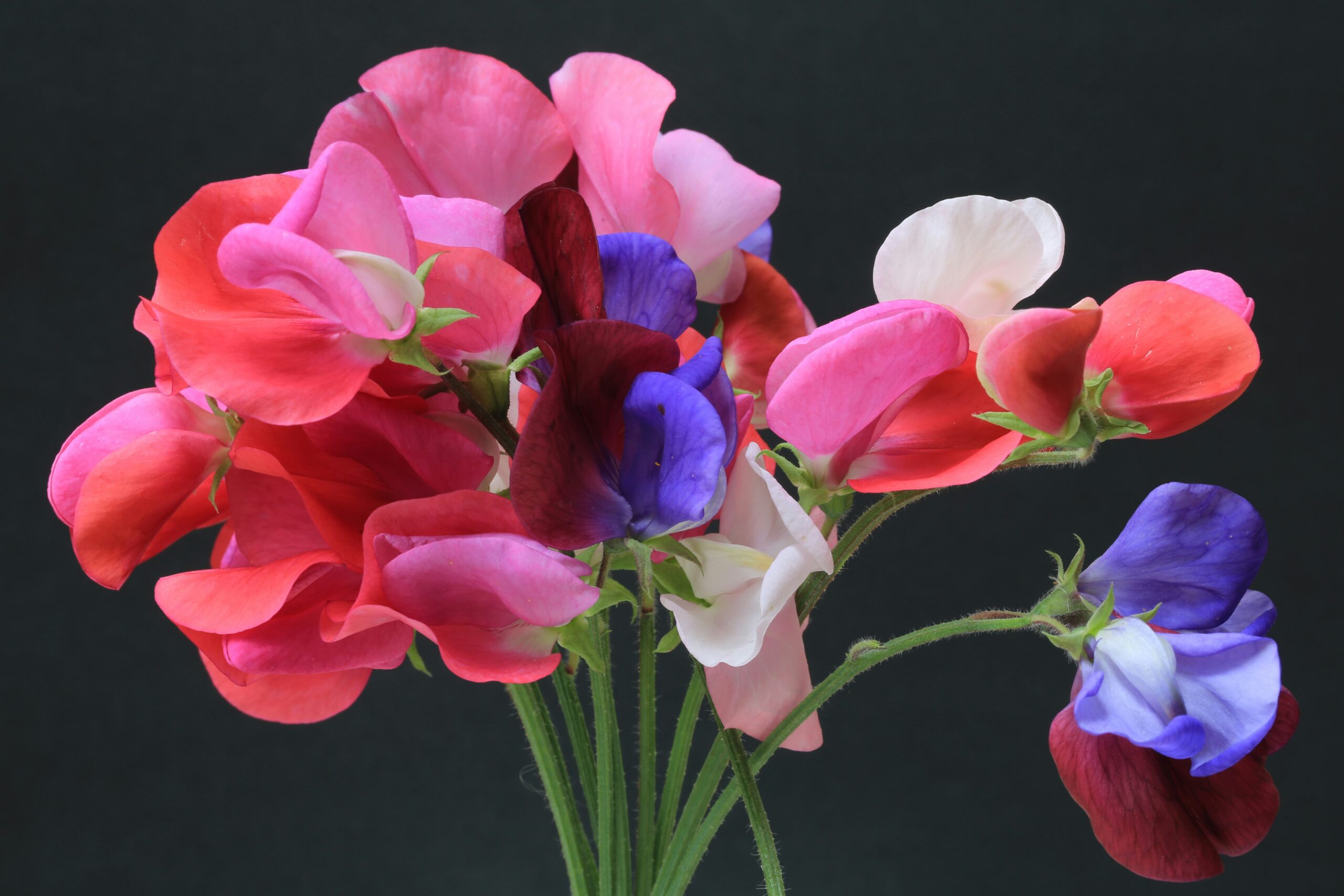
The flowers range from white through every shade of pink, red, purple, and burgundy. Some are bicoloured. Almost all of the old-fashioned and heritage varieties are intensely fragrant — the kind of scent that stops you in your tracks — though a handful of modern varieties bred for larger flowers have traded fragrance for showiness, so it’s worth reading labels before you buy.
This guide covers everything from sowing and supporting to picking and troubleshooting, for anyone starting from scratch.
Choosing Your Sweet Peas
There are two broad categories worth knowing about before you buy seeds or plug plants.
Spencer varieties are the classic tall, ruffled sweet peas — long stems, large flowers, exceptional fragrance. These are the ones you want for cutting and for growing up a proper wigwam or trellis. Old Spice, Matucana, and Painted Lady are heritage varieties with superb scent. Anything described as an “Old Fashioned” or “Heritage” mix will give you fragrance as a priority.
Dwarf varieties such as Cupid and Little Sweetheart are bred for containers and hanging baskets. They don’t need staking, reach only 30–45cm, and work well on a balcony or patio. The flowers are slightly smaller and the scent less powerful than the tall types, but they’re extremely convenient.
For most UK beginners, a tall Spencer type is the best starting point — you get the full experience, including that legendary scent — as long as you have somewhere to grow them upright, even if it’s just a few canes and some string against a fence.
How to Grow Sweet Peas in the UK: Sowing from Seed
Sweet peas can be sown at two points in the UK calendar, and experienced growers tend to be loyal to one or the other.
Autumn sowing (October–November) produces the strongest plants. Sow into deep pots or root trainers — sweet peas develop long roots early, so depth matters more than width — and overwinter the seedlings in a cold greenhouse or cold frame. They’ll sit quietly through the worst of winter, develop a robust root system, and be ready to plant out in March or April with a significant head start over spring-sown plants. They typically flower two to three weeks earlier as a result.
Spring sowing (February–April) is more forgiving for beginners and still produces excellent results. Sow indoors on a bright windowsill or in a heated greenhouse from late February, or directly outside from March once the worst frosts have passed.
Wherever and whenever you sow, a few preparation steps make a real difference. Nick or soak the seeds before sowing — sweet pea seeds have a hard coat, and soaking them overnight in water, or lightly scratching the surface with sandpaper, encourages faster and more even germination. It’s a two-minute job that noticeably improves your germination rate.
Sow two seeds per cell or pot at a depth of about 2cm. If both germinate, remove the weaker seedling. Keep compost moist but not waterlogged, in a temperature of around 15°C. Germination typically takes 7–14 days.
When seedlings reach about 10cm tall, pinch out the growing tip just above the second or third pair of leaves. This encourages bushy, multi-stemmed plants rather than a single weak shoot — and more stems means more flowers.
Planting Out and Supporting Your Sweet Peas
Sweet peas are hardy enough to go outside once the risk of hard frosts has passed — typically late March or April in southern England, late April to early May in Scotland and the north. Harden them off first by leaving them outside during the day and bringing them in at night for a week or two.
They need a sunny or lightly shaded spot with reasonably fertile, well-drained soil. Sweet peas do particularly well against south or west-facing fences and walls, where they get both sun and shelter.
Support is essential from day one. Sweet peas climb using tendrils that grab onto anything narrow — netting, string, twiggy pea sticks, or canes. A wigwam of 1.8m bamboo canes tied at the top is the classic kitchen garden structure and works very well. For a fence or wall, a panel of chicken wire or garden netting stretched between posts gives the tendrils plenty to grip. Plant one sweet pea at the base of each cane or every 20cm along a support, and they’ll find their way upward within days.
📖 Also read: How to Create a Wildlife-Friendly Garden — The UK Beginner’s Guide to Gardening with Nature
Feeding and Watering
Sweet peas are thirsty plants, particularly once they’re in full growth and flowering. In dry spells — and British summers do occasionally produce them — water deeply every two to three days rather than a light daily splash. Deep watering encourages roots to go down; surface watering keeps roots shallow and makes plants less drought-resilient.
Before planting, work in plenty of well-rotted compost or manure. Sweet peas are hungry, and a rich starting medium reduces the amount of supplementary feeding needed later.
Once plants are in flower, feed with a high-potassium liquid fertiliser — a tomato feed works perfectly — every fortnight. This supports continuous flowering rather than a single flush. Avoid high-nitrogen feeds at this stage, which push leafy growth at the expense of flowers.
Mulching around the base of the plants in May helps retain moisture and keeps roots cool — sweet peas dislike hot, dry roots, which can cause them to stop flowering prematurely.
How to Grow Sweet Peas in the UK: The Importance of Picking
This is the part most beginners don’t know, and it makes an enormous difference. Sweet peas must be picked regularly — every two to three days at the height of the season — or they will stop flowering.
The plant’s biological goal is to set seed. Once a flower is allowed to develop into a seedpod, the plant interprets this as job done and begins to wind down flowering. By removing every flower before it can set seed — whether you put it in a vase, give it away, or just compost it — you’re constantly telling the plant that it hasn’t achieved its goal yet, and it keeps producing more flowers in response.
This is why sweet peas are one of the great cut flower plants for the British garden. Cutting them isn’t depleting the plant; it’s actively encouraging it. A well-picked sweet pea in a good summer can produce flowers for twelve to fourteen weeks continuously.
Cut stems long, early in the morning when the flowers are fresh. Even a small jam jar of sweet peas on a kitchen table transforms a room — the scent carries surprisingly far indoors.
📖 Also read: Stop Throwing Away Seeds — How to Save Them from Your Garden and Grow for Free Next Year
Common Problems
Failure to germinate is usually down to seed that’s too old or compost that’s either too wet or too cold. Sweet pea seeds do lose viability over time — always use fresh seed from the current season where possible, and check that germination temperature is at or above 10°C.
Powdery mildew is the most common disease, appearing as a white dusty coating on leaves and stems, usually in mid to late summer as conditions get drier. It rarely kills the plant but looks poor and can reduce flowering. Improve air circulation by not planting too densely, water at the base rather than overhead, and remove badly affected leaves.
Slugs attack seedlings and young plants eagerly, particularly in spring. Protect newly planted-out sweet peas with copper tape around pot rims, wool pellets, or nightly checks for the first few weeks while plants are still small and vulnerable.
No flowers despite healthy growth usually means either the growing tip was never pinched out (producing one stem rather than many), the plant isn’t getting enough sun, or it’s being fed too much nitrogen. Review all three before worrying further.
Aphids tend to cluster on growing tips in spring. A firm blast of water or simply pinching out the affected tip usually deals with them — sweet peas outgrow light aphid attacks quickly once established.
The RHS has a comprehensive guide to growing sweet peas, including variety recommendations and advice on exhibiting, for anyone who catches the bug and wants to go further.
📖 Also read: Natural Slug Control That Actually Works — No Pellets, No Chemicals, No Nonsense
Growing Sweet Peas in Containers
If you don’t have a border, sweet peas grow well in large pots as long as you choose the right variety and water consistently. Use a pot at least 30cm deep and wide — root depth matters more than surface area — and fill with a good quality peat-free compost enriched with a slow-release fertiliser.
Tall varieties in containers need a support structure inside the pot: a wigwam of canes works well, or a circular metal obelisk. Dwarf varieties need only short canes or a small piece of netting.
Container-grown sweet peas dry out faster than those in the ground and need watering daily in warm weather. They’ll also need liquid feeding more regularly — every week rather than every fortnight — as nutrients leach through the compost more quickly.
Saving Seed for Next Year
One of the most satisfying things about sweet peas is how easy they are to save seed from. Towards the end of the season, allow a few pods on your best-performing plants to ripen and turn brown on the vine. Once fully dry, pick the pods, shell the seeds, and store them in a paper envelope somewhere cool and dry over winter.
Labelling is essential if you’re growing more than one variety — all sweet pea seeds look identical.
Saved seed from hybrid varieties won’t come true, but open-pollinated and heritage varieties — Matucana, Painted Lady, and most of the Old Spice types — will produce plants identical to the parent. It’s a completely free way to fill the garden next year from this year’s plants.
A Few Final Thoughts
Sweet peas reward beginners generously and consistently. They’re fast enough to give you flowers in their first season, cheap enough to grow from a 99p seed packet, and scented enough to justify the whole project on that basis alone. The learning curve is gentle, the main tasks — picking and watering — are pleasures rather than chores, and even a modest wigwam against a fence produces more cut flowers than most households can use.
In the British gardening year, few things beat pulling on your wellies on a damp June morning and coming back inside with a fistful of sweet peas. That’s the whole point.
Leave a Reply