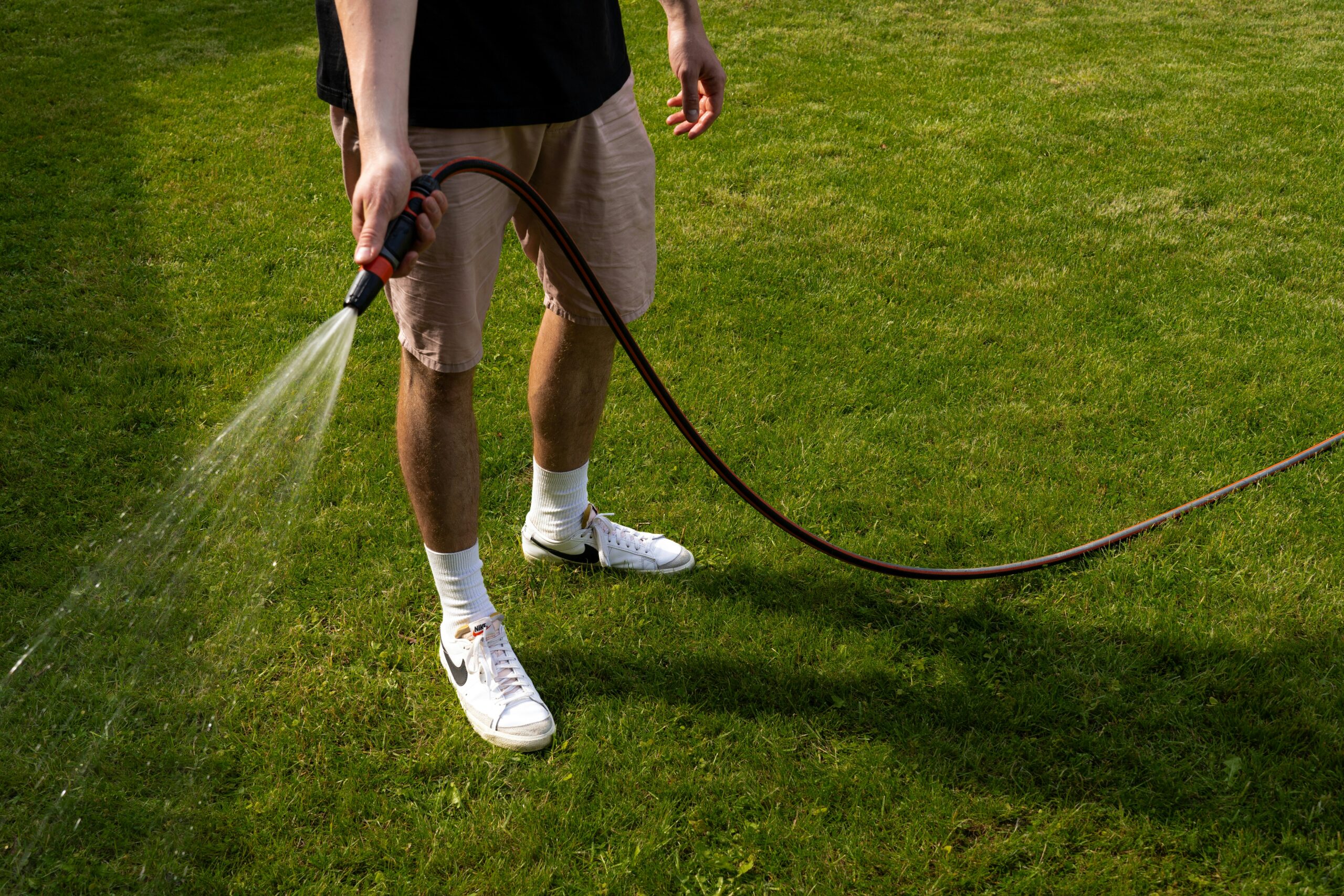
A good lawn doesn’t require the obsessive attention that some gardening programmes suggest. The complete lawn care guide for UK beginners comes down to understanding a handful of seasonal tasks, doing them at roughly the right time, and resisting the urge to cut grass too short — which is by far the most common mistake British gardeners make. Following this complete lawn care guide for UK beginners through the year will produce a noticeably better lawn within one growing season and a genuinely good one within two.
The UK climate is, in many ways, ideal for grass. Cool, moist conditions suit most lawn grass species well, and the same weather that makes growing heat-loving vegetables a challenge makes growing a lush green lawn almost effortless by comparison. The problems most UK gardeners face with their lawns come from working against that natural advantage — cutting too short, over-feeding, over-watering, or neglecting the few key seasonal tasks that keep grass healthy.
Understanding UK Lawn Grass
Before doing anything to a lawn, it helps to know what type of grass you’re working with.
Most UK lawns are a mixture of fine-leaved grasses — fescues and bents — which produce the finest, most ornamental turf, and coarser, broader-leaved grasses — rye grass and meadow grass — which are more hard-wearing and better suited to family gardens and areas of heavy use.
Fine lawns composed mainly of fescues and bents look beautiful but are less tolerant of wear, drought, and neglect. They benefit from the most attentive management described in this guide.
Utility lawns with a significant proportion of rye grass are more forgiving — they recover better from wear, drought, and the occasional missed mowing — and are the more practical choice for most British households with children, dogs, or both.
Knowing which you have informs some decisions, particularly around mowing height and feeding. If you’re unsure, a utility approach — moderate mowing height, seasonal feeding, prompt attention to problems — works well for both types.
Mowing: The Most Important Thing You Do to Your Lawn
Mowing is the single biggest determinant of lawn health and appearance, and most UK gardeners do it wrong in the same specific way: cutting too short.
The instinct to cut grass as short as possible — to get more time between mowings — produces the opposite of a good lawn. Grass cut very short is stressed, shallow-rooted, prone to drought damage in summer, dominated by weeds and moss, and slow to recover from wear. It’s the scalped, yellow-brown lawns of August that are the result of cutting on the lowest setting in June.
The right mowing height for most UK lawns is 2.5–4cm. Fine ornamental lawns can go to 1.5–2cm; utility lawns and areas under shade or stress should be kept at 4cm or higher. During drought or heat stress, raise the cutting height further — long grass shades the soil and retains moisture better than short grass.
Mowing frequency follows the grass’s growth rate rather than the calendar. In spring and early summer, growth is fastest — weekly mowing is typical. In midsummer heat or drought, growth slows and fortnightly mowing may be enough. In autumn, growth slows again as temperatures drop. In winter, mowing stops (or is reduced to an occasional light pass in mild periods in the south).
The one-third rule: never remove more than one third of the grass blade length in a single cut. If the lawn has grown long during a wet spell or holiday period, reduce the height gradually over two or three cuts rather than scalping it in one pass.
Leave clippings on the lawn during dry spells — they decompose quickly and return moisture and nutrients to the soil. Remove clippings in wet periods when they can clump and cause disease.
The Seasonal Lawn Care Calendar
Spring (March–May)
Spring is the most active period for lawn care. As soil temperatures rise above 5°C — typically from mid-March in southern England, later further north — grass begins active growth and the season’s first key tasks begin.
First mow: take the first cut of the year on a dry day when the grass is dry. Set the mower at a higher height than you’ll use through summer — about 4cm — for the first couple of cuts to avoid stressing new growth.
Feeding: apply a spring lawn fertiliser in March or April when growth is underway. Spring fertilisers are high in nitrogen to encourage green, leafy growth. Don’t feed too early — nitrogen applied to cold, wet soil washes out before the grass can use it.
Scarifying: raking out the thatch layer — dead grass and debris — improves air and water penetration. A spring scarify with a lawn rake (or a mechanical scarifier for large lawns) removes the winter’s accumulation and gives fresh growth room to develop.
Reseeding bare patches: April and May are ideal for overseeding bare or thin areas. Scratch the surface with a rake, scatter seed at the recommended rate, rake in lightly, and keep moist until germinated.
Summer (June–August)
Mowing: continue regular mowing at the appropriate height. Raise the cutting height in hot, dry spells.
Watering: established UK lawns don’t need watering in most summers — grass goes dormant in drought and recovers quickly when rain returns. Watering a lawn through a dry UK summer is expensive, environmentally questionable, and largely unnecessary. If you choose to water, do so deeply and infrequently in the evening rather than a light daily sprinkle.
Feeding: a summer fertiliser (lower nitrogen, higher potassium than spring feed) applied in June maintains colour and resilience through the drier months.
Weed control: hand-weeding individual rosette weeds (dandelions, plantains) with a daisy grubber is the most targeted approach. Selective lawn weedkillers applied in May and June when weeds are growing actively are effective for heavier infestations.
Autumn (September–November)
Autumn is the second most important lawn care season — arguably more important than spring for the long-term health of UK lawns.
Scarifying: a more thorough autumn scarify removes the summer’s thatch build-up. This can leave the lawn looking rough temporarily, but grass recovers strongly through October and November.
Aerating: driving a garden fork to a depth of 10–15cm every 10cm across the lawn — or using a hollow-tine aerator — alleviates compaction, improves drainage, and allows air to reach grass roots. This is most beneficial on heavy clay soils or lawns that receive heavy foot traffic. Do this in September or October.
Top-dressing: after aerating, work a mixture of sharp sand and topsoil or loam into the aeration holes with a stiff brush. This permanently improves drainage in the treated areas.
Overseeding: September is the best month for overseeding thin or bare areas — the soil is still warm from summer, rainfall increases, and there’s less weed seed germinating to compete with the new grass.
Autumn feeding: apply an autumn lawn fertiliser (low or zero nitrogen, high potassium and phosphorus) in September or October. This hardens the grass for winter rather than encouraging soft growth that frost would damage.
Leaf clearing: remove fallen leaves promptly — a thick leaf layer on a lawn for more than a week kills the grass beneath by blocking light and encouraging fungal disease.
Winter (December–February)
Winter lawn care in the UK is mainly about protection rather than action.
Avoid walking on frosted grass: footprints on frozen grass cause visible brown damage that persists for weeks.
Moss: grey or green moss visible in winter is a symptom of underlying problems — poor drainage, too much shade, soil compaction, or low pH — rather than a problem in itself. Treat the cause in spring and autumn rather than just killing the moss, which will return.
Planning: winter is the time to order seed, assess the lawn’s condition, and plan the spring renovation programme.
📖 Also read: The Complete UK Gardening Calendar — What to Do in Your Garden Every Month of the Year
Dealing with Moss
Moss in UK lawns is almost universal — the cool, moist, often acidic conditions of a British garden suit it perfectly. Killing moss with iron sulphate (the active ingredient in most lawn moss killers) is straightforward, but the moss returns within a season if the underlying cause isn’t addressed.
The most common causes of lawn moss in the UK are: poor drainage, too much shade, soil compaction, low soil pH, and cutting too short. Address these and moss pressure reduces significantly over time.
To raise soil pH — one of the most effective long-term moss management strategies — apply ground limestone at the recommended rate in autumn. Moss strongly prefers acidic conditions and struggles in a neutral or slightly alkaline lawn.
Improve drainage by aerating in autumn and top-dressing aeration holes with sharp sand over several years, which gradually improves the soil structure and drainage through the profile.
Increase light by pruning overhanging branches or, if shade from a structure is the issue, accepting that grass in deep permanent shade is unlikely to thrive and considering a shade-tolerant ground cover alternative.
Dealing with Weeds
The best weed control in a lawn is a dense, healthy grass sward — grass that is growing vigorously and covering the soil fully leaves little room for weeds to establish. Most lawn weed problems are a consequence of weak, thin grass rather than an aggressive weed invasion.
Daisies are actually a sign of a low-fertility, slightly acid lawn. They’re harmless and many gardeners choose to leave them — a lawn scattered with daisies in May is not without its own charm. If you want them gone, hand-weeding or selective weedkiller works well.
Dandelions and plantains have deep taproots that need to be fully removed to prevent regrowth. A long-handled daisy grubber or a knife inserted deep into the soil alongside the taproot is the most effective tool.
Clover is increasingly valued in UK lawns for the nitrogen it fixes and the flowers it provides for bees. A clover-inclusive “eco lawn” approach — tolerating clover alongside grass — is a perfectly valid choice that reduces feeding requirements and benefits pollinators.
Lawn weedkillers containing mecoprop-P or MCPA are selective — they kill broadleaved weeds without harming grass — and are effective when applied to actively growing weeds in May or June. They’re not necessary for a lawn with only occasional weed plants, but make sense for lawns with widespread weed coverage.
📖 Also read: 10 Plants That Slugs Actually Hate (And Why Gardeners in the UK Need to Know This)
Repairing a Neglected Lawn
If the lawn has been neglected — lumpy, full of weeds, dominated by moss, or thin and patchy — a full renovation in September is the most effective approach.
September renovation programme: mow as low as the mower will go (just this once), scarify thoroughly to remove thatch and moss, aerate the entire surface, apply iron sulphate to kill remaining moss, allow a week for the dead moss to blacken, rake it out, top-dress aeration holes, overseed the entire lawn at the recommended rate for overseeding, apply an autumn fertiliser, and keep traffic off the lawn for six weeks.
This sounds like a lot, but spread over two or three weekends in September it’s entirely manageable, and the improvement by the following spring is dramatic. A lawn that looked beyond saving in August can look genuinely good the following May.
Starting a new lawn from scratch — either from seed or turf — is the nuclear option for a truly hopeless lawn. Seed is significantly cheaper than turf and produces just as good a result given time; turf gives immediate results but requires careful laying and generous watering for the first six weeks to establish. Both are best laid in September or April.
The RHS has a comprehensive guide to lawn care through the year covering mowing, feeding, aeration, and renovation in detail, with specific advice for different lawn types and conditions.
📖 Also read: The Simple Soil Guide Every UK Gardener Needs
A Few Final Thoughts
A good UK lawn is not the product of obsessive daily attention — it’s the product of doing the right things at the right times of year and then largely leaving it alone in between. Mow at the right height. Feed in spring and autumn. Scarify and aerate in autumn. Overseed bare patches when they appear. Resist the temptation to cut short or water in summer.
The lawn that results from this approach — green, dense, relatively weed-free, and resilient through the summer — is well within reach of any beginner. British weather does most of the heavy lifting. Your job is mainly to not get in the way.
Leave a Reply