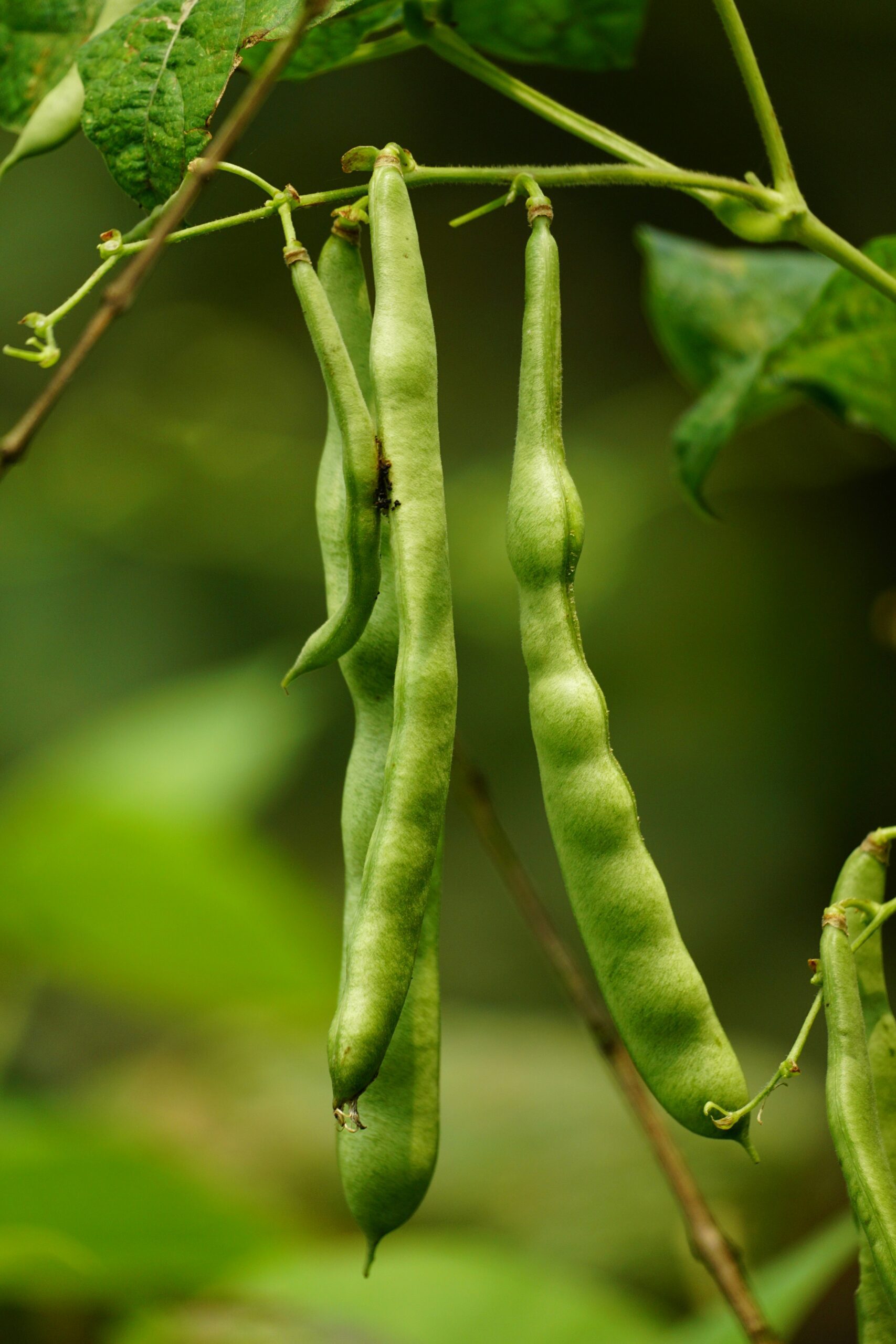
How to grow broad beans in the UK is one of the most satisfying things to discover as a kitchen gardener — because broad beans are one of the very few crops you can sow in autumn, leave in the ground all winter, and harvest in late spring before almost anything else is ready. How to grow broad beans in the UK is also one of the more straightforward growing projects available, with fewer pest pressures, no need for heat or a greenhouse, and a flavour when freshly podded and cooked that bears almost no resemblance to the tinned variety most people grew up eating.
If you’ve been put off broad beans by a childhood encounter with something grey and mealy from a tin, growing your own is the reset that changes that relationship entirely.
Why Broad Beans Are Perfect for UK Gardeners
Broad beans are one of the oldest cultivated vegetables in Britain and among the most naturally suited to our climate. Unlike most vegetables that want warmth and sun, broad beans actively prefer cool growing conditions — they germinate in cold soil, grow through winter, and produce their best crop before the summer heat arrives. In fact, they actively dislike hot weather, which makes them ideal for the British spring.
They’re also genuinely good for the soil. Broad beans, like all legumes, fix nitrogen from the air into the soil via bacteria in their root nodules. When you dig in the roots after harvest, you’re leaving behind a nitrogen-rich deposit that benefits whatever you grow in that spot next — a classic element of good crop rotation.
And they’re productive. A short double row of broad beans — 3 metres long — will give you enough pods for multiple meals, often more than a family can eat fresh at peak harvest. What you don’t eat fresh can be blanched and frozen with minimal effort.
Choosing a Variety
Broad bean varieties differ mainly in size, seed colour, flavour, and suitability for autumn vs spring sowing.
Aquadulce Claudia is the classic autumn-sowing variety and has been grown in British kitchen gardens for over a century. It’s extremely hardy, producing long pods on tall plants. The seeds are large and pale, with a mild flavour. This is the variety to choose if you want the earliest possible harvest — sown in October or November, it will be ready to pick in May or June.
The Sutton is a dwarf variety growing to only about 30cm tall, which makes it excellent for exposed or windy gardens and for growing in containers. It’s suitable for both autumn and spring sowing and is very popular on allotments for its compact habit.
Crimson Flowered is worth growing for its beauty alone — the flowers are a deep burgundy-red rather than the usual black and white, and the plants are ornamental enough to earn a place in a mixed border. The flavour of the beans is good too.
Stereo is a modern variety producing pods in clusters rather than singly, which means a higher yield from each plant. It’s also suitable for eating whole when young — pod and all — which gives you more flexibility in the kitchen.
Witkiem Manita is a reliable spring-sowing variety that establishes quickly and produces a good crop even in a shorter growing season. Useful if you missed the autumn sowing window.
When to Sow Broad Beans in the UK
This is where broad beans differ most dramatically from other vegetables — they have two distinct sowing windows, and both work well.
Autumn sowing (October–November): Sow directly outside in October or November, and the seeds will germinate, establish a small plant, and then more or less pause through the coldest winter months before growing away strongly in February and March. Autumn-sown plants are larger and stronger than spring-sown ones by the time flowering begins, and they crop two to four weeks earlier — typically late May to June. They’re also less troubled by blackfly (see below) because they complete their growth cycle before the main aphid season.
Spring sowing (February–April): If you missed the autumn window, sow from late February under cover (in pots in a cold greenhouse or on a windowsill) or directly outside from March once the soil is workable. Spring-sown broad beans are ready from July onwards and are an excellent follow-on crop after autumn-sown ones have finished.
Both windows work well; many gardeners do both to extend the harvest season across several months.
📖 Also read: How to Grow Leeks in the UK
How to Sow Broad Beans
Broad beans have large seeds and are one of the easiest crops to sow directly into the ground — no propagation equipment needed.
Direct sowing outdoors: Push seeds about 5cm deep and 20–23cm apart, in double rows with about 20cm between the rows and 60–90cm between each double row. The double-row system makes it easy to support the plants later with a simple string-and-cane framework.
Sowing in modules indoors: For an earlier start, or in areas with very cold winters where outdoor-sown seeds might rot before germinating, sow one seed per cell in deep modules or small pots filled with multipurpose compost. Keep on a cool windowsill or in a cold frame — broad bean seedlings don’t need warmth, just frost protection — and plant out when 8–10cm tall.
Pre-soaking: Soaking seeds overnight in water before sowing speeds germination slightly, though it’s not essential.
Mice are fond of broad bean seeds and will dig them up if they’re in the garden over winter. If you have a mouse problem, sowing in modules and transplanting is a good workaround.
Supporting Your Plants
Most broad bean varieties grow to at least 90cm–1.2 metres and will flop over without support — particularly in windy or wet conditions. The traditional solution is simple and effective: knock in a cane at each end and corner of your rows, and run lengths of garden twine between them at roughly 30cm and 60cm heights, creating a loose corral that the plants lean against as they grow. This takes ten minutes to set up and makes a significant difference to how the plants perform.
Dwarf varieties like The Sutton are much more self-supporting and can manage without this, which is part of their appeal for exposed gardens.
Caring for Broad Beans
Broad beans are low-maintenance compared to most vegetables, but a few practices make a real difference.
Watering: Once established, broad beans are reasonably drought-tolerant. The critical time for watering is when flowers are forming and pods are swelling — a dry period at this stage significantly reduces yield. Water at the base rather than overhead.
Feeding: Broad beans don’t need much feeding — their nitrogen-fixing roots provide much of what they need. A light dressing of general fertiliser in spring, when growth resumes after winter, is sufficient. Avoid high-nitrogen feeds, which encourage leafy growth at the expense of pods.
Pinching out: This is the most important cultural technique for broad beans. When the first pods have set and are beginning to swell, pinch out the very top 7–8cm of each plant — the growing tip with its cluster of young leaves. This does two things: it removes the tender shoot tips where blackfly colonies concentrate, and it directs the plant’s energy into swelling the pods rather than growing taller. It’s a quick job and makes a meaningful difference to both yield and pest control.
Pests and Problems
Blackfly (black bean aphid) is the main pest of broad beans. Colonies of small black aphids colonise the growing tips from May onwards, sometimes in extraordinary numbers that can completely coat the top of the plant. They weaken the plant by sucking sap and can spread viruses.
Pinching out the growing tips (as described above) removes the most attractive part of the plant for blackfly and is the first line of defence. If colonies have already established, a jet of water dislodges many of them; a spray of diluted washing-up liquid or organic insecticidal soap deals with larger infestations. Natural predators — ladybirds, hoverflies, parasitic wasps — will move in if you give them a chance.
Chocolate spot is a fungal disease that causes brown spots on leaves and stems, most common in wet, humid conditions or where plants are overcrowded. Good spacing (which is why the 20cm in-row spacing matters), adequate air circulation, and avoiding excessive nitrogen feeding all reduce the risk. A mild attack rarely kills plants; a severe one can.
Bean weevil creates characteristic U-shaped notches around the edges of leaves. It looks alarming but rarely causes serious damage to established plants — young seedlings are more vulnerable. Generally no treatment needed.
📖 Also read: How to Get Rid of Aphids Naturally
Harvesting Broad Beans
Broad beans are ready to harvest when the pods are well-filled and the beans inside are visible as distinct bumps. Don’t wait until the pods are bulging and tough — pick them while the pods are still bright green and the beans inside are young and tender. At this stage they’re sweet and delicate; left too long, they become starchy and mealy.
Pick from the bottom of the plant upwards — the lowest pods mature first. Use two hands: one to hold the stem, one to pull the pod downward with a firm tug.
Very young pods (up to about 7cm long) can be cooked and eaten whole, pod and all, like a mangetout. This is a revelation if you’ve never tried it — the whole pod is tender and delicious, and it extends the harvest window considerably.
Podding and cooking: Shell the beans and cook briefly in boiling salted water for 3–4 minutes. For a special treat, pop the cooked beans out of their grey outer skin to reveal a brilliant green inner bean — this double-podding is time-consuming but transforms both the colour and the texture.
Saving seed: Broad bean seeds are easy to save. Leave a few pods on the plant to dry fully and turn brown, then shell them out and store in a cool, dry place. They’ll be perfectly viable for next year’s sowing.
📖 Also read: How to Grow Runner Beans in the UK
After the Harvest: What to Do with the Plants
Once broad beans have finished cropping — usually by July — cut the plants off at ground level rather than pulling them up. The roots contain those nitrogen-rich nodules and are best left in the soil to break down. The stems and leaves can go on the compost heap.
The bed that housed your broad beans is now nitrogen-enriched and ready for a hungry follow-on crop — brassicas (cabbage, kale, broccoli) are the classic choice, as they benefit most from the nitrogen left behind.
A Vegetable Worth Rediscovering
Broad beans are one of those vegetables that genuinely reward growing your own. The flavour of freshly podded broad beans — cooked within an hour of picking, while still sweet and bright — is something that no shop-bought version can replicate. And the fact that you can sow them in autumn, walk past them all winter doing almost nothing, and come back in May to find a forest of tall, flowering plants already ahead of everything else in the kitchen garden is one of the quiet satisfactions of the growing year.
Leave a Reply