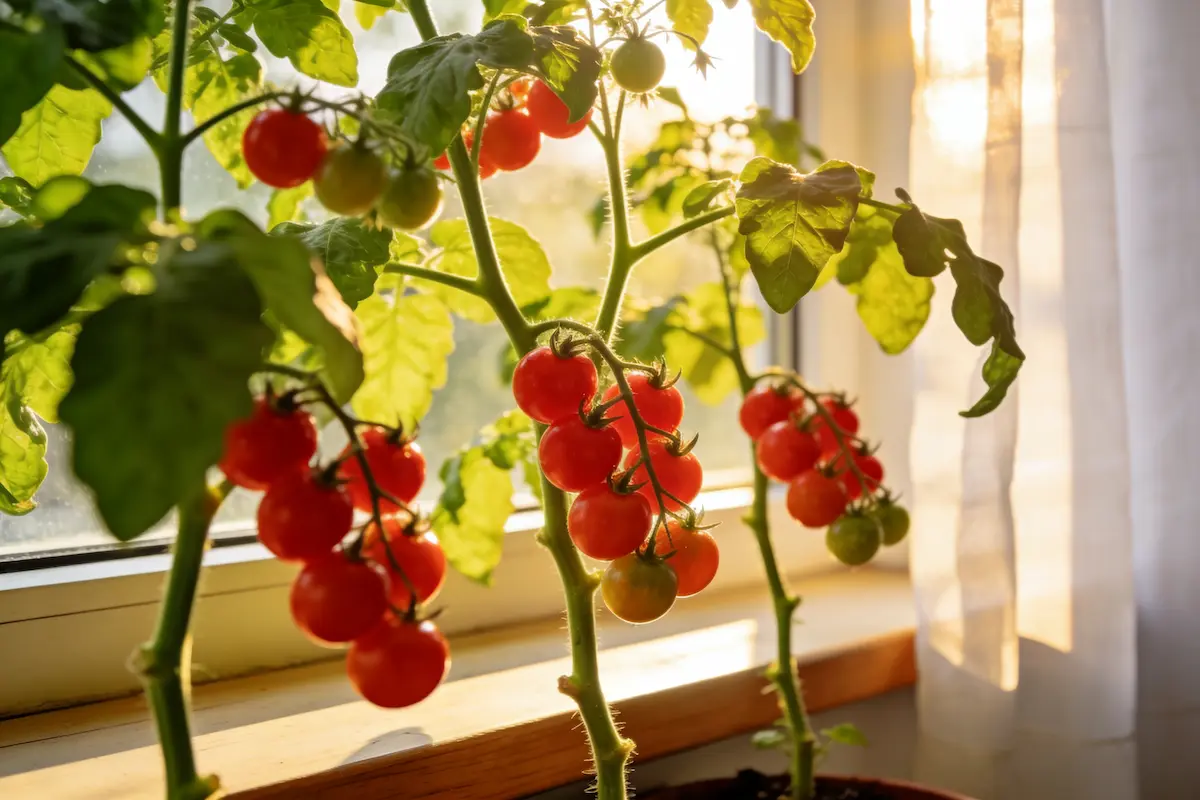
You don’t need a garden, an allotment, or even a greenhouse to grow cherry tomatoes in the UK. A sunny windowsill — south- or west-facing, ideally — is genuinely all the space you need to produce a steady, satisfying harvest of sweet little tomatoes from July right through to October. Learning to grow cherry tomatoes on a windowsill is one of the most rewarding things a flat-dweller, first-floor gardener, or anyone without outdoor space can do, and the results are so much better than anything from a supermarket that you’ll likely never go back.
Cherry tomatoes are, by some distance, the easiest type of tomato to grow indoors. Their smaller fruit size means they ripen faster, they’re more forgiving of fluctuating conditions than larger varieties, and many of the best-performing compact bush types have been specifically bred for container and indoor growing. Once you’ve set them up correctly and established a simple feeding routine, the main job becomes keeping up with the harvest.
📖 Also read: The Easiest Vegetables to Grow for UK Beginners — Start Here
The Best Cherry Tomato Varieties to Grow on a Windowsill
Variety choice is the single biggest factor in whether your windowsill tomatoes succeed or struggle. Tall cordon varieties — the ones that grow to six feet and need canes and regular side-shooting — are completely wrong for indoor growing. What you want are compact bush or dwarf varieties that stay naturally small, need minimal training, and are designed to perform in limited space and lower light levels.
‘Tumbling Tom Red’ and ‘Tumbling Tom Yellow’ are the classic windowsill and hanging basket varieties — trailing stems that cascade beautifully over the edge of a pot, with masses of small, sweet fruit. ‘Balconi Red’ and ‘Balconi Yellow’ are similarly compact, bred specifically for containers and indoor situations, and widely available from seed merchants including Thompson & Morgan. For flavour above everything else, ‘Sungold’ AGM — an RHS Award of Garden Merit winner — produces golden-orange fruits with an exceptional sweet-tangy taste that converts even the most indifferent tomato eater, though it grows a little taller and may need a short cane. The RHS recommends small-fruited varieties as the easiest, fastest and most prolific to grow, which makes them the obvious starting point for anyone new to indoor tomato growing.
Sowing Seeds for Your Windowsill Crop
If you want to grow from seed — which gives you access to a far wider range of varieties than buying young plants — sow indoors from late March to early April for a windowsill crop. Earlier than this and the light levels in most UK homes are still too low to sustain strong seedling growth without a dedicated grow light. Fill small pots or modular trays with peat-free seed compost, sow two seeds per module about 0.5cm deep, and place on your sunniest windowsill. Seeds need warmth to germinate — around 18°C is ideal — so a warm kitchen windowsill works well. You should see seedlings emerging within ten days to a fortnight.
Once seedlings have their first true leaves (the second pair to appear, which look like miniature tomato leaves rather than the rounded seed leaves), pot them on individually into 7.5cm pots of peat-free multipurpose compost. Keep them in the brightest spot you can find and turn the pot a quarter turn every couple of days — this prevents the seedlings leaning towards the light and growing lopsided. If you notice seedlings going pale yellow or very leggy, that’s a sign they need more light, not more water or feed. Buying a small clip-on LED grow light for the first few weeks makes an enormous difference in a typically gloomy British spring.
📖 Also read: How to Grow Potatoes in Bags — A Brilliant Harvest on Any Patio
Pots, Compost and Setup — Getting Your Windowsill Tomatoes Right
When your plants are about 15–20cm tall and well-rooted in their small pots, it’s time to move them into their final container. This is the most important practical decision you’ll make. Too small a pot is the most common mistake with windowsill tomatoes — a pot that’s too cramped restricts root development, causes the compost to dry out with alarming speed, and dramatically limits fruit production. For compact bush varieties, aim for a pot of at least 25–30cm in diameter. For slightly larger types like ‘Sungold’, go up to 35–40cm. The bigger the pot, the more forgiving the plant will be about watering, and the more fruit it will set.
Use a good-quality peat-free multipurpose or loam-based compost — loam-based (John Innes No. 3) holds water and nutrients slightly better than multipurpose, which matters when you’re in a small pot on a sunny windowsill where the compost can dry out fast. Make sure the pot has drainage holes and sits in a saucer, but empty the saucer after watering rather than letting the pot stand in water. Plant your tomato deeply — up to the first set of leaves — as the buried stem will develop additional roots and produce a sturdier, more productive plant.
📖 Also read: Container Gardening Ideas for Small UK Gardens — Grow a Lot in Very Little Space
How to Grow Cherry Tomatoes on a Windowsill — Watering and Feeding
Consistent watering is the single most important ongoing task with indoor tomatoes, and inconsistency is the main cause of problems. Allowing the compost to dry out completely and then giving a big drench — or the opposite, keeping it permanently waterlogged — causes the fruit to split, develop blossom end rot (a sunken black patch on the base of the tomato), or simply drop before ripening. The goal is compost that stays evenly moist: not bone dry, not sopping wet. During warm summer weather on a south-facing windowsill, that can mean watering every day. Stick a finger into the compost to the first knuckle — if it feels dry at that depth, water thoroughly until it runs out of the drainage holes.
Feeding starts once the first flowers appear and the fruit begins to set. Switch from general multipurpose to a high-potassium liquid tomato feed — Tomorite is the classic UK choice, widely available from Wilko and most garden centres — and apply every ten to fourteen days throughout the growing season. Potassium promotes flowering and fruit development, and the difference between fed and unfed container tomatoes is dramatic. Don’t be tempted to feed more frequently than the label recommends; over-feeding pushes leafy growth at the expense of fruit.
Pollination Indoors — The Step Most People Miss
Outdoors, bees and other insects do the work of pollinating tomato flowers without any help from you. Indoors on a windowsill, that help isn’t available, and poor pollination is the most common reason windowsill tomatoes flower abundantly but set very little fruit. The fix is simple and takes about thirty seconds: when the flowers are fully open — bright yellow and papery-looking — gently flick or tap each flower with your finger, or use a small, dry paintbrush to transfer pollen between flowers. Do this once or twice a week on a sunny morning when pollen is at its most viable. You can also mist the open flowers lightly with water, which helps pollen transfer.
Opening the window near the plants when the weather is warm enough also helps — any slight air movement encourages the same natural vibration that a bee’s buzzing creates inside a flower. This is why tomatoes in greenhouses are often tapped or shaken by growers, and why a gentle breeze makes a real difference to fruit set. It takes almost no effort once you’re in the habit, and the difference to your harvest is considerable.
📖 Also read: 10 Flowers That Attract Bees to Your UK Garden — and Why It Matters
Harvesting and Keeping the Crop Going
Cherry tomatoes on a windowsill typically start ripening from July onwards, depending on when you sowed and how much sun your window receives. Pick them as soon as they’re fully coloured and slightly yielding to a gentle squeeze — they should detach easily from the stem with a gentle twist. Don’t leave ripe fruits on the plant for too long; regular picking encourages the plant to set more fruit and keeps it productive for longer. A well-maintained windowsill plant can continue cropping well into October if kept warm and fed.
As the season draws to a close and outdoor temperatures drop, any remaining green tomatoes can be ripened indoors. Place them in a warm drawer or fruit bowl alongside a ripe banana — the ethylene gas the banana releases speeds ripening naturally. Avoid putting unripe tomatoes in the fridge, which stops ripening entirely and destroys the flavour. If you’ve managed to grow cherry tomatoes on a windowsill successfully this year, save a few seeds from your best fruits in September, dry them on a piece of kitchen paper, and store in an envelope somewhere cool and dry — they’ll be ready to sow again next spring, entirely for free.
📖 Also read: How to Deal with Blight on Tomatoes and Potatoes — The UK Grower’s Guide
Leave a Reply