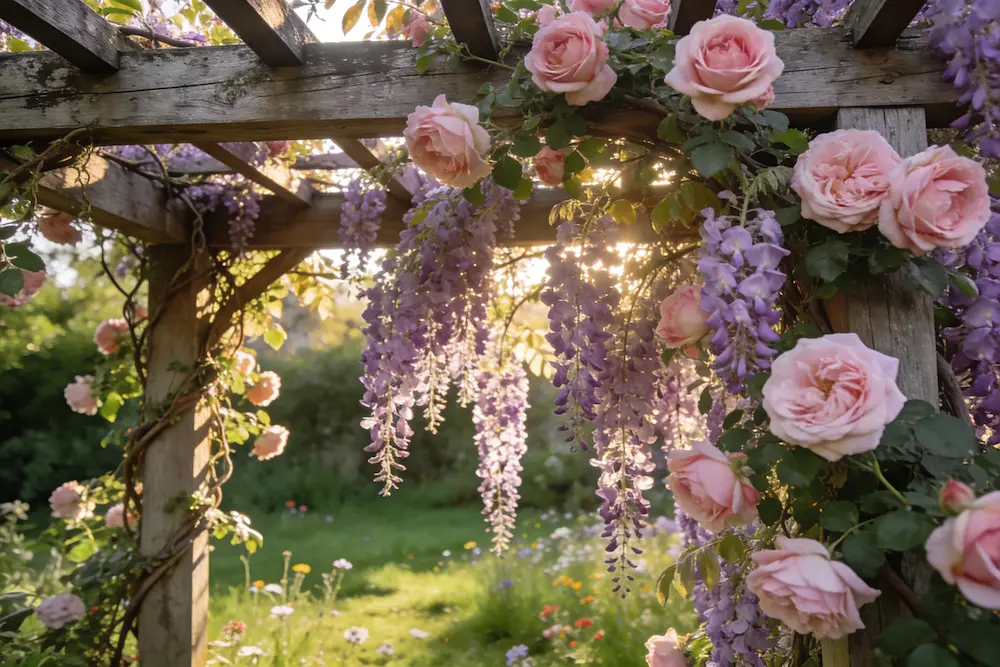
There are few garden features that make as dramatic and immediate an impact as a well-placed pergola. In a matter of months, what was once a flat, featureless plot acquires height, structure, shade, and — once the climbers get going — the kind of romantic, tumbling beauty that takes most gardens years to achieve. Pergolas in the UK have enjoyed something of a revival over the past decade, driven partly by the surge of interest in outdoor living and partly by how genuinely achievable they are compared to other structural garden features. Whether you want a grand arch-covered walkway down the centre of your kitchen garden, a shaded dining area on the patio, or simply something to give a long rectangular garden a focal point, a pergola can do the job — and do it beautifully.
The key to getting it right is making three good decisions upfront: what type of pergola to buy or build, where in the garden to put it, and what to grow over it. Get those three things right and the rest looks after itself. Get them wrong and you’ll end up with an expensive structure that feels out of proportion, catches too much or too little sun, or supports a plant that’s stripped bare of leaves every winter when you most want to look at it. This guide covers all three.
📖 Also read: How to Plan Your Garden Before You Spend a Single Penny
Types of Pergola — Which Style Suits Your UK Garden?
The word “pergola” covers a surprisingly wide range of structures, and understanding the differences between them helps enormously when you’re browsing catalogues or visiting garden centres. The traditional freestanding pergola is the most versatile — a series of upright posts with crossbeams across the top, forming an open-roofed tunnel or square canopy that stands independently in the garden. It can be positioned anywhere, scaled to almost any size, and planted around and over without any attachment to the house.
A lean-to pergola (sometimes called a veranda pergola or wall-mounted pergola) is fixed to the house or an outbuilding on one side, with freestanding posts on the other. These are particularly popular in the UK for creating a sheltered transition zone between house and garden — somewhere you can sit in light rain or strong sun with a degree of overhead cover. They tend to feel more integrated with the house and can add genuine value to a property. The limitation is that they depend on the wall orientation for sun exposure, which needs careful thought.
An arch or pergola walkway — a series of arches joined along a path — is the most theatrical option and suits longer, narrower gardens especially well. A rose-covered walkway leading from a gate to a door is one of the iconic images of the classic English garden, and while it takes three to four years to reach full glory, the effect once established is genuinely spectacular. In materials, timber remains the most popular choice for pergolas in the UK. The RHS recommends larch, Douglas fir or oak as the most durable timbers — pine can be used but tends to rot more quickly and needs more frequent treatment.
Where to Put a Pergola in Your UK Garden
Position is everything, and the two questions worth sitting with before you commit to a spot are: what is this pergola for, and where does the sun fall? If the primary purpose is a shaded outdoor dining area, you want afternoon shade — which means the pergola should be positioned so that it’s in sun during the morning and beginning to be shaded by its own structure and plants from early afternoon. In the UK, this typically means siting it to the west or south-west of an open area. A pergola that faces due south will be brilliantly sunny but potentially uncomfortably hot in summer for sitting under; one that faces north will be permanently cool and is better suited to plants than people.
If the purpose is more structural — a walkway, a focal point at the end of a path, or a frame for a view — then proportion and line matter more than sun exposure. The RHS guidance on dimensions is well worth following: uprights should be around 2.7 metres from ground level to allow climbers to trail down without impeding passage, and the width between posts should roughly match the height, to achieve a sense of balance. A pergola that’s too narrow feels claustrophobic; one that’s too wide loses its sense of enclosure. If you’re commissioning a bespoke build, these proportions are worth specifying explicitly.
Think too about the view from the house, especially in winter when the climbers have lost their leaves. A bare timber frame at the end of the garden can look handsome if it’s well-made and properly proportioned, or bleak and random if it isn’t. Evergreen climbers help enormously with this — which leads us neatly to what to plant.
📖 Also read: How to Layer Plants in a Border — The Simple Trick That Makes Any UK Garden Look Designed
The Best Climbing Plants for Pergolas in the UK
This is where pergolas become genuinely exciting, because the list of plants suited to growing over them in the UK is long and includes some of the most beautiful climbers in cultivation. The general principle is to choose vigorous plants — a pergola is a large structure that needs substantial coverage, and shy or slow climbers will look sparse and disappointing for years. Beyond vigour, you’re balancing flower season, scent, and whether you want the plant to be evergreen or deciduous.
Rambling roses are the single best choice for a pergola in most UK gardens. Their long, flexible stems are made for training over curved and angled structures, they produce an extraordinary flush of flower in June and July, and varieties like ‘New Dawn’ AGM, ‘Félicité Perpétue’ AGM and ‘Veilchenblau’ AGM are reliable performers across a wide range of UK conditions. ‘New Dawn’ is particularly worth seeking out — it’s repeat-flowering (unusual in a rambler), disease-resistant, and produces those pale blush-pink flowers that look impossibly romantic against timber uprights. A good approach with a larger pergola is to plant a rambling rose at each post and allow a less vigorous clematis to thread through it — the combination of two flowering seasons, different flower forms and the structural support that the rose provides for the clematis is enormously effective.
Wisteria is the other iconic pergola plant for UK gardens, and understandably so — a mature wisteria in full flower in May is one of the most breathtaking sights in gardening. Both Wisteria sinensis and Wisteria floribunda are well suited to pergola growing, with the latter producing the longest flower racemes of any commonly grown variety. Be aware that wisteria needs firm, heavy-duty timber to support it at maturity — it’s surprisingly heavy — and requires twice-yearly pruning to keep it flowering well and under control. For a pergola on a more modest scale, honeysuckle (Lonicera periclymenum ‘Graham Thomas’ AGM or ‘Serotina’ AGM) is a less demanding alternative that delivers generous summer flower and exceptional scent in the evenings.
📖 Also read: How to Grow Wisteria in the UK — The Beginner’s Guide to the Most Spectacular Climber
Pergolas UK — Training and Planting Your Climbers Properly
Getting climbers off to a good start on a pergola makes an enormous difference to how quickly and evenly they cover the structure. Plant at the base of each upright rather than in the middle of a span, and improve the soil generously before planting — a bucketful of garden compost or well-rotted manure forked in will help establishment significantly. Angle the plant towards the post using a short cane if needed, and attach vertical wires or wire mesh up the pillar so you have something to tie new shoots to as they grow.
One of the most useful training tips is to spiral shoots around the uprights rather than allowing them to go straight up. A shoot that goes straight up a post will concentrate all its flower production at the top of the structure — out of sight and out of reach. A shoot that’s spiralled around the post will flower all the way along its length, from ground level upwards, which is a far more beautiful and effective result. Once shoots reach the top, train them across the beams and tie in regularly as they extend. In the first year, be patient — climbers are establishing roots rather than racing upwards, and growth can seem slow. By year two, most vigorous climbers begin to make the kind of growth that starts to deliver real impact.
📖 Also read: How to Grow Clematis in the UK — The Beginner’s Guide to the Queen of Climbers
Maintaining a Pergola — What to Do Each Year
A well-built timber pergola needs relatively little maintenance beyond an annual inspection and occasional treatment. Check all joints and fixings each spring, tighten any that have worked loose over winter, and treat exposed timber with a suitable wood preservative every two to three years. Oak and larch weather gracefully without treatment but will last even longer with occasional care. Softwood pergolas need more regular attention — leave them untreated and rot will set in at ground level within a decade.
On the plant side, the main annual tasks are pruning rambling roses after flowering in late summer (removing the oldest flowered stems to make way for the new growth that will flower next year), cutting wisteria twice — once in August to shorten the current season’s side shoots, and again in January or February to reduce those same shoots further — and cutting back clematis according to their pruning group. If climbers start to look bare at the base of the uprights, spiral any new shoots around the post rather than training them straight upwards, which will stimulate flowering lower down the structure. A pergola in the UK that’s well planted, well maintained, and given a little patient training each year becomes one of the most rewarding garden features you can invest in.
📖 Also read: How to Grow Roses in the UK — The Beginner’s Guide to the Nation’s Favourite Flower
Leave a Reply