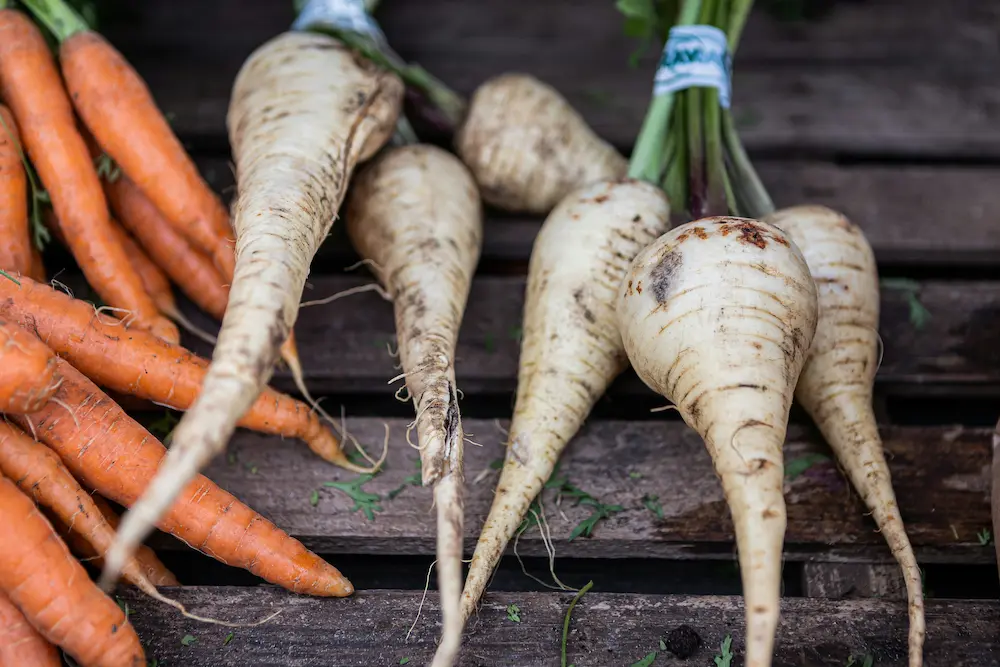
There are very few vegetables that make you feel quite as accomplished as a parsnip. They’re slow, they’re occasionally stubborn, and they demand a bit of planning — but pull a long, pale, sweet root out of the frozen ground in December, something that you sowed from seed back in April, and it’s genuinely one of the most satisfying moments in the kitchen garden calendar. If you want to grow parsnips in the UK, you’re in the right place — this guide covers everything from soil prep to that first frost-sweetened harvest.
Parsnips have been grown in British gardens and allotments for centuries, and they remain a staple of the winter veg plot for good reason. They’re hardy, they store themselves in the ground, they need almost no attention once established, and the flavour of a home-grown parsnip roasted in a hot oven bears absolutely no resemblance to anything you’ll find in a supermarket bag. That alone is reason enough.
📖 Also read: How to Grow Broad Beans in the UK — The First Vegetable of Spring
Why Parsnips Are Perfect for UK Gardens
The UK climate suits parsnips beautifully. They’re a cool-season crop that needs a long growing season — typically six to nine months from sowing to harvest — and they positively improve with cold weather. A hard frost converts the starches in the roots to sugars, which is why a parsnip harvested in January tastes noticeably sweeter than one pulled in October. It’s one of the few vegetables where autumn and winter weather actively makes the crop better rather than worse.
They’re also remarkably undemanding once they’re in the ground. Weed them when young, water in dry spells, and then largely leave them to get on with it. The foliage dies back in autumn, but the roots stay in the ground perfectly happily until you’re ready to use them — making parsnips one of the most storage-efficient crops you can grow, with zero cold storage required.
Soil Preparation — Getting This Right Changes Everything
Parsnips are more forgiving than their reputation suggests, but they do have strong opinions about soil. The ideal is deep, light, stone-free, and free-draining — the kind of conditions you’d find on a good allotment in the Vale of Evesham, where market gardeners have been growing parsnips and root vegetables commercially for generations. In that kind of soil, parsnips grow long, straight, forking-free roots without much encouragement.
In heavier clay soils or shallow, stony ground, the roots fork and branch as they hit obstacles, producing the gnarled, multi-legged specimens that are perfectly edible but frustrating to peel. The fix is to break up the soil deeply before sowing — at least 30cm (12in) down — removing as many stones as you can. On very heavy or shallow soil, choosing a shorter, more bulbous variety is a practical compromise: less root to force through difficult ground, and still plenty of flavour.
Crucially, do not add fresh manure or garden compost to the bed immediately before sowing. This is one of the most common mistakes. Freshly added organic matter causes the roots to fork as they seek out nutrients, producing exactly the strange shapes you’re trying to avoid. Instead, prepare a bed that was manured the previous autumn, or dig in organic matter several months before sowing and let it settle fully.
📖 Also read: Simple Soil Guide for UK Gardeners
When to Sow Parsnips in the UK
This is where many beginners go wrong. Parsnip seeds need warmth to germinate reliably — soil temperature needs to be around 12°C (54°F) — and sowing too early in cold, wet February or March results in seed that sits dormant, rots, or germinates so patchily that you end up re-sowing anyway. March sowings in a mild spring can work, but April is the sweet spot for most of the UK, with early May still perfectly viable. The plants will still produce an excellent winter harvest despite the later start.
Parsnips must be sown directly outdoors. Unlike many vegetables, they form a taproot immediately after germination and do not transplant well — so starting them in modules or trays is not a practical option. Sow into a shallow drill about 1cm (½in) deep, three seeds together at 15cm (6in) intervals, and thin to the strongest seedling once they’re established. Germination can take anywhere from two to four weeks, so patience is essential — don’t assume failure and re-sow on top of seeds that are simply taking their time.
One useful tip: sow a fast-germinating crop like radishes in the same row. The radishes emerge quickly, marking the row so you know where to weed, and they’re harvested long before the parsnips need the space.
📖 Also read: How to Grow Beetroot in the UK — Easier Than You Think and Better Than the Jar
Choosing the Right Parsnip Variety
The variety you choose matters more than many gardeners realise. The main differences are root length and shape, skin colour, canker resistance, and overall yield. For most UK kitchen gardens, a canker-resistant AGM variety is the best starting point — canker is the most common parsnip problem and resistant varieties sidestep it almost entirely.
‘Gladiator’ AGM is one of the most reliably productive varieties available, producing long, slender roots with smooth skin and good flavour. ‘Albion’ AGM is similar but with notably white skin and strong canker resistance. ‘Pearl’ AGM is excellent for longer-term winter storage in the ground. For heavy or shallow soils, look for shorter, more compact varieties rather than forcing long-rooted types into ground that won’t accommodate them. Seeds are widely available from Thompson & Morgan, Suttons, and most garden centres — always buy fresh each year, as parsnip seed has notoriously poor viability after its first season.
Growing Parsnips — Care Through the Season
Once your seedlings are through and thinned, parsnips are pleasingly low-maintenance. The main jobs are weeding and watering. Weed by hand rather than hoeing — a hoe blade caught on the top of a young root damages it and creates an entry point for canker. As the plants grow and the foliage fills out, natural leaf cover suppresses most weeds for you.
Water during any prolonged dry spells, particularly through summer. Irregular watering — long dry periods followed by heavy rain — causes the roots to split suddenly as they take up moisture too fast. Consistent moisture is the goal, not constant watering. A mulch of garden compost applied once the soil is warm in late spring helps enormously, locking in moisture and suppressing weeds at the same time.
Carrot fly is the main pest threat. The larvae tunnel into the roots and render them partially inedible. The most effective protection is a physical barrier — fine insect-proof mesh draped over the crop from sowing time keeps the low-flying adult flies away from the plants entirely. Avoid touching the feathery foliage when weeding, as the bruised leaves release a scent that attracts carrot fly.
📖 Also read: How to Grow Peas in the UK
How and When to Harvest Parsnips
Parsnips are ready to harvest from late autumn onwards, once the foliage has died back. In practice, most gardeners wait until after the first hard frost — which typically hits most of England between October and December — because the frost converts the root’s starches to sugars and genuinely transforms the flavour. A parsnip pulled in September is fine; a parsnip pulled in January, after two months of frost, is something else entirely.
Use a garden fork to carefully ease the roots out of the ground, working around the outside of the plant rather than straight down — parsnip roots are long and you want the whole thing intact. Mark the rows clearly with canes before the foliage disappears in autumn, otherwise finding them in the dark of a December afternoon becomes an archaeological exercise. The roots can stay in the ground right through winter, harvested as needed, as long as the ground doesn’t freeze solid. If a prolonged hard freeze is forecast, it’s worth lifting a few extra roots and storing them in a cool place as a backup.
For full guidance on varieties, sowing technique, and pest management, the RHS guide to growing parsnips is an excellent and comprehensive resource.
Common Parsnip Problems and How to Avoid Them
Poor germination is the most common complaint, and it almost always comes down to one of three things: seed that’s too old, soil that’s too cold, or sowing too early in a wet spring. Fresh seed sown into warm soil in April solves all three at once. If germination is still patchy, don’t panic — parsnip seedlings can take up to four weeks to appear and stragglers often catch up with the early ones.
Forked roots are nearly always a soil issue — stones, freshly added organic matter, or compacted subsoil deflecting the taproot as it grows. Thorough soil preparation before sowing is the only real fix. Canker — the orange-brown rot that appears at the crown of the root — is most common on damaged roots, so hand-weed carefully and choose a resistant variety. Root splitting is caused by erratic watering and is avoided by keeping moisture levels consistent through summer.
📖 Also read: Easiest Vegetables to Grow in the UK for Beginners
The Reward Is Always Worth the Wait
Parsnips take longer than almost anything else in the kitchen garden. Sow in April, harvest in December — that’s the better part of a year from packet to plate. But the payoff is a vegetable that barely resembles its supermarket counterpart: sweeter, earthier, more complex, and grown in your own soil through every season. Roasted with butter and thyme, puréed with cream, or simply thrown into a tray alongside a Sunday joint, a home-grown parsnip is one of the genuinely great pleasures of winter cooking in the UK.
If you only grow one new vegetable in your kitchen garden this year, make it a parsnip. Start the soil preparation now, order fresh seed, and mark the calendar for harvest day. You’ll understand why British gardeners have been growing them for centuries.
Leave a Reply