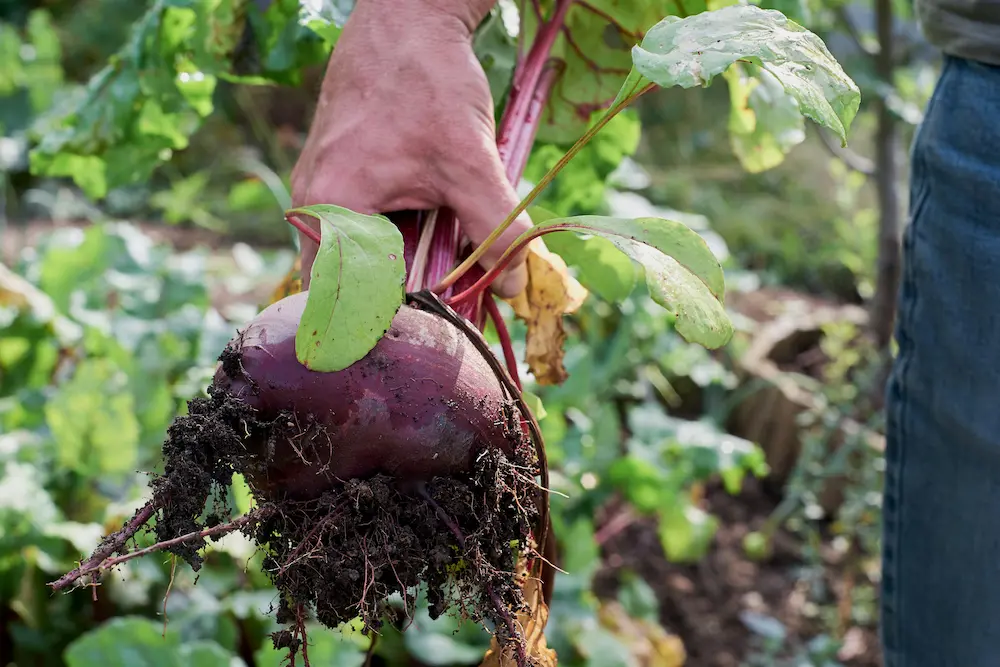
If you’ve never grown beetroot before, prepare to feel slightly embarrassed that you waited this long. Learning to grow beetroot in the UK is one of those gateway experiences that turns a casual gardener into a proper one — because the gap between a freshly pulled, roasted beetroot and the slippery, vinegary discs from a jar is so enormous that it’s almost offensive. This is a crop that asks very little, grows surprisingly fast, and rewards you with something genuinely delicious from late spring right through to autumn. It even tastes good raw.
Beetroot is also one of those crops that suits almost every gardening situation in the UK. You don’t need an allotment or a large kitchen garden — a deep container on a sunny patio works perfectly well, and several popular varieties have been bred specifically for smaller spaces. Whether you’re growing in a border in Bristol or pots on a balcony in Manchester, beetroot is well within reach.
📖 Also read: The Easiest Vegetables to Grow for UK Beginners
The Best Beetroot Varieties to Grow in the UK
The classic deep-red globe is what most people picture, but the variety list for beetroot has expanded considerably in recent years and it’s worth exploring. For reliable, beginner-proof performance, bolt-resistant varieties are the ones to reach for — especially for early sowings in March or April when the weather can still swing between cold nights and bright days. ‘Boltardy’ remains the most popular variety in the UK for exactly this reason: it’s widely available from Thompson & Morgan and most high street garden centres, produces handsome round roots, and simply gets on with the job without fussing.
If you’d like something a little more unusual, ‘Chioggia’ (sometimes called ‘Candy Stripe’) is an Italian heritage variety that reveals beautiful pink and white concentric rings when sliced — stunning on a salad plate and considerably milder in flavour than the standard red types. ‘Golden Beetroot’ is another brilliant option: sweet, tender, and completely free of the staining problem that puts some cooks off red varieties. And for peak flavour and texture, aim to harvest any variety when the root is somewhere between the size of a golf ball and a cricket ball — the RHS advises harvesting at 4–7cm across for the best eating quality. Leave them much beyond that and the flesh starts to turn woody.
When and How to Sow Beetroot in the UK
Beetroot is a direct-sow crop in most cases, and that’s part of what makes it so satisfying — you push a seed into the ground and ten weeks later you’re pulling dinner. The UK sowing window runs from late March through to July, which gives you an unusually long season to work with. Sow your first batch in late March or early April (choosing a bolt-resistant variety for these early sowings), then sow another short row every three weeks or so through to mid-July. This staggered approach means you’ll have harvests rolling in from June right through to October, rather than a glut all at once.
One thing most beginners don’t realise: each beetroot “seed” is actually a corky cluster of seeds, which means several seedlings will often sprout from a single sowing point. Soaking the seeds in warm water for an hour before sowing dramatically improves germination rates, particularly in a cool spring. Sow into drills about 2.5cm deep, spacing individual seed clusters 10cm apart in rows 30cm apart. If more than one seedling emerges, thin to the strongest once they’re about 2.5cm tall — the thinnings are perfectly edible in salads, so nothing is wasted.
📖 Also read: How to Grow Peas in the UK — Sweeter from the Garden Than Anything in a Supermarket
Growing Beetroot in Containers — A Brilliant Option for Small UK Gardens
One of the best things about trying to grow beetroot in the UK is that you genuinely don’t need much space at all. A container at least 40cm wide and deep, filled with peat-free multi-purpose compost, will support a perfectly decent crop of round-rooted varieties. Long or tapered varieties aren’t suitable for pots — they need more depth — but globe types like ‘Boltardy’ or ‘Wodan’ AGM thrive in containers and are easy to harvest without disturbing roots you want to leave a little longer.
Container-grown beetroot does need more consistent watering than border-grown plants, as compost in pots dries out faster. Water every few days in warm weather and never let it dry out completely — this is one of the main causes of woody, unpleasant roots. A position in full sun is ideal, though a spot that gets sun for most of the day is fine too.
📖 Also read: How to Grow Potatoes in Bags — A Brilliant Harvest on Any Patio
How to Grow Beetroot in the UK — Soil, Watering and Feeding
Beetroot is not a fussy plant, but it does have a few preferences worth knowing. It wants a sunny spot with free-draining soil — waterlogged ground is the one thing it genuinely dislikes, and roots sitting in wet soil over prolonged periods will rot or turn woody. If your garden has heavy clay, dig in plenty of grit and garden compost before sowing, or consider growing in a raised bed or containers where drainage is fully under your control.
Feeding is rarely necessary in a border if the soil has been prepared with compost. In containers, a liquid feed every couple of weeks through the growing season helps — use a balanced general fertiliser rather than a high-nitrogen one, which would push leafy growth at the expense of root development. Watering should be steady and consistent: too little leads to woody roots, too much at once after a dry spell can cause the roots to split. Little and often, roughly every ten to fourteen days in dry weather, is the approach to aim for.
📖 Also read: The Simple Soil Guide Every UK Gardener Needs
Harvesting and Storing Your Beetroot
Beetroot is ready to harvest anywhere from 50 to 70 days after sowing, depending on variety and conditions. Start pulling alternate roots once they reach golf-ball size — this thins the row naturally and lets the remaining plants bulk up further. There’s no need to harvest everything at once; beetroot is perfectly happy staying in the ground until you need it, as long as the soil doesn’t freeze solid. In mild parts of the UK — Cornwall, much of Wales, and lowland Scotland included — late-sown beetroot can often stay in the ground well into December.
For longer-term storage, lift roots sown from June onwards in October or November before the first hard frosts. Twist the leaves off about 2.5cm from the base (cutting causes bleeding), brush off soil, and layer the roots in boxes of dry sand or coir in a cool shed or garage. Stored this way, they’ll keep for two to three months easily — meaning you can grow beetroot in the UK from a single summer sowing and still be eating it at Christmas. Don’t forget the leaves either: young beetroot tops are excellent wilted in butter, treated much like spinach, and the coloured varieties add genuine ornamental interest to the kitchen garden while they’re growing.
📖 Also read: How to Grow Spinach and Salad Leaves Year-Round in the UK
Common Problems — and Why Beetroot Is Usually Trouble-Free
Beetroot has very few serious pest or disease problems, which is one of the best things about growing it. The main issue most UK gardeners encounter is bolting — when the plant sends up a flower stem rather than swelling the root. This happens most commonly with early sowings when the weather turns cold, or conversely during an unusually hot dry spell. Choosing bolt-resistant varieties like ‘Boltardy’ or ‘Forono’ AGM for your early March and April sowings sidesteps this almost entirely. If you do spot a plant beginning to bolt, harvest it immediately — the root is still usable if caught early.
Beet leaf miner — a fly whose larvae tunnel inside the leaves — occasionally appears during summer but rarely causes serious damage and has no impact on the root itself. Slugs can nibble seedlings when they first emerge, so a few slug pellets or a ring of sharp grit around young plants in April is worth doing. Beyond that, beetroot is genuinely one of the most resilient vegetables you can grow in a UK kitchen garden, and problems are the exception rather than the rule.
Why Home-Grown Beetroot Is Worth Every Bit of the Effort
There’s a particular satisfaction that comes from growing a crop that looks so dramatic in the ground and tastes so completely different from the shop-bought version. The moment you roast a freshly pulled beetroot — still earthy, still sweet, still retaining that deep jewel colour — and compare it with anything from a jar, you’ll understand why it earns its place in even the smallest kitchen garden. Once you grow beetroot in the UK successfully that first time, it becomes one of those crops you simply cannot imagine not growing again.
Start with one short row of ‘Boltardy’ in April, keep the watering steady, and harvest when the roots are the size of a tennis ball. Everything else follows naturally from there.
📖 Also read: How to Start an Allotment in the UK — Everything a Complete Beginner Needs to Know
Leave a Reply