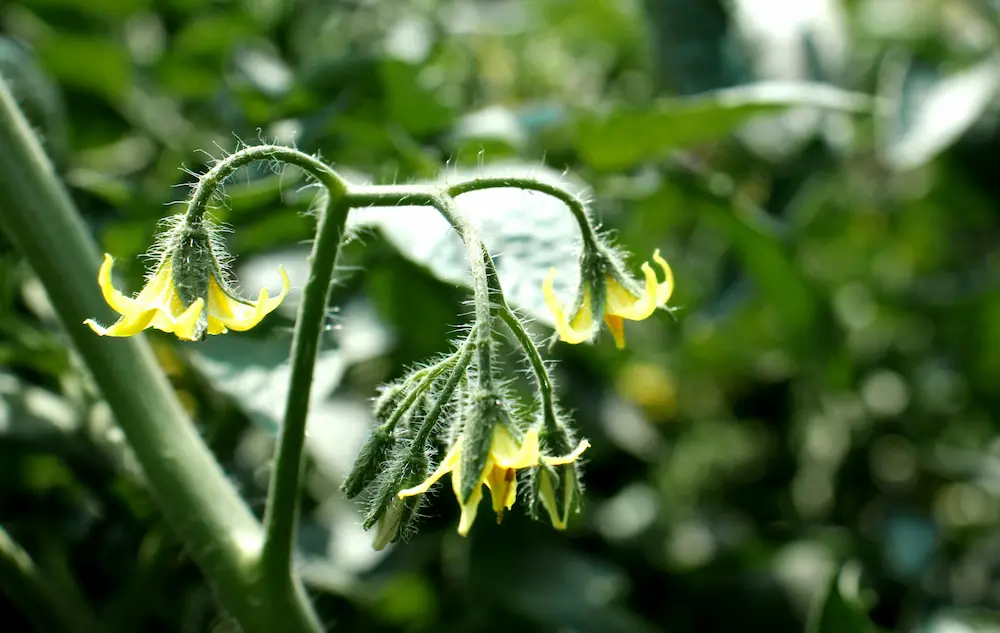
You’ve grown your tomato plants from seed or bought healthy plug plants in spring, potted them on carefully, tied them in, fed them, watered them — and now the flowers are falling off before they’ve set a single fruit. It’s one of the most dispiriting moments in the kitchen garden, and one of the most common questions UK tomato growers ask every summer. The good news is that tomato flowers dropping off almost always has a fixable cause, and once you know what to look for, the solution is usually straightforward.
This guide covers the main reasons tomato flowers drop before setting fruit, what’s happening inside the plant when they do, and what you can do — practically, today — to turn it around.
📖 Also read: How to Grow Cherry Tomatoes on a Windowsill — No Garden Needed
Why Tomato Flowers Drop Off — The Short Answer
Tomatoes are self-pollinating, which means each flower contains both male and female parts and pollinates itself — usually with a little help from vibration (in the wild, from wind or buzzing insects). For a flower to set fruit, the pollen has to move from the anther to the stigma at exactly the right moment, under the right conditions. If temperature, humidity, or plant health are outside a fairly narrow range when the flower is ready, pollination fails and the flower drops. The plant cuts its losses and moves on.
The frustrating thing is that flower drop doesn’t always mean something is catastrophically wrong. Sometimes it’s a brief weather event. Sometimes it’s a watering inconsistency. Sometimes the plant is simply prioritising root establishment over fruit. Understanding which cause is at work in your specific situation is the key to fixing it.
1. Temperatures Are Too High or Too Low
This is the single most common cause of tomato flower drop in UK gardens, particularly in greenhouses and polytunnels during summer heatwaves. Tomatoes pollinate best when daytime temperatures are between 18°C and 29°C (65–85°F) and night-time temperatures stay above 10°C. Outside this range, pollen becomes non-viable — either too sticky to move at high temperatures, or released too slowly in the cold.
In a UK greenhouse in July or August, temperatures can spike well above 35°C by mid-afternoon, which is enough to cause consistent flower drop even when everything else is perfect. The fix is ventilation: open the roof vents and door early in the morning before temperatures rise, and consider adding shade netting on the south-facing glass during the hottest weeks. Outside, tomato flowers drop in late spring cold snaps when night temperatures fall below 10°C — if this is the problem, a layer of fleece overnight is often enough to protect flowering plants until conditions improve.
📖 Also read: Greenhouses vs Polytunnels — Which Is Right for You?
2. Low Humidity Prevents Pollination
Tomato pollen is sticky, and in very dry air it clumps together and won’t release from the anther properly. Greenhouse-grown tomatoes are particularly vulnerable to low humidity in hot, dry summers — the air inside a well-ventilated polytunnel can get extremely dry, especially on south-facing sites in July.
The traditional fix is to damp down — wet the floor of the greenhouse with a watering can in the morning to raise humidity around the plants. You can also tap or gently shake the flowering stems at midday when they’re at their warmest, mimicking the vibration that bees would normally provide. Some growers use an electric toothbrush held against the stem behind each flower cluster — it sounds eccentric but it works very effectively. This technique, sometimes called hand pollination, is standard practice among serious tomato growers.
3. Inconsistent Watering
Irregular watering — letting the compost dry out completely, then soaking it — causes a cascade of problems in tomato plants, and flower drop is one of them. When a plant is water-stressed it prioritises survival over reproduction, dropping flowers and sometimes small developing fruits to reduce its metabolic load. The same stress response also leads to the more visible problems of blossom end rot and fruit splitting later in the season.
The goal is consistent moisture — compost that stays evenly damp without becoming waterlogged. For container-grown tomatoes in the UK, this typically means watering daily in warm weather, twice daily in a hot greenhouse in high summer. A moisture meter takes the guesswork out of it completely. Mulching the surface of the compost or soil with a thick layer of garden compost also helps enormously by slowing moisture loss between waterings.
📖 Also read: Blight on Tomatoes and Potatoes in the UK
4. Too Much or Too Little Feeding
Feeding tomatoes incorrectly is a surprisingly common cause of flower drop. Too much nitrogen — from a general-purpose or leafy plant feed — pushes the plant into vigorous vegetative growth at the expense of flowering and fruiting. You end up with a lush, dark-green plant full of thick stems and leaves and very few flowers, and those that do appear may drop before setting. Switch to a high-potassium tomato feed once the first flowers appear, and stop using any nitrogen-rich fertiliser from that point on.
Under-feeding is also a problem, particularly for container-grown plants later in the season when the compost is depleted. A plant running short of nutrients — particularly calcium and magnesium — will drop flowers as resources run low. Feed with a dedicated tomato fertiliser such as Tomorite or Chempak Tomato Food weekly from the moment the first flower truss opens, and increase to twice weekly once plants are fruiting heavily.
5. Poor Pollinator Activity
Outdoor tomato plants are largely pollinated by bumblebees — specifically by a process called buzz pollination, where the bee grips the flower and vibrates its flight muscles at exactly the right frequency to release the pollen. In a cold, wet UK summer with low insect activity — which is far from uncommon, particularly in the north of England and Scotland — outdoor tomatoes can suffer from poor pollination simply because the bees aren’t visiting reliably.
Encouraging pollinators into the garden generally helps: growing companion flowers nearby (marigolds, borage, and phacelia are all excellent) attracts bees and keeps them around your veg patch. For greenhouse tomatoes where bees can’t access easily, the hand-pollination method described above is the most reliable solution.
📖 Also read: How to Create a Garden That Attracts Butterflies in the UK
6. The Plant Is Too Young or Too Stressed
A tomato plant that has been recently transplanted, recently repotted, or subjected to a sudden change in conditions — a cold snap, a move from indoors to outdoors, a period of drought — will often drop its first flower truss as it acclimatises. This is normal plant behaviour and not a sign of a lasting problem. The plant is redirecting energy into root establishment rather than fruit production, and once it’s settled it will flower again.
Some experienced growers deliberately remove the first flower truss on newly planted tomatoes to encourage stronger root development before the plant commits to fruiting. Whether you do this or not, early flower drop on a recently transplanted plant is rarely a cause for concern — give it two weeks of consistent watering and feeding in its new position and it will almost certainly recover.
7. Overcrowded or Unventilated Conditions
Tomatoes grown too close together, or in a greenhouse with inadequate airflow, suffer in several ways — increased disease risk, reduced light penetration, and impaired pollination. Good airflow around the flowers is part of what allows pollen to move, and a dense, airless canopy of leaves suppresses the natural vibration that helps pollen release.
Keep plants properly side-shooted — removing all the shoots that develop in the leaf axils on cordon varieties — and remove lower leaves as the season progresses to allow air to circulate freely through the plant. Space plants at least 45–60cm apart, and if you’re growing in a greenhouse, don’t be tempted to squeeze in more plants than the space comfortably allows. For full guidance on growing healthy, productive tomato plants from sowing to harvest, the RHS guide to growing tomatoes is comprehensive and trustworthy.
When to Stop Worrying
It’s worth remembering that some flower drop is completely normal. A healthy, well-grown tomato plant produces far more flowers than it could ever develop into fruits, and it self-regulates by dropping some. If the majority of flowers are setting fruit and you’re seeing some drop here and there, that’s not a problem — that’s just a productive plant managing its own resources.
The time to act is when entire trusses are dropping with no fruit set at all, repeatedly, over several weeks. In that case, work through the causes above systematically — temperature first, then watering, then feeding — and you’ll almost certainly identify the issue within a few days. Tomatoes are resilient plants. Given the right conditions, they want to fruit. Your job is mostly just to get out of the way.
📖 Also read: Easiest Vegetables to Grow in the UK for Beginners
Leave a Reply