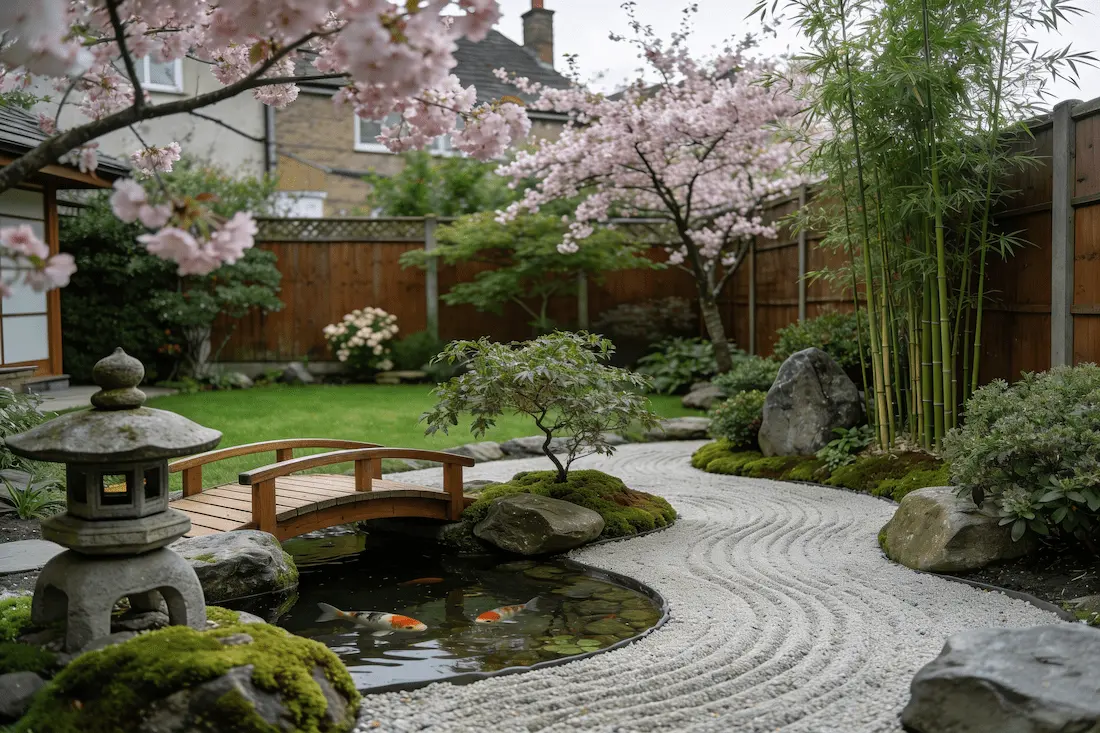
There is something quietly irresistible about a Japanese garden. The stillness, the precision, the sense that every stone and stem has been placed with genuine intention — it’s the opposite of the cheerful chaos that characterises a lot of British planting, and for many gardeners, that contrast is exactly the point. Designing a Japanese garden in the UK is entirely achievable, even in a modest suburban plot, and the good news is that our cool, damp climate is surprisingly sympathetic to many of the plants and materials that define the style. You don’t need a Kyoto-sized space. You need a clear set of principles and the willingness to take away as much as you put in.
Understanding What a Japanese Garden Actually Is
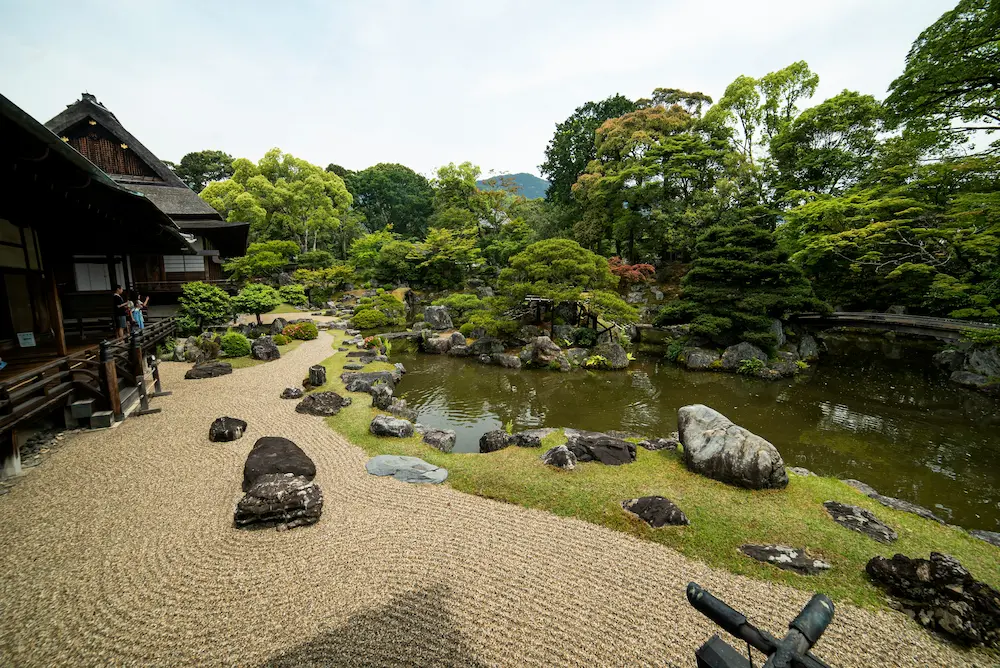
Before reaching for the gravel rake, it’s worth understanding the philosophy behind the aesthetic. Traditional Japanese garden design draws from Shinto and Zen Buddhist ideas about nature, impermanence, and the relationship between the human and the natural world. Gardens are designed not to impress but to encourage contemplation — to slow the eye down, create a sense of enclosure and calm, and evoke natural landscapes in miniature. The three core styles you’re most likely to adapt for a UK setting are the karesansui (dry landscape or Zen garden), the tsukiyama (hill-and-pond garden), and the roji (tea garden path). Most domestic Japanese-inspired gardens in the UK draw from all three, combining gravel or pebble areas with water features, specimen plants, and simple stone paths. Understanding this helps you make decisions that feel cohesive rather than just decorative.
📖 Also read: How to Plan Your Garden — A Practical Guide to Getting It Right
The Japanese Garden Principle of Ma — Embrace Empty Space
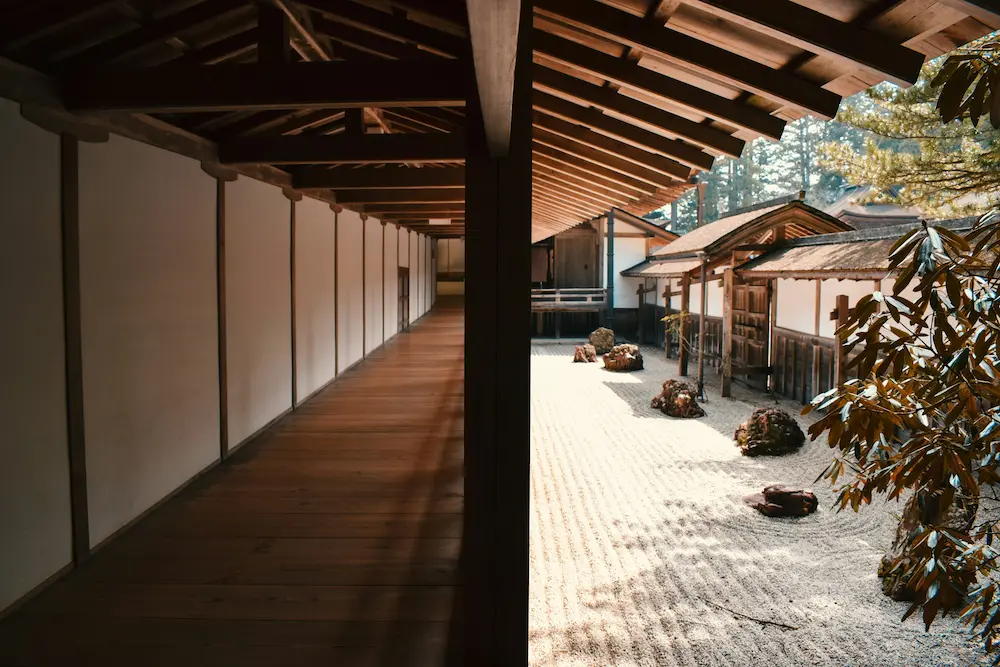
One of the hardest things for enthusiastic British gardeners to do is leave space empty. We tend to fill every gap with another plant, another pot, another colour. Japanese garden design operates on the principle of ma — the meaningful use of negative space. A raked gravel area with three carefully placed rocks is not a half-finished garden; it is the garden. The emptiness is doing as much work as the elements within it, directing the eye, creating pause, and implying water or open landscape. When planning your Japanese-inspired space, resist the urge to fill. Decide early which areas will be deliberately sparse, and treat that sparseness as a feature rather than a gap in your planting plan.
Gravel, Stone, and Moss — The Foundation Materials
Gravel and stone form the bones of almost every Japanese garden, and the UK has excellent access to the materials you need. For a dry garden area, fine-grade angular gravel in pale grey, cream, or off-white raked into wave or linear patterns is the traditional choice. Rounded river pebbles work for transitional areas and planting beds. Large specimen rocks — ideally with interesting shapes, lichen, or natural weathering — act as focal points; in Japanese design, these are placed with great care and are never moved casually. Moss, if your garden is shaded and damp enough (which describes a lot of northern UK gardens perfectly), is a wonderful ground cover that brings that characteristic ancient, hushed quality to the space. The RHS Garden at Wisley has a small Japanese-influenced area that’s well worth visiting if you want to see these materials used well in a British context.
📖 Also read: Rocks, Pebbles and Bark — What to Choose and Where to Use Them
Key Plants for a Japanese Garden in the UK
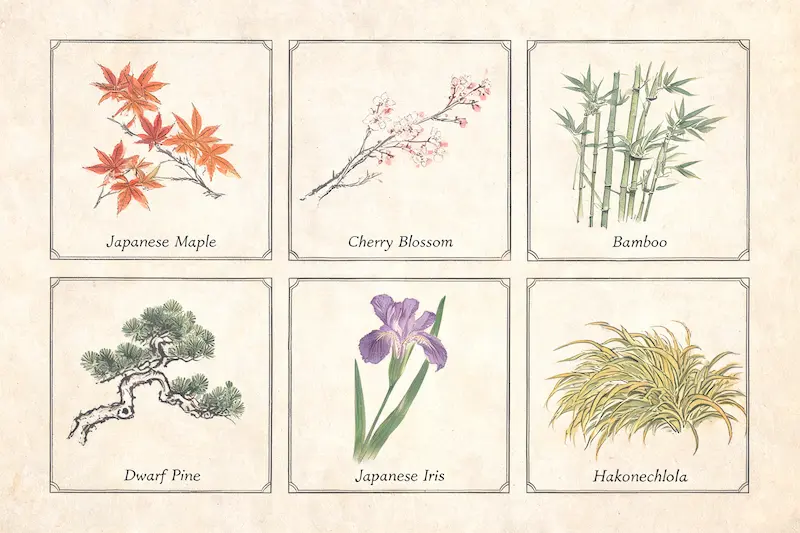
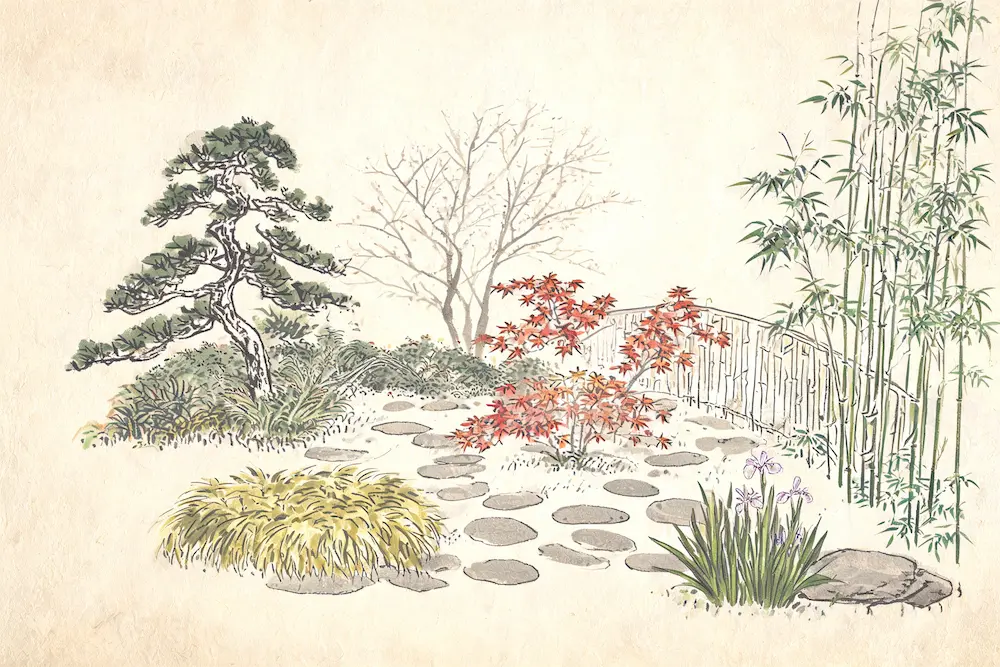
Choosing the right plants is where a Japanese garden UK design really comes together — or falls apart. The palette is deliberately restrained: you’re aiming for form, texture, and seasonal change rather than floral abundance. Japanese maples (Acer palmatum) are the cornerstone plant for most British interpretations, offering extraordinary autumn colour, delicate leaf shape, and a naturally elegant structure. They’re reliably hardy across most of the UK if given shelter from cold easterly winds. Ornamental cherry trees, particularly Prunus ‘Kojo-no-mai’ for smaller spaces, bring the brief but intensely beautiful spring blossom that is central to Japanese garden philosophy. Bamboo provides year-round structure and movement — choose clump-forming varieties like Fargesia murielae rather than running types, which will colonise the entire garden given the chance. Pines, both dwarf and standard, shaped through careful pruning, add that characteristic silhouette. Japanese iris, Epimedium, and Hakonechloa macra (golden hakone grass) all work beautifully as ground-level planting.
Water: Pools, Streams, and the Sound of Stillness
Water is not essential in a Japanese-inspired garden — the dry karesansui style deliberately evokes it through raked gravel — but where space and budget allow, it adds an unmistakable quality. A still, dark pond planted simply with a single water lily or a stand of iris at the edge is more authentically Japanese than a busy, heavily planted water feature. The water should be calm; the reflection matters as much as what’s in the water. A simple bamboo deer scarer (shishi-odoshi) that fills with water and tips periodically adds movement and sound without fuss. For small spaces, a tsukubai — a low stone basin filled with water, traditionally used for ritual handwashing — creates a focal point that takes up almost no room at all. UK suppliers including Serenity Garden Products and various specialist Japanese garden importers stock these if you don’t want to source your own stone basin.
Paths and Stepping Stones
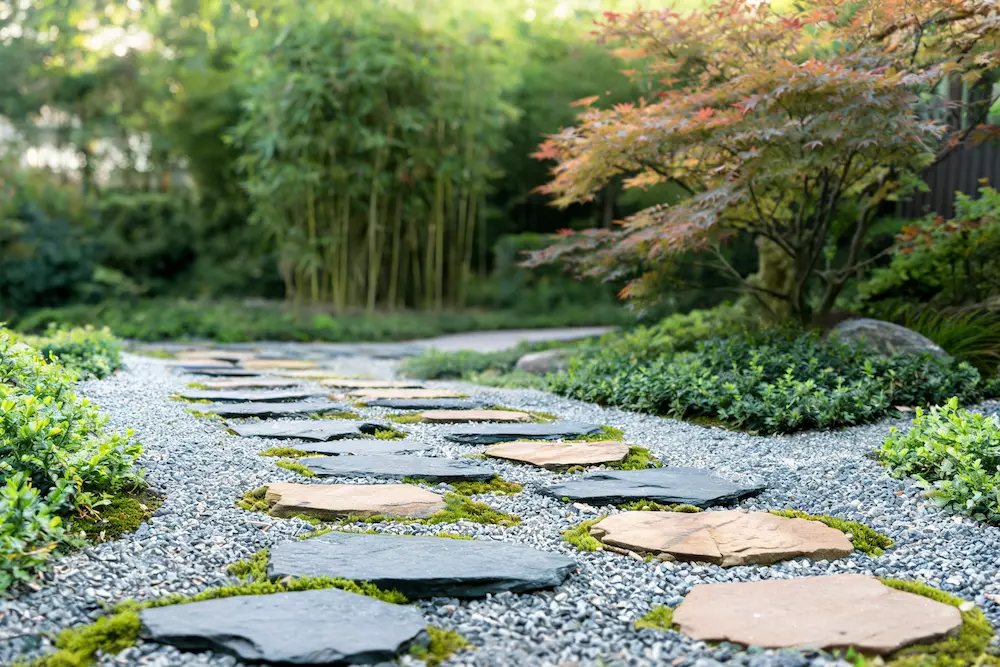
In a Japanese garden, the path is not simply a way of getting from one place to another — it controls the pace of the journey and determines what you notice. Stepping stones placed at irregular, slightly awkward intervals force you to look down, to slow your step, to be present. This is entirely deliberate. For a UK Japanese-inspired garden, large flat stones — sandstone, slate, or granite setts — set into gravel, moss, or low ground cover work beautifully. The spacing should feel slightly considered rather than comfortable; close enough to walk naturally but with enough irregularity to hold your attention. Avoid the temptation to edge paths with neat timber boards or straight lines; let the path feel as though it has settled into the landscape rather than been imposed upon it.
📖 Also read: Garden Paths — DIY Ideas to Transform How You Move Through Your Garden
Shaped Shrubs and Cloud Pruning
One of the most striking elements in Japanese garden design is the shaped and cloud-pruned shrub — the technique of trimming plants into rounded, cloud-like pads that float above the branch structure. This is applied most commonly to box (Buxus), yew (Taxus), and Japanese holly (Ilex crenata), the last of which is worth considering given the ongoing issues with box blight in the UK. Cloud pruning requires patience rather than skill: you’re essentially removing growth to reveal the branch architecture beneath while keeping clusters of foliage as distinct rounded masses. The effect, against a gravel ground and a backdrop of bamboo or maple, is immediately and recognisably Japanese. It’s the kind of feature that looks like it took years and considerable expertise, but is genuinely within reach for any gardener willing to take their time.
📖 Also read: Topiary for Beginners — How to Shape Shrubs and Add Garden Structure
Enclosure, Screens, and Borrowed Landscape
Japanese gardens are almost always enclosed — bounded by walls, fences, bamboo screens, or hedging that creates a sense of separation from the world beyond. In a UK suburban garden, this enclosure is both practical and philosophical: it removes the sight of the neighbour’s extension, focuses attention inward, and makes even a small space feel like its own complete world. Traditional Japanese fencing styles include simple bamboo panel fencing, woven branch screens, and the elegant kenninji-style bamboo fence. These are available from specialist suppliers and increasingly from mainstream UK garden centres as interest in the style has grown. Wisteria trained along a simple timber frame also creates a superb overhead element that feels completely at home in this context.
📖 Also read: How to Grow and Trim a Hedge — Boundaries That Look After Themselves
Starting Small — A Japanese Corner Rather Than a Full Redesign
You don’t need to rip out your entire garden to bring Japanese principles into your outdoor space. One of the most practical approaches for most UK gardeners is to designate a single area — a corner, a side return, a courtyard, or a section of the back garden — and apply these ideas there. A gravel area with three or four carefully chosen rocks, a single Japanese maple in a glazed pot, some clump-forming bamboo in the background, and a simple flat stone path is enough to create a genuinely calming corner that operates on completely different principles to the rest of the garden. Over time, if it works for you, you can extend the language outwards. Japanese garden design is ultimately about editing, restraint, and intention — values that improve any garden, in any style, anywhere.
📖 Also read: How to Layer Plants in a Border for Year-Round Colour and Structure
Leave a Reply