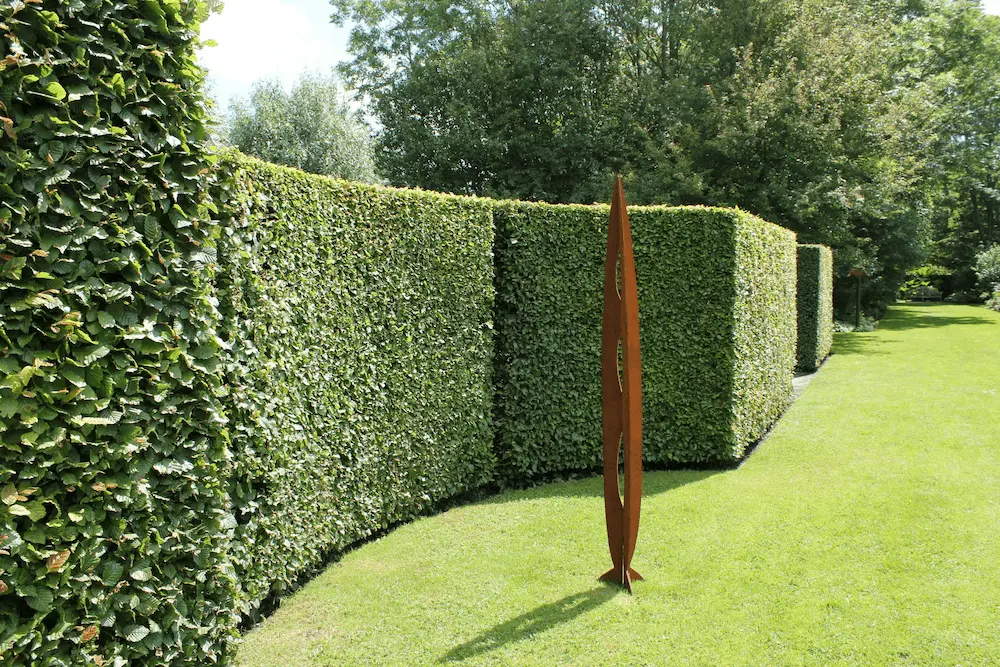
A well-grown hedge is one of the most valuable things in a UK garden. It provides privacy, shelter from wind, habitat for wildlife, and a living boundary that improves with every passing year. But getting there — from a row of spindly bare-root whips in November to a dense, handsome hedge that actually does its job — requires understanding a few things that most gardening guides skim over. This article covers everything you need to grow and trim a hedge in the UK properly, from choosing the right plants to getting the timing and technique right on every cut.
The good news is that hedges are more forgiving than they look. Most hedging plants are vigorous, adaptable, and respond well to hard cutting. The mistakes that matter are the ones made at the beginning — poor soil preparation, wrong plant choice, and planting at the wrong spacing — which is exactly where this guide starts.
📖 Also read: How to Deal with Windy Gardens — Plants, Windbreaks, and Pots That Won’t Blow Over
Choosing the Right Hedging Plants for a UK Garden
The single most important decision is plant choice, because it determines everything that follows: how fast the hedge establishes, how it looks through the seasons, how often it needs cutting, and how it performs in your specific soil and conditions. There is no universally “best” hedging plant — the right choice depends on what you want the hedge to do.
Hawthorn (Crataegus monogyna) is the backbone of traditional British countryside hedging and superb for wildlife. It’s native, incredibly tough, grows on almost any soil, and forms a stock-proof barrier within a few years. It’s deciduous, so it loses its leaves in winter, but its dense, thorny structure still provides shelter and security year-round. Paired with a mix of blackthorn, field maple, dog rose, and hazel — a traditional mixed native hedge — it creates a habitat-rich boundary that looks beautiful in all four seasons.
Yew (Taxus baccata) is the finest formal hedging plant available in the UK. It clips to a razor-sharp edge, is extremely long-lived, tolerates shade better than almost any other hedging plant, and — contrary to widespread belief — is not particularly slow. In good soil with proper establishment watering, yew can put on 30–40cm (12–16in) of growth per year. It’s expensive to buy in quantity, but if you want a classic, deep-green formal hedge that will outlast the house, yew is without equal.
Hornbeam (Carpinus betulus) is often recommended over beech for wetter, heavier soils. Like beech, it holds its dead, russet-brown leaves through winter as a juvenile plant, providing year-round privacy even though it’s technically deciduous. It clips beautifully and is extremely hardy. Beech (Fagus sylvatica) itself is the classic choice for free-draining, chalky, or sandy soils — its copper-brown winter leaves and fresh lime-green spring growth make it one of the most seasonally beautiful hedging options available.
For a fast, informal, wildlife-friendly boundary hedge, mixed native hedging is hard to beat and widely available as bare-root whip bundles from specialist hedging suppliers like Ashridge Trees or Hopes Grove Nurseries. For a formal, evergreen boundary in a smaller garden, Portuguese laurel (Prunus lusitanica) is increasingly popular — faster and more disease-resistant than its common relative cherry laurel, with attractive dark leaves and a neat growth habit.
📖 Also read: Topiary for Beginners — How to Shape Shrubs and Create Structure in a UK Garden
Bare Root vs Potted — Which to Buy and When
For most hedging plants, bare-root whips planted between November and March are far better value than pot-grown plants and establish just as quickly — often more quickly, since bare-root plants put their energy into root development from the moment they go in rather than adjusting from pot to ground. A bare-root whip costs a fraction of a pot-grown equivalent and the difference in establishment speed after the first season is barely noticeable.
The exception is if you’re planting outside the bare-root season (April to October), in which case pot-grown plants are the only option. Plant them in spring or autumn rather than the height of summer if you can, and water consistently through their first season regardless of rainfall.
How to Prepare the Ground and Plant a Hedge
Good soil preparation is worth more than any amount of aftercare. Mark out the hedge line and dig a trench at least 40–60cm (16–24in) wide and a spade’s depth deep along the full length. Fork over the base of the trench to break up compaction, then incorporate generous quantities of well-rotted garden compost or manure — a full barrowload per metre of trench is not excessive. This upfront investment in the soil pays back for decades.
Spacing depends on species and desired density. As a general guide, plant hawthorn, blackthorn, and field maple at 3–5 plants per metre for a dense mixed hedge; hornbeam, beech, and yew at one plant every 30–45cm for a formal hedge. For very thick, stock-proof hedges, a double staggered row is worth the extra cost. Plant bare-root whips at the same depth they were growing in the nursery — you’ll see the soil mark on the stem — firm in well, and water thoroughly even in winter.
Apply a thick mulch of wood chip, garden compost, or well-rotted bark along the entire hedge line immediately after planting. This single step does more to ensure establishment than almost anything else — it locks in moisture, suppresses competing weeds, and moderates soil temperature through the critical first growing season. For comprehensive guidance on hedging plant choices and establishment, the RHS hedges resource covers a wide range of species and situations.
📖 Also read: How to Improve Clay Soil in the UK
The First Two or Three Years — Training the Hedge
This is the phase most gardeners get wrong, usually by being too cautious with the secateurs. The instinct is to leave newly planted hedging alone to grow, but the opposite approach produces a better hedge. In the first spring after planting, cut all the whips back by one-third to one-half. It seems brutal, but this hard cut stimulates branching low down on the plant — exactly where you need the dense, twiggy growth that makes a hedge impenetrable. A hedge that is left uncut in its early years grows upward quickly but remains open and gappy at the base, which is very difficult to correct later.
Continue trimming the sides and tip lightly each year for the first three years, always encouraging lateral branching rather than height. Only once the hedge has reached its desired width at the base should you start allowing it to grow to full height. This training phase requires patience — perhaps three to five years before the hedge looks genuinely established — but the result is a dense, well-filled structure that will remain solid and attractive for decades.
When and How to Trim an Established Hedge in the UK
Timing is critical and varies by species. The key legal constraint is nesting birds: in the UK, cutting hedges between 1 March and 31 August risks disturbing active bird nests, which is an offence under the Wildlife and Countryside Act 1981. This isn’t an absolute ban — if you check carefully for active nests first and find none, trimming is technically lawful — but most responsible gardeners and landowners avoid cutting between these dates as a precaution, especially for native species hedges that are prime nesting habitat.
For formal hedges of yew, hornbeam, and beech, the main annual trim is best done in late summer — August is ideal. New growth has hardened off by then, the cut heals cleanly before winter, and the hedge holds its shape through the cold months without producing a second flush of soft, frost-vulnerable growth. A single annual cut in late August is sufficient for most established formal hedges.
For faster-growing informal hedges — Leylandii, privet, and laurel — two cuts per year (late spring and late summer) keep growth under control without allowing it to become unruly. Native mixed hedges managed in the traditional way can be cut in late winter (February) when birds aren’t nesting and the structure of the hedge is most visible.
📖 Also read: Garden Arches — How to Choose One and Which Climbing Plants Look Best Over Them
The A-Frame Shape — Why It Matters
A well-trimmed hedge should be slightly wider at the base than at the top — an A-frame profile rather than straight vertical sides or, worst of all, wider at the top than the bottom. The reason is light: if the top of the hedge overhangs the base, the lower branches are permanently shaded and gradually die back, leaving a hedge that is dense and green at the top but thin and woody at the base. The A-frame allows light to reach every level of the hedge, keeping growth dense from ground level upward.
A simple string line or a homemade wooden template cut to the right profile, held against the hedge as you cut, is the most effective way to achieve a consistent batter (the technical term for this inward slope) on both sides. Experienced hedge trimmers do it by eye, but even professionals use string lines on longer runs to keep the top level and the sides consistent.
Hedges and Wildlife — Getting the Best of Both
A garden hedge is one of the most wildlife-rich habitats you can create. Hedgehogs use the base for hibernation and movement corridors. Sparrows, wrens, and dunnocks nest in the dense interior. Bees forage on the blossom of hawthorn, blackthorn, and wild rose. Berries from hawthorn, holly, and dog rose feed fieldfares and redwings through the winter. Even a short garden hedge, managed thoughtfully, contributes meaningfully to biodiversity.
The simplest thing you can do is cut less often and leave some informality. A mixed native hedge cut every two years rather than annually produces far more blossom and berries than one cut back hard every summer. If a fully formal hedge doesn’t suit the garden, consider a compromise: formal yew or hornbeam on the boundary proper, with a wilder native hedge along an internal boundary or the back of a border where the informality is an asset rather than a problem.
📖 Also read: How to Create a Garden That Attracts Butterflies in the UK
Leave a Reply