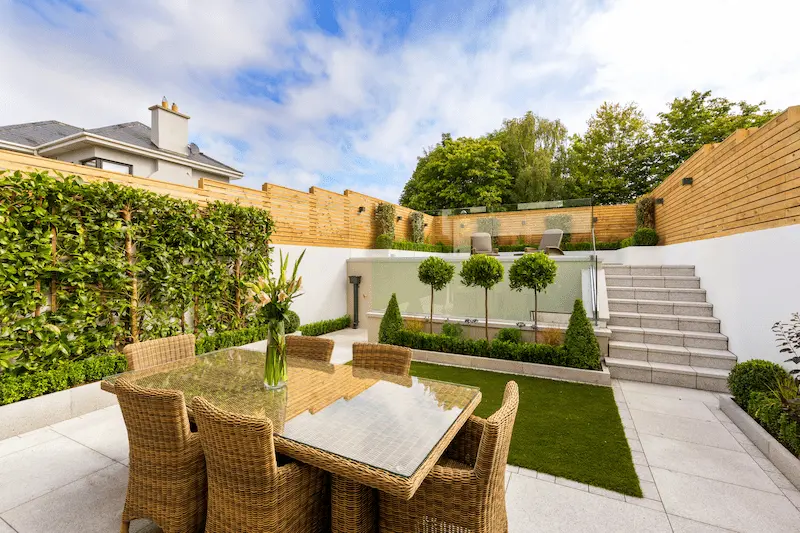
Garden furniture in the UK occupies a strange position in most people’s outdoor lives. It gets dragged out hopefully in April, used intensively for about three weekends, rained on repeatedly, and then either abandoned in place or stuffed under a tarpaulin until next year. The result, after a few seasons, is furniture that looks tired, sits in entirely the wrong spot, and bears no relationship whatsoever to the plants growing around it. Getting garden furniture right — the material, the placement, the planting — makes an enormous difference to how much you actually use your outdoor space, and it’s not nearly as complicated as the sheer volume of options in garden centres makes it feel. Here’s how to think about it properly.
Where to Put Garden Furniture: Placement Comes First
The single most common mistake with garden furniture UK buyers make is placing it where the garden looks good rather than where it actually works. A table and chairs positioned in the middle of a lawn looks balanced on a plan but often sits in full exposure — too hot at midday, too cold in the evening, buffeted by any wind. Before buying a single piece, spend a few days noticing where you naturally gravitate in the garden at different times of day. Where is the morning sun? Where does evening light fall? Where does wind funnel through? The best spot for a dining set is almost always against a wall, fence, or hedge on the south or west-facing side of the garden — sheltered enough to be comfortable, warm enough to be used without a coat from May to September in most parts of the UK. A secondary seating area in partial shade is enormously useful for hot days, something that’s increasingly relevant as UK summers warm.
📖 Also read: How to Plan Your Garden — A Practical Guide to Getting It Right
Which Garden Furniture Materials Survive British Weather
Not all materials are created equal when it comes to surviving UK winters, and the choice matters more than most buyers realise at the point of purchase. Hardwood — teak and iroko in particular — is the gold standard for longevity. Left untreated, teak weathers to a beautiful silvery grey; oiled annually, it retains its warm honey tone and will last decades. It’s expensive, but it’s a genuine long-term investment. FSC-certified teak is widely available in the UK from suppliers including Barlow Tyrie and various independent garden retailers, and is well worth the premium over cheaper tropical hardwoods of dubious provenance. Powder-coated aluminium is the other material worth serious consideration: it’s lightweight, rust-proof, and has improved enormously in design quality over the past decade. It needs essentially no maintenance and won’t warp, rot, or corrode through a British winter left outside. Rattan-effect furniture made from high-density polyethylene (HDPE) has become ubiquitous and, at the better end of the market, performs well — but quality varies enormously, and cheap PE rattan will crack and fade within a few years. Solid timber like pine and eucalyptus needs regular treatment to stay in good condition. Steel rusts if the coating is damaged. Untreated softwood is a false economy regardless of how attractive it looks in the showroom.
Leaving Furniture Out vs Storing It Over Winter
Whether to leave garden furniture outside year-round depends entirely on the material. Quality teak, powder-coated aluminium, and treated hardstone are designed to be left out — covering them with breathable furniture covers rather than plastic sheets (which trap moisture) will keep them cleaner and extend their life further. Rattan-effect and upholstered pieces should come inside or into a dry shed over winter; persistent damp accelerates UV degradation and, in the case of cushions, creates mould problems that are very difficult to shift. If storage is an issue — and it is for many UK gardens where shed space is at a premium — choose your materials with this in mind from the outset. A teak bench that lives outside all year with minimal fuss will give you far less grief than a rattan corner sofa that needs disassembling and storing every October.
Creating a Proper Outdoor Room Around Your Furniture
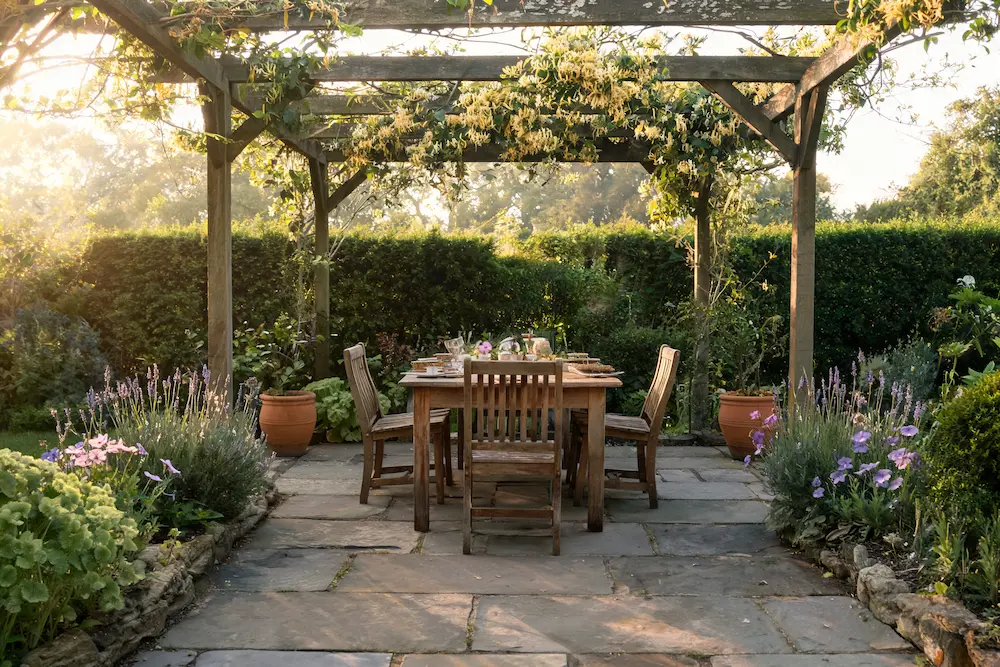
The gardens that feel most inviting are those where the furniture exists within a defined space rather than floating in the middle of a lawn. A pergola or overhead structure above a dining set creates an immediate sense of enclosure and purpose, and provides a frame for climbing plants that transforms the area entirely. At ground level, a hard surface — paving, decking, or compacted gravel — under and around the furniture means chairs don’t sink into soft ground and the whole area reads as intentional. Low boundary planting, pots, or a change in level can delineate a seating corner without fully enclosing it. This idea of creating a room within the garden is one of the most powerful tools in outdoor design, and furniture is often the anchor around which that room is built.
📖 Also read: Pergolas — How to Choose, Place, and Plant Up a Garden Pergola
Lighting Around Garden Furniture
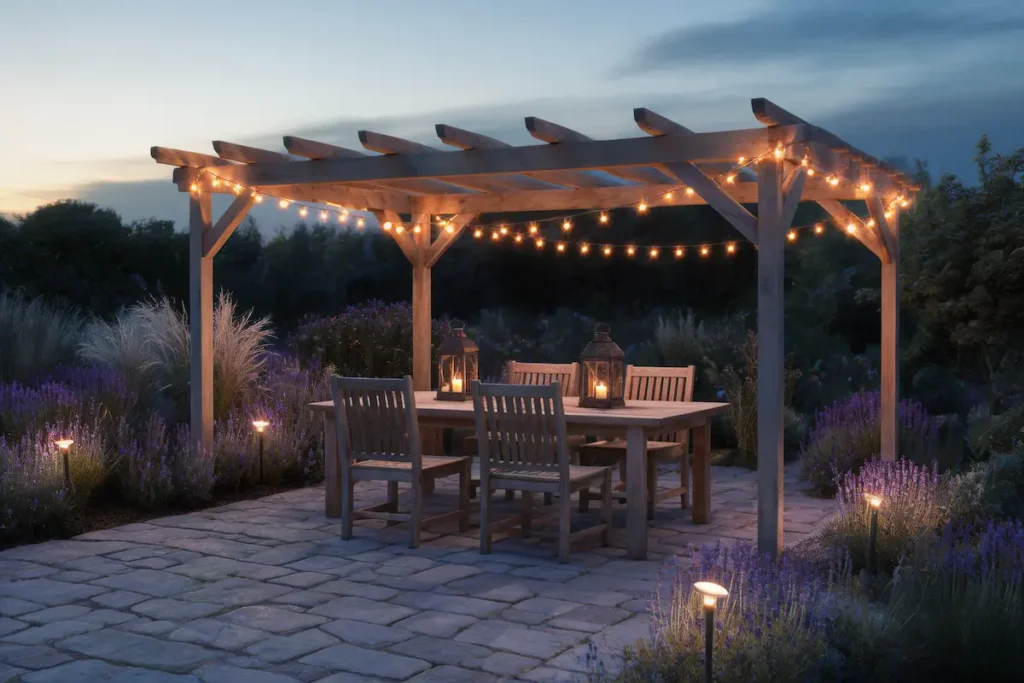
Outdoor lighting is what separates a seating area you use until 7pm from one you use until midnight. The principle is simple: avoid overhead glare and instead layer low, warm light at ground level and within nearby planting. Solar stake lights pushed into borders, string lights threaded through the pergola overhead, and a couple of lanterns on the table itself create an atmosphere that no single bright bulb ever achieves. Wall-mounted lights near the house door are practical; they’re rarely enough on their own to make the far end of the garden feel welcoming after dark. Investing in even a modest outdoor lighting setup dramatically increases the number of evenings you actually use your garden furniture across the season — and in the UK, where summer evenings are long and genuinely beautiful, that return is worth having.
📖 Also read: Garden Lighting — How to Light Your Outdoor Space for Plants and Atmosphere
Which Plants Look Best Around Garden Furniture
Planting around garden furniture is one of the most enjoyable parts of designing an outdoor space, and the plants you choose will define the character of the whole area more than the furniture itself. The principle to hold onto is contrast: furniture tends to be solid, angular, and man-made, so planting that is soft, airy, and naturalistic creates the most satisfying balance. For a dining or seating area, lavender is almost unbeatable — it smells extraordinary when brushed in passing, deters flies, works at the border edge or in pots, and is completely at home in UK conditions. Ornamental grasses like Stipa tenuissima or Pennisetum provide movement and softness. Tall alliums and verbena bonariensis add height and a looseness that feels far removed from formality. Scented climbers on a nearby fence or pergola — roses, honeysuckle, jasmine — are worth their weight in gold on a warm evening. And a few well-chosen pots close to the seating give you flexibility to move colour and fragrance around as the season progresses.
📖 Also read: Container Gardening Ideas for Small UK Gardens
Scent, Herbs, and Edible Plants Near Your Seating Area
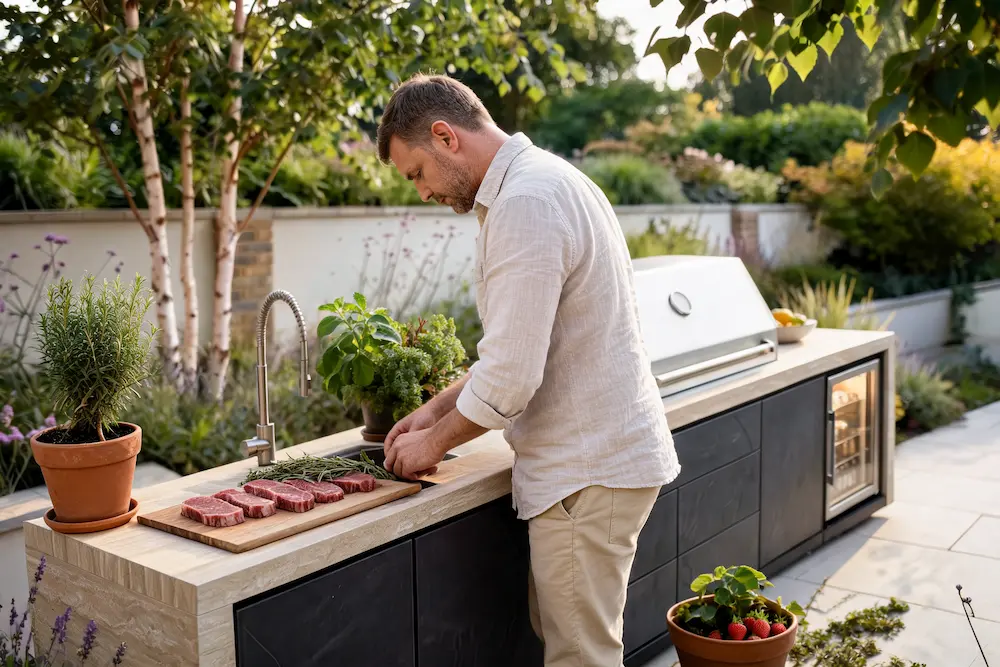
There is a long tradition in British kitchen gardens of planting herbs close to the house and seating area, and it makes perfect practical sense — a pot of mint, basil, or lemon verbena within arm’s reach of the garden table is used far more often than one tucked away near the vegetable patch. Rosemary clipped into a low hedge along the edge of a paved seating area looks architectural, smells wonderful, and provides year-round structure. Thyme planted between paving slabs releases scent underfoot and tolerates being occasionally stepped on. Strawberries in a pot within easy reach of a garden chair need no further justification. The combination of scent, flavour, and beauty in the immediate vicinity of where you sit makes the whole experience of being in the garden richer — and is one of those small decisions that makes a disproportionately large difference to how much pleasure the space gives you.
Putting It All Together: A Simple Framework
The best garden furniture setups share a few consistent qualities: they’re in the right spot for how the sun and wind move through the garden, made from materials that genuinely suit the British climate without demanding constant attention, set within a defined space that has some sense of enclosure, lit for use after dark, and surrounded by planting that softens the edges and engages the senses. None of this requires a large budget or a garden designer. It requires a bit of observation, some patience in the planning stage, and the willingness to think about planting and furniture as a single unified scheme rather than two separate decisions. Get that right, and your garden furniture stops being something you drag out hopefully in April and becomes the centre of your outdoor life from the moment the weather turns.
📖 Also read: How to Layer Plants in a Border for Year-Round Colour and Structure
Leave a Reply