There’s a moment every summer that makes container growing completely worth it. You’re standing on your balcony, still in your pyjamas, and you pick a strawberry that’s warm from the morning sun and eat it before you’ve even made a cup of tea. It tastes nothing like the ones from the supermarket. That moment is entirely achievable — even if your entire outdoor space is a 6-foot balcony in a Manchester flat.
Strawberries are one of the best crops you can grow in pots. They don’t need deep soil, they thrive in containers, they produce fruit in their first year, and children absolutely love them. If you have a balcony, a patio, or even a sunny windowsill, you can grow strawberries. This guide tells you exactly how. Growing strawberries in pots is one of the most rewarding things a UK balcony gardener can do.
Why Growing Strawberries in Pots Works So Well in the UK
Unlike tomatoes or courgettes, strawberries have shallow roots — they don’t need a deep container. They also naturally trail and spill over the sides of pots, which looks beautiful and makes harvesting easy. In a container, you also have total control over the soil quality, which matters because strawberries are fussy about drainage. In the ground, UK clay soils can cause root rot. In a pot, you choose exactly what goes in.
📖 Also read: Container Gardening Ideas for Small UK Gardens
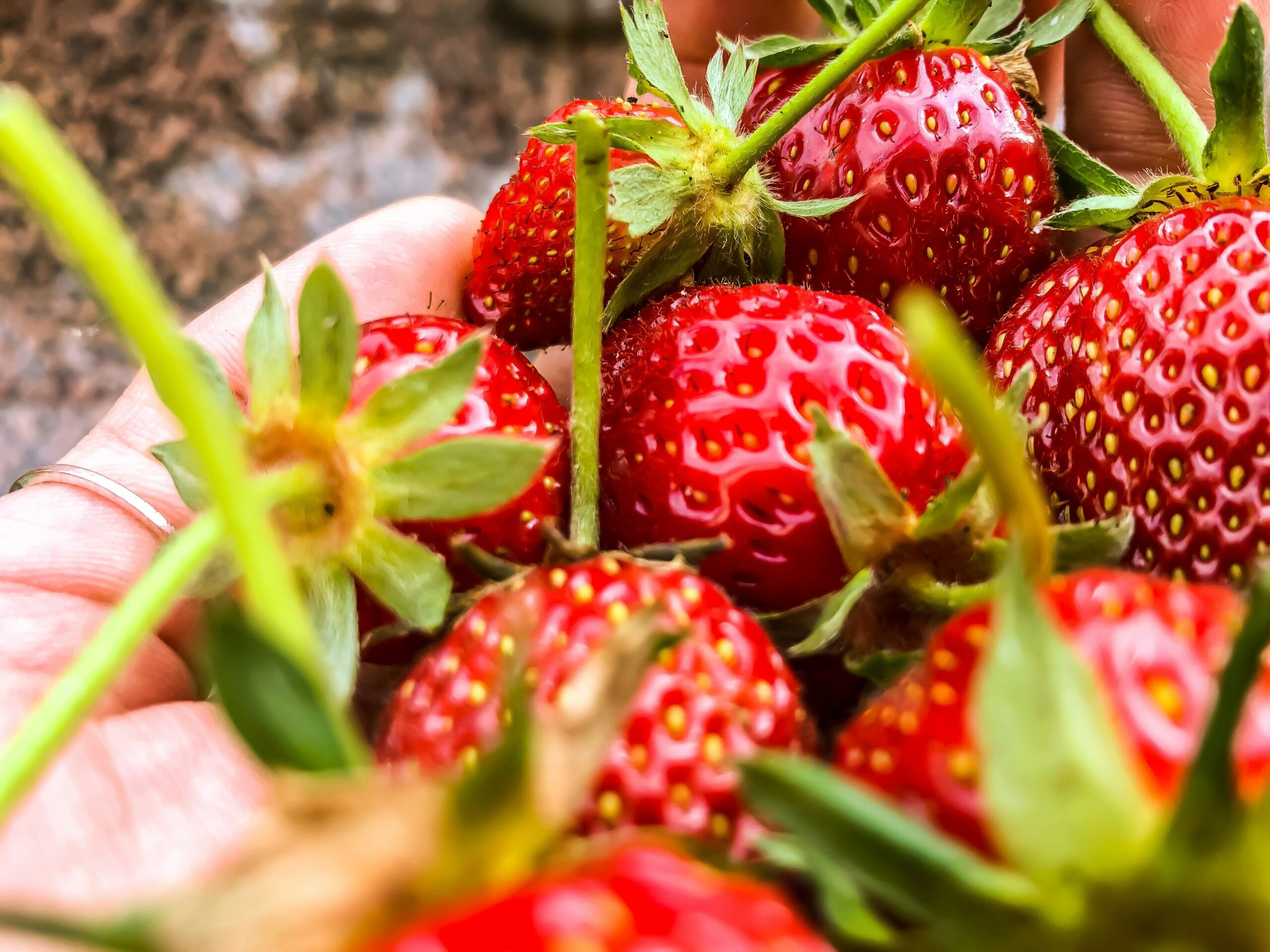
Another advantage: slugs. Slugs destroy strawberries at ground level. Raising your plants off the ground in containers puts them out of reach of most slug activity — a genuine UK advantage that ground growers don’t have.
What You Need Before You Start
- Containers — Strawberries need at least 20–25cm depth. A standard 30cm pot holds 3 plants comfortably. Hanging baskets work brilliantly — the fruit hangs down beautifully and airflow around the plant reduces mould. Avoid very small pots; they dry out too fast in summer.
- Compost — Use a good multipurpose compost mixed with 20% perlite or horticultural grit for drainage. Strawberries hate sitting in waterlogged soil.
- Plants or runners — Buy bare root runners from a garden centre or online in early spring (February–April). Varieties like Elsanta, Cambridge Favourite, or Honeoye are all reliable UK performers. Avoid cheap supermarket plants — they’re often disease-prone.
- A sunny spot — Strawberries need at least 6 hours of direct sun per day. South or west-facing balconies are ideal. If your balcony faces north, strawberries will struggle.
Step 1 — Planting
Fill your container to within 3cm of the top with your compost mix. Make a small hole in the centre for each plant. The crown — the point where the leaves meet the roots — must sit exactly at soil level. Too deep and the crown rots. Too high and the roots dry out.
Space plants around 20–25cm apart if using a larger trough or window box. Water well after planting and place in your sunniest spot immediately.
💡 UK TIMING TIP: Plant bare root runners between February and April for a summer crop. If you miss this window, you can buy pot-grown plants from garden centres up until June, though your crop will be smaller in the first year.
Step 2 — Feeding and Watering
This is where most beginners go wrong. Strawberries in containers need more feeding and watering than those in the ground because the nutrients in the compost get used up quickly and pots dry out fast.
- Watering — Check your pots daily in warm weather. Stick your finger 2cm into the soil — if it’s dry, water thoroughly. In a heatwave, pots may need watering morning and evening. Never let them sit completely dry.
- Feeding — Once you see flower buds forming (usually May–June), start feeding weekly with a high-potassium liquid feed. Tomorite works perfectly — the same feed used for tomatoes. This is what drives fruit development.
- Stop feeding — Once fruiting is finished in late summer, stop feeding and cut back the old leaves to about 10cm. This encourages the plant to put energy into next year’s roots.
Step 3 — Pollination and Fruiting
Outdoors, bees will pollinate your strawberry flowers naturally. However, if your balcony is very exposed or high up and bees don’t visit often, you may need to help. Simply use a small soft paintbrush or cotton bud to gently transfer pollen between flowers — brush the centre of each open flower in turn. Do this on dry, sunny days when the flowers are fully open.
Fruits develop 4–6 weeks after pollination. They’ll start green, turn white, then blush red. Don’t pick too early — wait until the berry is fully red all over. Partially red strawberries taste sour.
💡 UK PEST TIP: Birds are your biggest enemy once fruit appears. Cover plants with fine netting (widely available in UK garden centres) as soon as berries start to colour. A single pigeon can strip a plant in minutes — ask any British allotment holder.
📖 Also read: 10 Plants That Slugs Actually Hate — And Why UK Gardeners Need to Know This
Step 4 — Getting Free Plants Next Year
Strawberry plants send out long shoots called runners after fruiting — these are the plant’s way of reproducing. Each runner produces a baby plant at the end. To get free new plants:
- Let the runner trail into a small pot of compost placed next to the parent plant
- Peg the baby plant down with a piece of bent wire or a hairpin
- Water the pot regularly
- After 4–6 weeks the baby plant will have rooted — snip the runner connecting it to the parent
- You now have a free new plant for next year
One strawberry plant typically produces 3–5 runners, so from your first year’s plants you can build up a substantial collection for free.
How Long Do Strawberry Plants Last?
Strawberry plants produce well for 3 years, then yield drops. After year 3, replace them with the runners you’ve been propagating. This way you always have productive plants without buying new ones.
📖 Also read: Stop Throwing Away Seeds — How to Save Them and Grow for Free Next Year
The whole system — buy once, propagate runners, replace every 3 years — means strawberries become essentially free after your initial investment. For a balcony grower in a UK city, that’s about as good as it gets.
💡 WHAT TO BUY: A bag of perlite, a bottle of Tomorite, and Cambridge Favourite bare root runners are all you need to start. Total cost: around £15–20. Available on Amazon UK or at any garden centre from February.
Leave a Reply