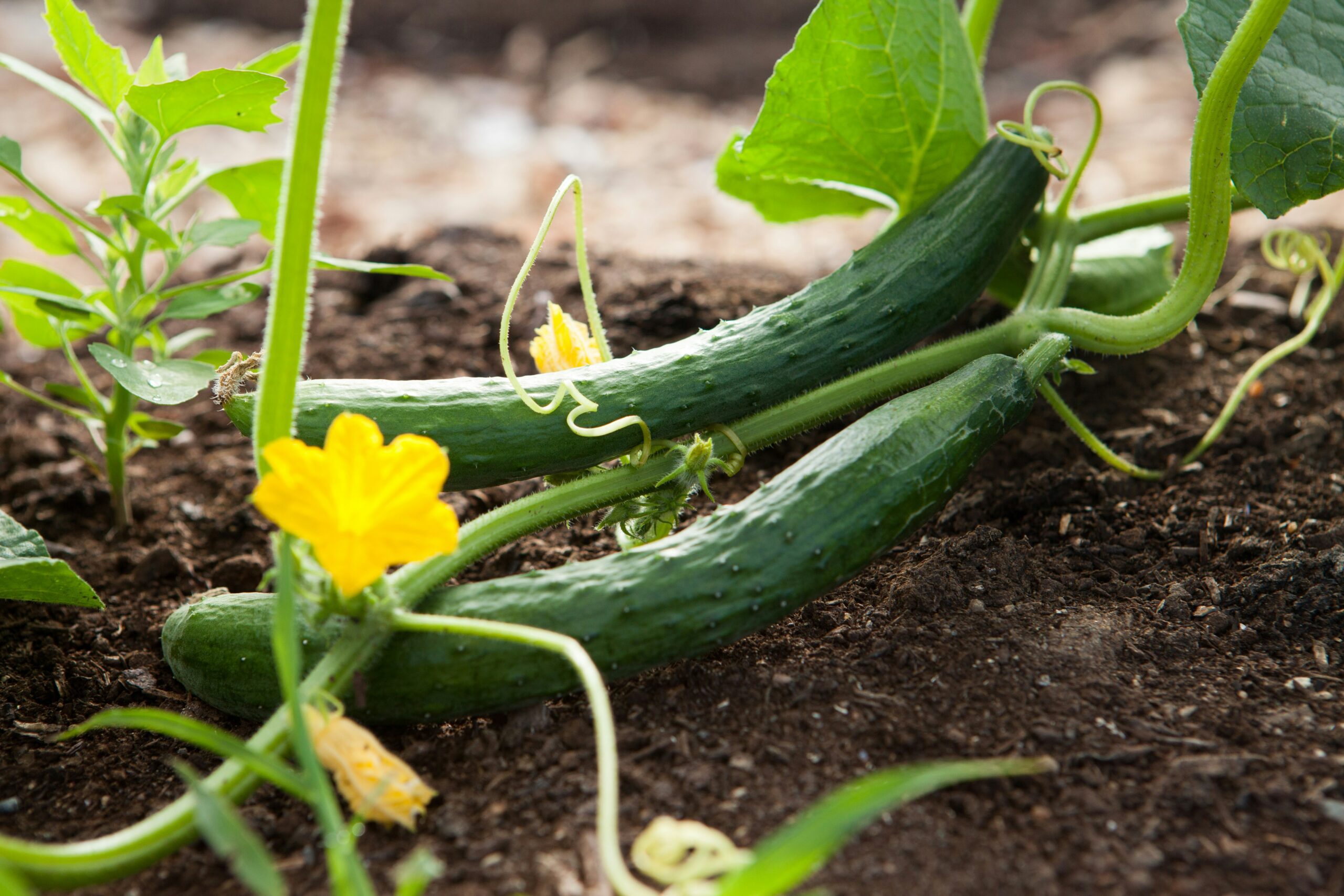
Learning how to grow cucumbers in the UK surprises most beginners — not because it’s difficult, but because the results are so much better than anything available in a supermarket. How to grow cucumbers in the UK does require a little more warmth than most other kitchen garden crops, which means either a greenhouse, a polytunnel, or a very sunny sheltered spot outside, but within those conditions cucumbers are fast, productive, and generous in a way that fully justifies the extra attention they need. A homegrown cucumber eaten the same day it’s picked has a flavour and crunch that the plastic-wrapped supermarket version simply cannot match.
The key to success is understanding which type of cucumber suits your growing situation — indoor or outdoor — and then giving it the warmth, water, and feed it needs once it gets going.
Indoor vs Outdoor Cucumbers: The Most Important Choice
This is the first decision, and getting it right matters more than any other single factor in cucumber growing.
Indoor (greenhouse) cucumbers are the long, smooth-skinned type most people buy in supermarkets. They need consistent warmth — ideally above 20°C — to perform at their best, which in the UK means a greenhouse, polytunnel, or heated conservatory. Under glass, they’re highly productive and produce the familiar long fruits from July through to September. They must not be grown in the open ground outside in most of the UK — they need the protection of a structure.
Varieties: Bella F1, Flamingo F1, and the reliable Telegraph Improved are among the best for UK greenhouse growing. Female-only (all-female) varieties such as Bella produce fruits without pollination and are the most practical for beginners — avoiding the complication of removing male flowers to prevent bitter, seedy fruits.
Outdoor (ridge) cucumbers are shorter, bumpier-skinned, and more robust. They’re bred to handle the variable conditions of a British summer outside and can be grown on a sunny, sheltered patio or in a raised bed without glass protection. They’re less productive than indoor types in a good year but don’t require a greenhouse.
Varieties: Marketmore is the most reliable and widely recommended outdoor variety for the UK. Burpless Tasty Green produces mild, virtually seedless fruits. Crystal Lemon — round, pale yellow fruits the size of a tennis ball — is an unusual and productive outdoor variety that consistently performs well in UK conditions.
For anyone with a greenhouse or polytunnel, indoor varieties are the better choice. For anyone growing entirely outside, outdoor ridge varieties are essential.
How to Grow Cucumbers in the UK: Sowing from Seed
Cucumbers need warmth to germinate — a soil temperature of at least 20°C, ideally 25°C — and they’re frost-tender, so all UK cucumber growing starts indoors.
Sow from late March to late April for planting into a greenhouse from late May, or for planting outside from early June once frost risk has passed.
Sow one seed per 9cm pot, on its side at 2cm depth — the same sideways sowing technique used for courgettes reduces the risk of the seed rotting before germination. Use a heated propagator or the warmest windowsill in the house. Germination is fast in warm conditions — often three to five days at 25°C.
Cucumber seedlings grow quickly and don’t like their roots disturbed, so avoid starting too early — a cucumber sown in March and potted on correctly will catch up with and overtake one sown in February that has become pot-bound waiting for warm enough conditions outside.
Once germinated and growing strongly with their first true leaves, pot up into 13cm pots and keep in a warm, bright location. Cucumbers at this stage are vulnerable to cold and draughts — a temperature drop below 10°C even briefly can set them back significantly.
Planting and Supporting Indoor Cucumbers
Plant greenhouse cucumbers into their final growing position once the greenhouse temperature stays reliably above 15°C at night — in most parts of the UK, from late May or early June.
Growing in the border soil of a greenhouse is traditional but can lead to soil-borne disease build-up over the years. Large containers or growing bags are more hygienic and give you control over the growing medium. Use two plants per standard growing bag, or a large pot of at least 30 litres per plant.
Cucumbers are vigorous climbers and need substantial vertical support. Run vertical strings from the greenhouse ridge or a horizontal wire near the top down to each plant, and train the main stem upward by twisting it around the string as it grows. Side shoots are trained along horizontal wires.
Training for indoor varieties: allow the main stem to grow vertically to the top of the support. Pinch out the growing tip when it reaches the roof. On female-only varieties, the side shoots can be left to develop — each will produce fruit. On standard varieties with both male and female flowers, remove all male flowers (the ones without a tiny fruit behind the petals) to prevent pollination, which causes bitter, seedy cucumbers.
Planting Outdoor Cucumbers
Plant outdoor ridge cucumbers outside from early June in most of England and Wales, or from mid-June in Scotland and northern England. Harden off plants thoroughly — two weeks of progressively longer outdoor exposure — before planting in their final position.
Outdoor cucumbers can trail along the ground, but training them up a trellis, netting, or wigwam of canes significantly improves airflow, makes fruits easier to spot and harvest, and reduces slug damage. Unlike indoor types, outdoor cucumbers should be pollinated naturally by bees — don’t remove the male flowers.
Choose the warmest, most sheltered spot available — a south-facing wall or fence, a sun trap corner of the garden, or a raised bed in full sun. Cold draughts are the primary enemy of outdoor cucumbers in the UK.
Pinch out the growing tip after five or six leaves to encourage the plant to bush out and produce more side shoots, each of which will carry fruits.
Watering and Feeding
Cucumbers are among the thirstiest plants in the kitchen garden. In full summer growth, a greenhouse cucumber may need watering once or twice daily. Inconsistent watering is the main cause of bitter fruits and blossom end rot — the plants need even moisture throughout the growing period.
Water at the base rather than overhead — wet foliage in a greenhouse encourages mildew and other fungal problems. In hot weather, damping down the greenhouse floor (wetting the floor to raise humidity) benefits cucumbers, which prefer a humid atmosphere.
Feed weekly with a high-potassium liquid fertiliser — tomato feed is ideal — once the first fruits begin to develop. Before fruiting, a balanced fertiliser every fortnight supports plant establishment and leaf development. Cucumbers are hungry plants and the difference between fed and unfed plants becomes dramatically visible by late July.
📖 Also read: How to Make Free Liquid Fertiliser from Weeds (And Why It Works Better Than You’d Think)
Harvesting Cucumbers
Cucumbers should be harvested while still firm and before they start to yellow. Most varieties are best picked at 20–30cm for indoor types, or 15–20cm for outdoor ridge types. Left on the plant to grow large and yellow, they signal to the plant that seed production is complete and flowering slows significantly.
Check plants every two to three days at the height of the season — cucumbers grow fast in warm conditions and can go from ideal to overripe in less than a week. Use a sharp knife or scissors rather than pulling, which can damage the stem and the plant.
A healthy indoor cucumber plant in a good UK summer can produce fifteen to twenty fruits over the season. Outdoor varieties produce fewer but are still well worth growing for the flavour and the freshness.
Common Problems
Powdery mildew is the most common cucumber problem in UK greenhouses — a white dusty coating on the leaves, usually appearing from late July onwards. It’s encouraged by dry roots combined with humid air. Maintain consistent watering, improve ventilation, and remove badly affected leaves. Some modern varieties have improved mildew resistance — worth checking labels when buying seed.
Bitter fruits in standard (non-female-only) varieties almost always result from accidental pollination — male flowers were left on the plant and the fruits were pollinated. Switch to female-only varieties like Bella to avoid this entirely.
Poor fruit set on outdoor varieties is usually a pollination issue — insufficient bee activity in cool or wet weather. Hand-pollinate using a small paintbrush to transfer pollen from male to female flowers on dry, warm mornings.
Yellowing lower leaves as the season progresses is normal — the plant naturally sheds its oldest leaves. Concern is only warranted if yellowing is rapid, widespread, or accompanied by other symptoms.
Cucumber mosaic virus causes mottled, distorted leaves and stunted, misshapen fruits. It’s spread by aphids and has no cure. Remove affected plants and control aphid populations on nearby plants.
Slugs target young outdoor plants. Protection measures in the first few weeks after planting out are essential.
The RHS has a comprehensive guide to growing cucumbers covering both indoor and outdoor varieties, training methods, and pest and disease management in detail.
📖 Also read: Natural Slug Control That Actually Works — No Pellets, No Chemicals, No Nonsense
Growing Cucumbers Without a Greenhouse
If you don’t have a greenhouse but want to try cucumbers, two approaches are worth considering.
A cold frame or cloche can extend the season and provide enough extra warmth for outdoor varieties in cooler parts of the UK, bringing the planting date forward by two to three weeks and protecting plants from late cold snaps.
A large container on a very sunny, south-facing patio works for outdoor ridge varieties in a reasonable summer. Use a pot of at least 30 litres, a good quality multipurpose compost, and provide a vertical support for the plant to climb. Water daily in warm weather and feed weekly. Results will be more variable than under glass but entirely achievable in a warm year.
📖 Also read: Container Gardening Ideas for Small UK Gardens — How to Grow a Lot in Very Little Space
A Few Final Thoughts
Cucumbers reward the effort they require with something genuinely special — a fresh cucumber picked and eaten in the garden on a warm August afternoon is one of the simple pleasures of the kitchen garden that justifies the whole project. They’re not the most beginner-friendly crop in the UK, but they’re far from the most difficult, and the requirements are clear and consistent enough that once you understand them, the results are reliable.
A greenhouse makes them easier. Consistent watering makes them possible. And picking them at exactly the right size makes them delicious.
Leave a Reply