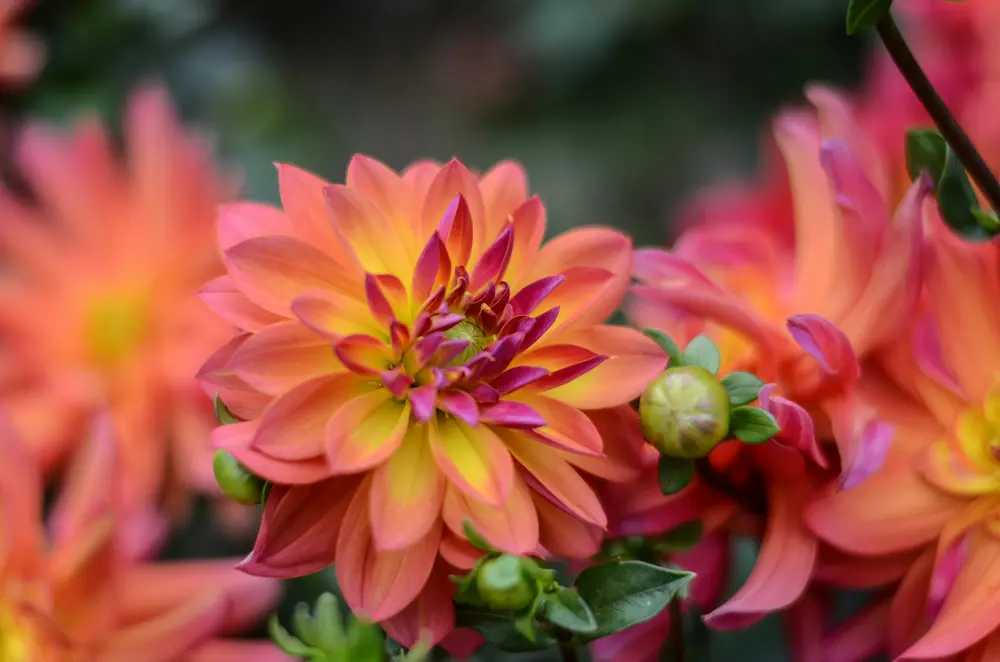
Growing dahlias from tubers is one of the most rewarding things you can do in a UK garden. You start with something that looks like a wrinkled brown root vegetable, and by late summer you’ve got a plant covered in blooms that would stop traffic. Dahlias are bold, long-flowering, and surprisingly easy to manage once you understand the annual rhythm of storing, planting, and — if you’re organised about it — dividing your clumps to get more plants for absolutely nothing.
Whether you’re a first-timer picking up a bag of tubers from the garden centre in April or a seasoned grower with a shed full of labelled boxes from last autumn, this guide covers everything you need to know.
📖 Also read: How to Grow Hollyhocks in the UK — Tall, Dramatic, and Completely HardyWhat Are Dahlia Tubers and How Do They Work?
Dahlias are tender perennials, originally from Central America and Mexico. In their natural habitat they’d survive year-round, but in the UK our winters are cold enough to kill the top growth. The plant retreats into its underground tubers — a cluster of fleshy, sausage-shaped roots joined at a central crown — and waits for warmer conditions.
Each year, the shoots emerge from the crown (the point where the old stems meet the tubers), not from the tubers themselves. This is important to understand because it affects both how you plant them and how you divide them. A tuber with no crown attached won’t grow — it’s just food storage. New growth only happens from the crown.
Buying Dahlias from Tubers in the UK
From February through to April, bags of dormant dahlia tubers appear in garden centres across the UK — stacked near the seed displays at Dobbies, Thompson & Morgan, and most independents. Online, specialist dahlia nurseries like Halls of Heddon in Northumberland offer an extraordinary range of named varieties that you simply won’t find on the high street.
When buying tubers, look for plump, firm specimens with no obvious soft or mushy patches. A little surface wrinkling is normal — tubers lose moisture in storage — but anything that feels hollow or rotten should be left on the shelf. Check too that the crown is intact, since that’s the growing point.
For size guidance: bedding dahlias grow to about 60cm (2ft) and suit containers or front-of-border positions. Most standard varieties reach around 1.2m (4ft) and need staking. A handful of giant cultivars can exceed 2m — spectacular, but they’ll need robust support and a sheltered spot.
📖 Also read: How to Grow Sweet Peas in the UKHow to Start Dahlias from Tubers Indoors
In most of the UK, dahlias can’t go outside until late May or early June when the risk of frost has passed. But you can get a head start by potting up your tubers indoors from early spring.
Place each tuber — or clump of tubers — in a pot of peat-free multipurpose compost, with the crown (the knobbly junction where the old stems were) positioned just below the surface. Keep the compost barely moist at first. Overwatering at this stage is the number-one reason tubers rot in pots. Water only when the compost feels dry an inch below the surface, and never let them sit in standing water.
Provide as much light as possible — a bright south-facing windowsill works well — and keep the temperature above 10°C. Shoots should appear within a few weeks. Once the risk of frost is past and your plants have been hardened off gradually over a week or two, they’re ready to go outside.
If you don’t have space to start them indoors, you can plant tubers directly into the ground from mid-April. The soil won’t freeze by then, so the tubers will be safe underground — and by the time shoots emerge in early June, any damaging frosts will usually be over.
Planting Dahlias from Tubers Outside
Dahlias want a warm, sunny, sheltered spot with fertile, free-draining soil. They thrive in moisture-retentive loam, but will sulk in waterlogged ground and can struggle in very sandy, dry conditions without regular watering.
Dig a hole deep enough to accommodate the full length of the tubers, and position the crown just at soil level. Space standard dahlias at least 60cm (2ft) apart — they fill out quickly and need air circulation to stay healthy. After planting, water generously and then apply a thick mulch of homemade compost or well-rotted manure around the base to lock in moisture and feed the soil.
Insert a sturdy stake at planting time — it’s much easier to do it now than to risk spearing a tuber later in the season. Bamboo canes work well for most varieties; giant-flowered types need something stouter, like a thick wooden post, with individual stems tied in as they grow.
📖 Also read: How to Layer Plants in a BorderHow to Store Dahlia Tubers Over Winter
Once the first frosts blacken the foliage — usually October or November in most parts of England, a little earlier in Scotland and the north — it’s time to think about storing your tubers. This is the part that intimidates beginners, but it’s genuinely straightforward once you’ve done it once.
Cut the stems back to about 10–15cm (4–6in) and carefully lift the clumps with a fork, working outward from the plant to avoid stabbing the tubers. Knock off as much loose soil as you can, then — and this step matters — turn them upside down for a few weeks so that any moisture trapped in the hollow stems can drain out completely. Moisture left sitting in the stems will cause rot during storage.
Once dry, pack the tubers into shallow boxes or crates, surrounding them with dry spent compost, sand, straw, or even crumpled newspaper. Label each box with the variety name. Store in a cool, frost-free place — a garage, shed, or cellar is ideal. Aim for somewhere that stays above freezing but doesn’t get too warm or the tubers will try to sprout. Check them every few weeks through winter and remove any that show signs of softening or mould before it spreads to the others.
In milder parts of the UK — coastal Cornwall, Devon, and some urban areas — you may be able to leave tubers in the ground over winter, especially in light, free-draining soil. Simply cut back the stems and pile at least 15cm (6in) of insulating mulch over the crown. It’s a gamble on the weather, though, and most gardeners prefer not to risk it.
📖 Also read: How to Fix Waterlogged SoilHow to Get More Dahlias from Tubers for Free
This is where growing dahlias from tubers gets genuinely exciting. One clump, left to grow for a season, can produce a mass of tubers that you can divide into multiple plants the following spring — multiplying your stock for nothing.
In late winter (February is ideal), bring your stored tubers into a warm room or heated greenhouse and pot them up in shallow trays of compost. Once shoots appear — usually 2–3cm tall — you can cut the clump apart with a clean, sharp knife, making sure every division has both tubers and at least one shoot or visible bud attached at the crown. Tubers without a crown bud will not produce plants, so be ruthless about discarding them.
Pot up each division separately, label carefully, and grow on in a bright, frost-free spot until late May or early June. You can also take basal cuttings from the new shoots — snipping them cleanly just below the surface — and root them in a propagator or on a warm windowsill. A single stored clump can easily yield six to ten new plants this way, which is why enthusiastic dahlia growers so often end up with more plants than garden space.
📖 Also read: Easiest Vegetables to Grow in the UK for BeginnersDahlias from Tubers — The Ongoing Care They Need
Dahlias are hungry, thirsty plants that reward attentive gardeners. Water regularly in dry spells — they won’t tolerate drought — and feed container-grown plants fortnightly from early July with a potassium-rich fertiliser such as tomato feed to boost flowering.
Pinch out the main growing tip when the stem reaches around 40cm to encourage bushier growth and more flowers. Deadhead spent blooms weekly — cutting back to a leaf joint — to keep new buds coming. Dahlias will flower right through until the first frosts if you keep on top of this, making them exceptional value for border colour from July to November.
Watch out for slugs on young shoots in spring (they are devastatingly effective), aphids in summer, and powdery mildew in dry spells. For detailed variety recommendations and further growing advice, the RHS dahlia growing guide is an excellent resource, covering everything from choosing cultivars to managing pests organically.
Why Dahlias Deserve a Place in Every UK Garden
There’s a reason dahlia societies across the UK — from the National Dahlia Society to dozens of local clubs — attract such dedicated members. These are plants with genuine spectacle, extraordinary variety, and the kind of season-long payoff that very few other plants can match. Once you understand the simple rhythm of planting, deadheading, lifting, and storing, growing dahlias from tubers stops feeling like a chore and starts feeling like one of the year’s most satisfying rituals.
Start with three or four tubers, choose a variety that excites you, and see how many plants you can multiply them into by the following spring. You’ll run out of garden space long before you run out of enthusiasm.
Leave a Reply