The idea of keeping bees is enormously appealing. A hive at the bottom of the garden, a jar of your own honey on the breakfast table, the gentle hum of a productive colony through a summer afternoon — it sounds like the perfect extension of a passion for growing and wildlife. And for many UK gardeners it is exactly that. But beekeeping is also one of the most frequently romanticised and least honestly described hobbies in the gardening world, and the gap between the dream and the reality catches a significant number of beginners off guard. If you’re seriously considering whether to keep bees in your garden in the UK, this guide gives you the honest picture — the genuine rewards alongside the real demands — so you can make a properly informed decision.
The short answer to the question is: it depends almost entirely on how much time, money, and ongoing learning you’re genuinely willing to commit to. Bees are not a low-maintenance wildlife feature. They are livestock — living creatures in your care, with needs, diseases, and behaviours that require active management. Done well, beekeeping is one of the most absorbing and rewarding pursuits a gardener can take up. Done half-heartedly, it is a welfare problem for the bees and a source of frustration for you.
📖 Also read: How to Create a Garden That Attracts Butterflies in the UK
What Keeping Bees in Your Garden UK Actually Involves
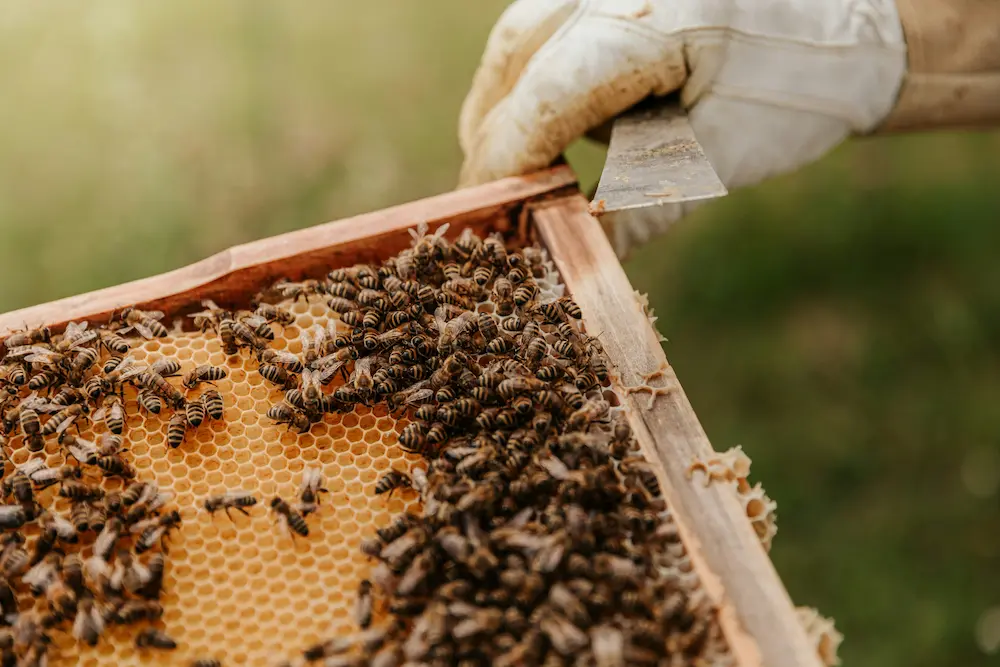
A healthy honeybee colony in the UK requires inspection roughly every seven to ten days throughout the active season (April to September). Each inspection takes 30–60 minutes and involves opening the hive, lifting and examining each frame, assessing the health of the colony, checking for signs of disease, and making management decisions based on what you find. Miss inspections and you risk missing swarm preparations — the colony’s natural urge to divide and leave — which, in a residential garden, can cause significant problems for you and your neighbours.
Outside the inspection season, winter management is less intensive but not absent. You need to check the hive is secure against weather and predators, monitor the colony’s weight (an indicator of food stores), and treat for Varroa mite, the most serious health threat facing honeybees in the UK. Varroa treatment is not optional — untreated colonies typically collapse within three years, causing significant harm to the bees and potentially spreading the mite to neighbouring colonies.
The Legal and Registration Requirements in the UK
Beekeeping in the UK is largely unregulated in terms of licensing, but there are responsibilities you need to be aware of. All beekeepers are strongly encouraged — and in some parts of the UK effectively required — to register their hives on BeeBase, the National Bee Unit’s online registry. Registration is free, takes ten minutes, and allows government bee inspectors to contact you if a notifiable disease is detected in your area. Notifiable bee diseases in the UK include American Foulbrood and European Foulbrood, both of which require immediate reporting and, in the case of American Foulbrood, the destruction of the colony and hive by law.
There is no legal minimum garden size for keeping bees in England, Scotland, or Wales, but practical and neighbourly considerations are significant. Most beekeeping associations recommend a garden of at least 5m × 5m with a solid fence or hedge of at least 2m height behind the hive, which forces the bees to fly upward when leaving and returning, reducing the likelihood of them flying at head height across a neighbour’s garden. In densely populated urban areas, hive placement requires careful thought, and local council planning rules occasionally apply to hive structures.
📖 Also read: How to Grow and Trim a Hedge in the UK — From Bare Root to Beautiful Boundary
The Honest Costs of Starting Beekeeping
The start-up cost of beekeeping is higher than most beginners expect. A basic National hive (the standard UK hive design) with a nucleus colony of bees costs in the region of £300–£500, depending on whether you buy new or secondhand equipment and whether you source bees locally or from a commercial supplier. Add a full beekeeper’s suit (£60–£120), hive tool, smoker, and the basic inspection kit, and you’re looking at a realistic first-year spend of £500–£700 before you’ve harvested a single frame of honey.
Ongoing annual costs include Varroa treatments (essential), replacement frames and foundation, and the inevitable equipment repairs and replacements. If a colony fails — which happens to beginners with some regularity — replacing it costs another £150–£250 for a new nucleus. These are not reasons not to start beekeeping, but they are reasons to go in with realistic expectations rather than discovering them mid-season.
Is Your Garden Big Enough? And Is the Location Right?
Bees forage up to 3–5km from the hive, so they don’t rely exclusively on your garden for food — nearby parks, allotments, farmland, and road verges all contribute to their forage. What your garden does need to provide is a safe, stable position for the hive: sheltered from prevailing winds, with morning sun to warm the hive entrance and encourage early foraging, and positioned so the flight path doesn’t cross a regular human thoroughfare. A hive in the corner of a garden, facing south or south-east, backed by a tall hedge or fence, is the classic British beekeeping setup for good reason.
You will also need to consider your neighbours honestly. A well-managed hive in a sensible position is rarely a problem — bees are far less aggressive when foraging than people imagine, and a healthy colony produces very little nuisance. But a defensive colony, a swarm that lands in a neighbour’s garden, or bees flying repeatedly at someone who is allergic to stings can create serious neighbourhood conflict. Most experienced beekeepers recommend talking to immediate neighbours before starting, and some local beekeeping associations offer free advice visits to assess suitability.
📖 Also read: Bird Feeders in the UK — How to Attract the Right Birds to Your Garden All Year
Learning Before You Start — Why a Course Is Non-Negotiable
Every reputable beekeeping association in the UK — including the British Beekeepers Association (BBKA), the Scottish Beekeepers’ Association, and the Welsh Beekeepers’ Association — strongly recommends completing a beginners’ course before acquiring your first bees. The BBKA’s introductory course, offered through local associations across England and Wales, combines classroom learning with practical hands-on hive sessions that are genuinely invaluable for building the confidence and knowledge to manage a colony safely.
Books are a useful supplement but cannot substitute for practical experience. Beekeeping is a tactile, observational skill — learning to read a frame, to identify eggs and young larvae, to spot a queen, to recognise the difference between a colony preparing to swarm and one that is simply busy — requires time in front of an open hive with an experienced mentor. Most local associations pair beginners with an experienced beekeeper during their first season, which is the single most effective way to avoid the mistakes that lead to colony losses.
The Genuine Rewards — What You Actually Get
With all of that said honestly: beekeeping, done well, is remarkable. A thriving colony at peak summer strength contains 50,000–80,000 bees, operating as a superorganism of extraordinary complexity and efficiency. Working through a hive inspection — the smell of warm wax and propolis, the weight of a full frame of capped honey, the quiet satisfaction of finding a healthy, laying queen — is one of the most absorbing experiences in the natural world, and it happens in your own back garden.
The honey is genuinely special too. UK garden honey — made from whatever your local landscape offers, neighbourhood by neighbourhood, season by season — has a flavour entirely its own, completely unlike commercial blends. A jar of honey from your own hive, given as a gift or spread on toast on a November morning, carries a quality of pleasure that is hard to put into words but very easy to understand once you’ve experienced it.
The pollination benefit to your garden is real but frequently overstated — your garden’s pollination needs are almost certainly already well-served by solitary bees, bumblebees, and hoverflies, and adding a honeybee colony doesn’t dramatically change this. The value of keeping bees is not primarily agronomic. It’s the relationship: the ongoing, weekly engagement with a living colony through the seasons, the learning that never really stops, and the particular satisfaction of doing something genuinely skilled and genuinely useful.
📖 Also read: How to Grow Sweet Peas in the UK
Where to Start If You’ve Decided to Go Ahead
The practical first steps are straightforward: join your local beekeeping association (find it through the BBKA website), book onto a beginners’ course for the coming spring, and register on BeeBase. Most associations hold open days, give beginners access to association apiaries for hands-on practice, and offer mentoring through the first season — all of which are far more valuable than any amount of reading or online research.
Don’t buy equipment before completing at least the first part of a course. Hive designs, frame sizes, and equipment choices vary between regions and beekeepers, and the guidance of a local mentor on what to buy — and what to avoid — will save you money and the frustration of incompatible kit. Source your bees locally wherever possible, ideally from a reputable local beekeeper rather than a distant commercial supplier, as locally-bred bees are better adapted to your climate and forage conditions and are typically calmer and easier to manage.
Leave a Reply