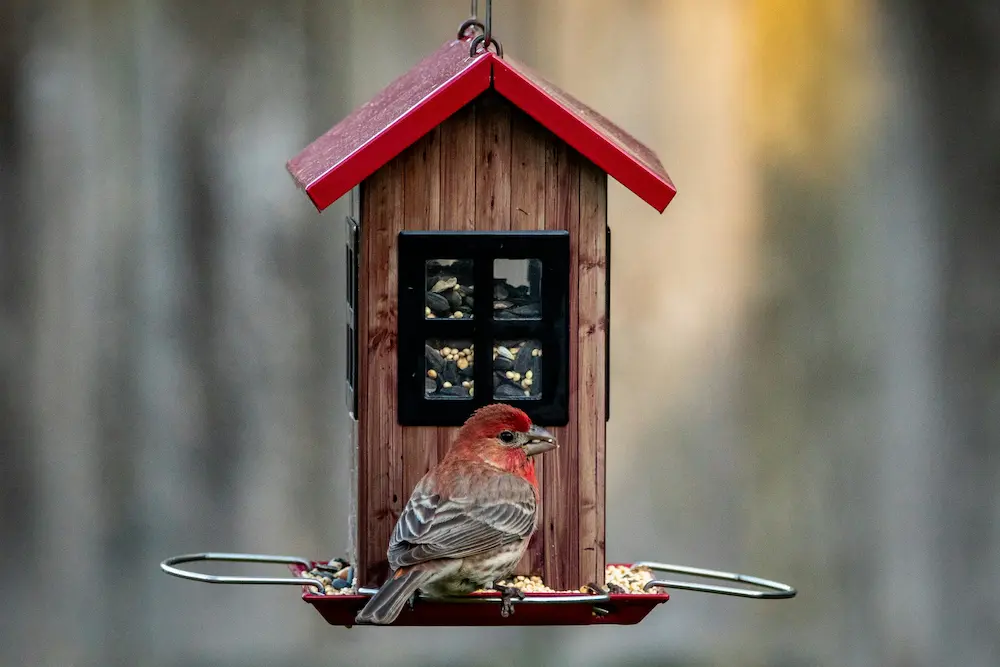
Bird feeders are one of the simplest and most rewarding things you can add to a UK garden. Put out the right food in the right feeder in the right spot and you’ll have a steady stream of visitors within days — robins, blue tits, goldfinches, sparrows, and if you’re lucky, the occasional woodpecker or nuthatch. But the difference between a feeder that buzzes with activity and one that sits largely ignored comes down to a handful of decisions that most people never think about. This guide covers everything you need to know about bird feeders in the UK — from choosing the right types to positioning them well and keeping them clean enough to actually benefit the birds you’re trying to help.
It’s also worth saying: feeding garden birds in the UK is genuinely valuable, not just a pleasant hobby. The RSPB estimates that around 60% of UK adults feed wild birds, making it the most widely practised form of wildlife conservation in the country. As natural habitats continue to diminish, a well-managed garden feeding station makes a real difference to local bird populations, particularly through winter and the hungry late-summer period when natural food is scarce.
📖 Also read: How to Create a Garden That Attracts Butterflies in the UK
Types of Bird Feeders and What Each Attracts
Seed tube feeders are the most versatile and widely used type — a clear plastic or metal tube with multiple ports and perches, filled with sunflower hearts, nyjer seed, or mixed seed. They attract a wide range of small garden birds: blue tits, great tits, coal tits, house sparrows, chaffinches, and greenfinches all use them readily. Metal-mesh versions are more durable and squirrel-resistant than thin plastic; look for feeders with metal ports rather than plastic ones, which crack and can injure birds over time.
Nyjer seed feeders have very fine ports designed specifically for nyjer (also called thistle seed) — a tiny, oil-rich seed that goldfinches adore. If you want to attract goldfinches specifically, a dedicated nyjer feeder stocked consistently is the most reliable way to do it. Goldfinches are now one of the UK’s most common garden visitors and their increase is directly linked to the widespread adoption of nyjer feeders over the last two decades.
Fat ball feeders are mesh cages or tubes designed for suet fat balls — one of the most energy-dense foods you can offer birds, especially valuable in cold weather. Starlings, sparrows, tits, and woodpeckers all use them. Avoid fat balls sold in nylon netting bags — birds can get their feet tangled in the mesh with sometimes fatal results. Always remove fat balls from their netting and place them in a proper cage feeder.
Ground feeders are low, open trays or platform feeders that attract species that don’t use hanging feeders — robins, dunnocks, blackbirds, thrushes, and wrens all feed predominantly at or near ground level. A simple ground tray with a roof to keep rain off the food, positioned near cover, can attract species that would never visit a hanging feeder. In most gardens, a combination of hanging and ground-level feeding attracts the widest range of species.
Peanut feeders are wire mesh tubes through which birds extract whole peanuts piece by piece. Blue tits, great tits, nuthatches, and great spotted woodpeckers all use them enthusiastically. Only ever use peanuts in a proper mesh feeder — loose whole peanuts offered outside the breeding season pose a choking risk to nestlings if parent birds carry them back to the nest.
📖 Also read: How to Grow and Trim a Hedge in the UK — From Bare Root to Beautiful Boundary
The Best Foods for UK Garden Birds
Sunflower hearts are the single best all-round bird food you can offer. They’re high in fat and protein, suitable for almost every UK garden bird, produce no husk waste on the ground, and are taken enthusiastically year-round. If you only stock one type of food, make it sunflower hearts. They cost more per kilogram than mixed seed but produce far less waste — cheap mixed seed is often bulked out with cereals that most birds simply kick aside.
Nyjer seed is essential if you want to attract goldfinches and siskins. Suet products — fat balls, suet pellets, and suet blocks — are invaluable in winter when birds need maximum calories to maintain body temperature through cold nights. Live mealworms are the single most irresistible food for robins and are excellent for attracting them reliably to a specific spot; dried mealworms are a convenient alternative, though less appealing to some birds.
Avoid using salted peanuts, bread, desiccated coconut, or cooking fat — all of these are harmful to birds. Milk should never be offered. In spring and summer, be particularly careful about offering whole peanuts or large food items that parent birds might carry to chicks that can’t swallow them safely.
Where to Position Bird Feeders in a UK Garden
Position is one of the most important factors in feeder success, and it involves balancing two competing needs: the birds’ need for safety, and your desire to watch them. Birds feel most comfortable feeding near cover — a hedge, a shrub, or a tree — where they can retreat quickly if a predator appears. A feeder positioned in the middle of an open lawn, far from any cover, will be used reluctantly and infrequently. A feeder positioned 2–3 metres from a hedge or dense shrub, with a clear sightline so birds can observe before approaching, is close to ideal.
Equally important is distance from windows. The RSPB recommends placing feeders either very close to windows (less than 1 metre, so birds can’t build up dangerous speed if they fly toward the glass) or well away from them (more than 3 metres). The dangerous zone is the middle distance — far enough for birds to reach full speed, close enough for the window to look like open sky.
Height matters too. Hanging feeders at roughly head height (1.5–2m) gives you a good view and keeps food out of reach of most cats. Ground feeders should be positioned in the open enough that approaching cats can be spotted, but close enough to low cover that birds can escape quickly. Relocate feeders occasionally if you notice a cat learning to stalk a particular spot — birds adapt quickly to new positions.
📖 Also read: Solar Garden Fountains — How to Choose, Place, and Maintain One in a UK Garden
Feeding Birds Through the Seasons
The idea that bird feeders are only needed in winter is a persistent myth. While winter feeding is critical — birds can lose up to 10% of their body weight in a single cold night and need to replenish it rapidly each morning — garden birds benefit from supplementary feeding year-round in the UK.
Spring is the hungriest period for many birds, as natural food stocks are depleted after winter and breeding demands are at their highest. Summer feeding supports parent birds raising multiple broods and young birds learning to find food independently. Autumn is when many species, including migrant visitors like redwings and fieldfares from Scandinavia, first arrive and need to replenish energy after long flights. Year-round feeding, consistently maintained, produces a garden bird population that is healthier and more diverse than seasonal feeding alone.
The one seasonal adjustment worth making is to avoid offering loose whole peanuts or large suet chunks during the main nesting season (April to July), when parent birds are most likely to carry food back to chicks. Suet pellets, sunflower hearts, and nyjer are all fine year-round.
Cleaning Bird Feeders — The Step Most People Skip
This is genuinely important, not a minor detail. Dirty feeders harbour bacteria including Salmonella and the parasite Trichomonas gallinae, which causes trichomonosis — a disease that has killed significant numbers of greenfinches and chaffinches across the UK since 2006. Regular cleaning is the single most effective thing you can do to ensure your bird feeding is actually benefiting rather than harming the birds visiting your garden.
Clean feeders every one to two weeks using hot water and a brush, with a mild disinfectant solution or a dedicated feeder cleaner (available from most garden centres and bird food retailers). Rinse thoroughly and allow to dry completely before refilling — wet seed left in a feeder quickly moulds. Move feeders to a fresh spot on the ground beneath them regularly, as accumulated droppings and husks on the ground below become a disease reservoir that ground-feeding birds then walk through.
Replace old, cracked plastic feeders — broken surfaces trap bacteria and can injure birds. Metal feeders last far longer and are much easier to clean thoroughly. A set of dedicated feeder-cleaning brushes, kept separate from kitchen brushes and stored outdoors, is a small investment that makes the job quick and consistent.
📖 Also read: Garden Lighting — How to Highlight Your Plants and Create the Right Atmosphere
Adding Water — The Upgrade That Makes the Biggest Difference
If you only do one thing beyond putting up a feeder, add a bird bath. Fresh water for drinking and bathing attracts more species than food alone, including many birds that don’t visit feeders at all — blackbirds, song thrushes, starlings, and collared doves all bathe enthusiastically. A shallow dish or purpose-made bird bath positioned near (but not directly under) a feeder, with a gently sloped interior so birds can wade in gradually, will be in constant use from dawn to dusk on dry days.
Change the water every day or two to keep it clean. In winter, check it each morning and break any ice with a gentle pour of warm (not boiling) water — birds’ access to unfrozen water in cold weather is at least as important as their access to food. A small floating ball or a purpose-made bird bath heater prevents freezing on the coldest nights.
Building a Feeding Station That Works
The most effective garden bird feeding set-up combines several elements: a hanging seed feeder stocked with sunflower hearts, a nyjer feeder for goldfinches, a fat ball cage for cold-weather energy, a ground tray for robins and blackbirds, and a fresh bird bath positioned nearby. This covers the feeding preferences of the majority of UK garden bird species and creates a feeding station that remains active year-round rather than attracting only one or two species.
Start with one or two feeders, position them well, keep them clean, and be patient. Birds are creatures of habit and it can take two to four weeks for local birds to discover a new feeding station — particularly if you’ve moved to a new house or are setting up a feeding area in a garden that hasn’t been fed before. Once they find it, they’ll be back every morning.
Leave a Reply