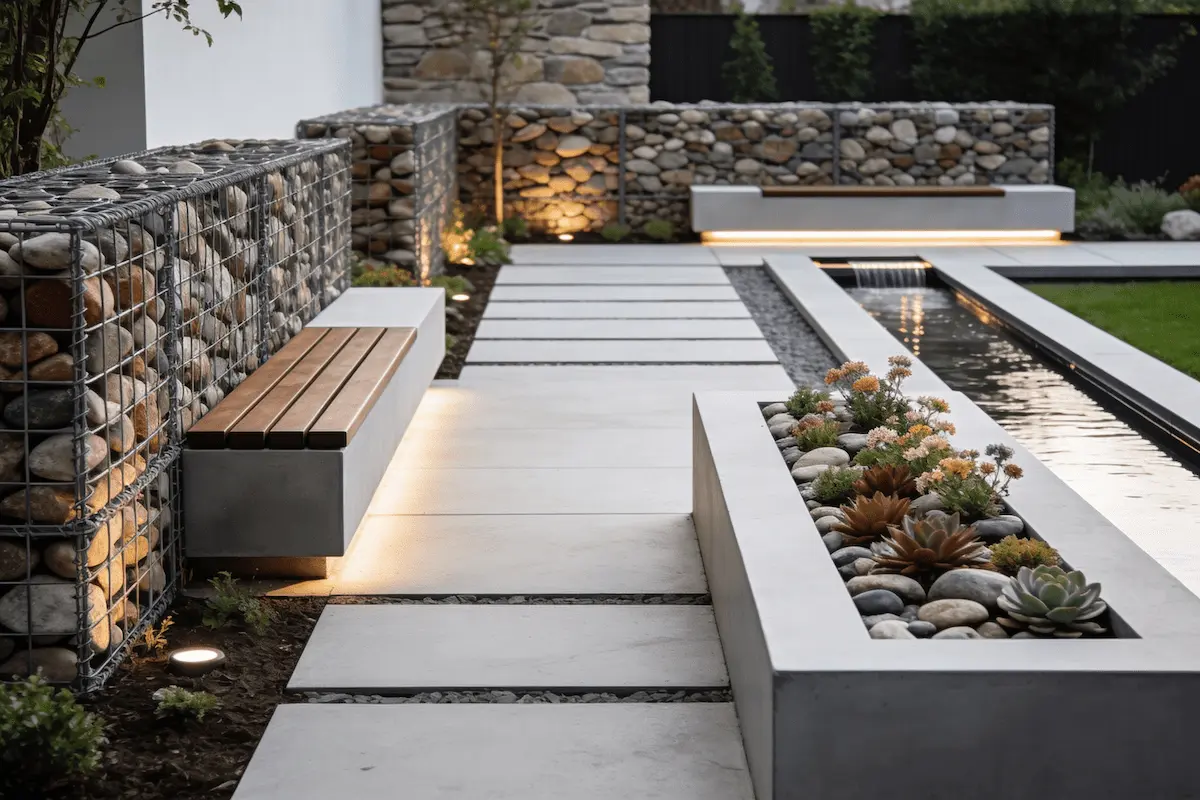
Gabion walls UK garden lovers keep spotting — those striking cages filled with stone or slate — are absolutely as good as they look. Gabion walls have been used in civil engineering for decades to hold back slopes and reinforce riverbanks, but UK garden designers have embraced them enthusiastically, and once you understand how they work and what they cost, it’s easy to see why. A gabion wall in a UK garden gives you something that timber, brick, and rendered concrete rarely manage all at once: strength, texture, drainage, and a look that only improves with age.
What Exactly Is a Gabion Wall?
A gabion is a wire mesh cage — usually made from galvanised or PVC-coated steel — that you fill with rocks, stones, slate, flint, or even broken terracotta. The cage holds the fill material in place while water drains freely through the gaps, which is one of the reasons gabions are so popular in gardens that suffer from poor drainage or heavy rainfall. Once filled and closed, the structure becomes incredibly heavy and solid, needing no mortar, no concrete footings in most applications, and very little maintenance.
For any gabion walls UK garden project, you’ll find gabions sold by landscaping suppliers like Marshalls, Travis Perkins, and numerous online retailers, with prices for a standard cage starting from around £30–£50 depending on size and gauge.
Why Gabion Walls Work So Well in a UK Garden
Britain’s climate throws a lot at garden structures — freeze-thaw cycles, wet winters, and summers that swing between drought and downpour. Gabions handle all of this with ease. Because they’re permeable, they don’t trap water behind them the way a solid wall does, so you don’t get the pressure build-up that can crack brickwork. The wire mesh is designed to flex slightly rather than crack, which means a well-built gabion wall will outlast most timber and rival the longevity of a good brick wall at a fraction of the cost. For gardens on slopes, near drainage channels, or in areas with heavy clay soil, they’re often the single most practical boundary or retaining option available.
📖 Also read: Dealing with an Uneven Garden — How to Fix Bumpy and Sloped Spaces
Gabion Walls as Retaining Walls and Terracing
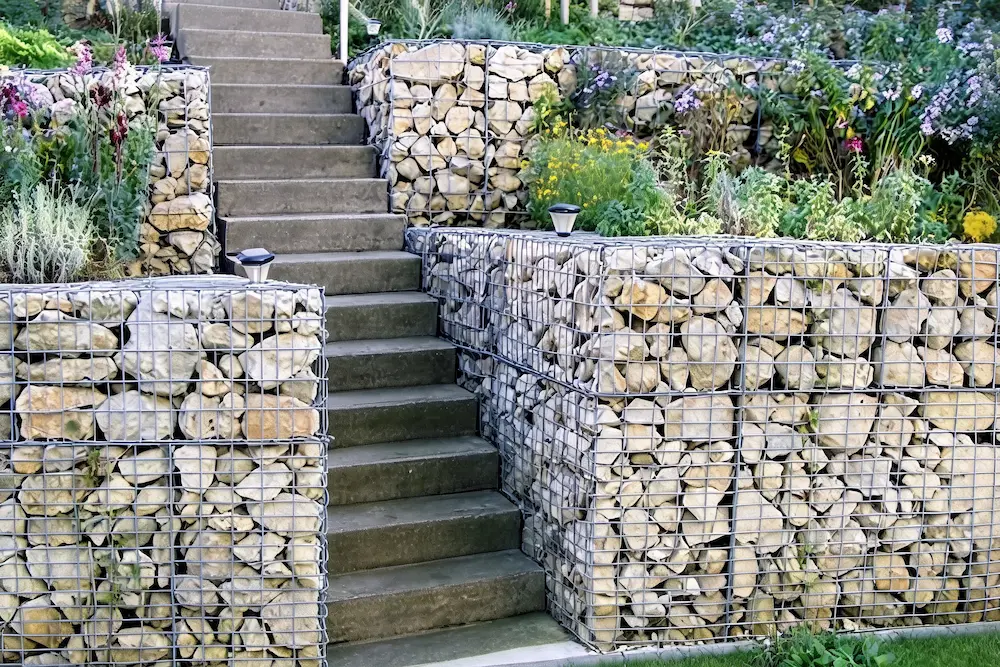
This is the most common use for gabion walls UK garden design, and the one they were practically born for. If you have a sloping plot — especially common in gardens across Wales, the Peak District, or anywhere with natural topography — a gabion retaining wall lets you create level terraces without the expensive groundwork a brick or concrete wall would require. You don’t need a structural engineer for a low retaining wall (generally under one metre), though for anything taller, it’s worth taking professional advice.
The fill material you choose becomes part of the aesthetic: local limestone gives a Cotswolds feel, dark Welsh slate looks contemporary and dramatic, and mixed river pebbles soften the whole effect beautifully.
📖 Also read: Rocks, Pebbles and Bark — What to Choose and Where to Use Them
Using Gabion Walls as Raised Beds
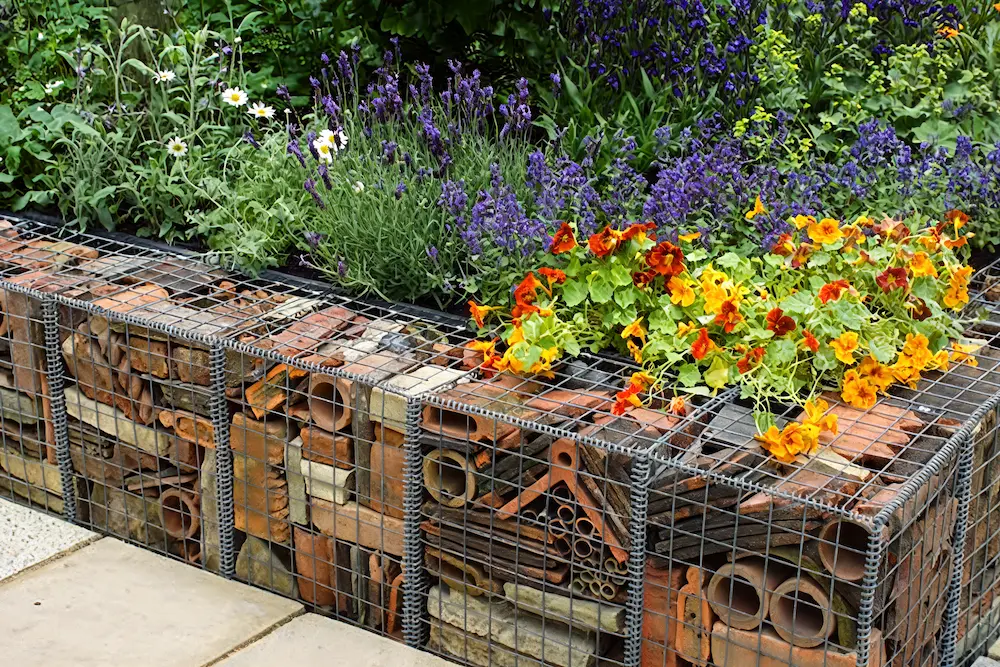
Gabion raised beds are one of the most satisfying gabion walls UK garden projects you can take on over a weekend. Because the walls are permeable, drainage is excellent — a real advantage for growing vegetables and herbs that hate waterlogged roots. You line the inside of the cage with a layer of weed-suppressing membrane or heavy-duty polythene (leaving the base open) before filling with good topsoil and compost, and the stone exterior means the beds look architectural and intentional rather than like an afterthought.
They’re also substantially more durable than most timber raised beds, which will eventually rot. A pair of gabion raised beds filled with charcoal-grey slate running along a patio edge looks genuinely stunning and will still look that way in twenty years.
Gabion Seating and Low Walls
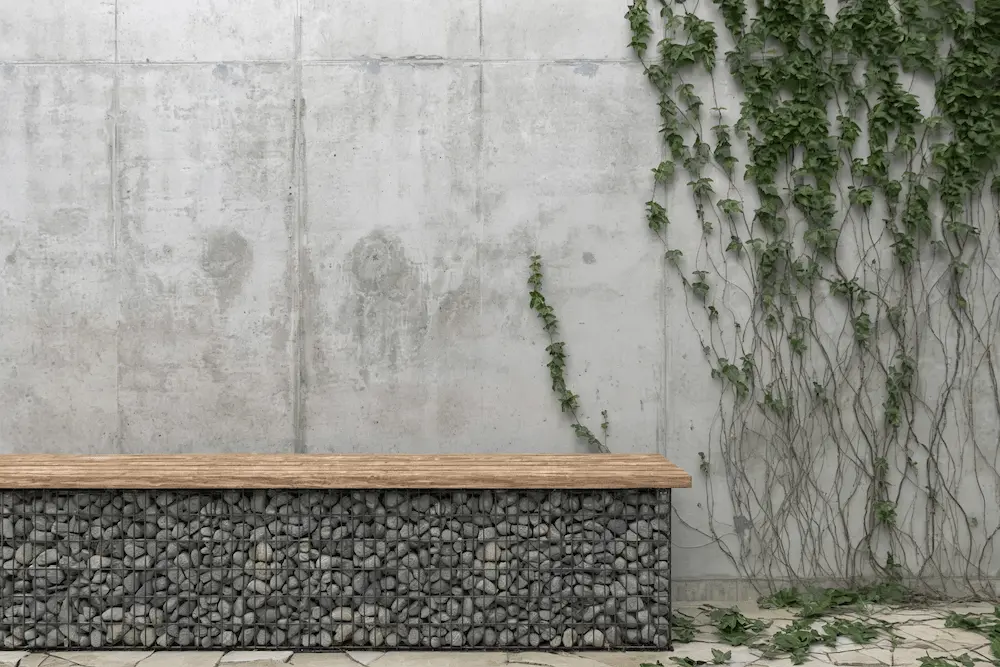
One of the cleverest applications for gabion walls in a UK garden is as built-in seating. A gabion structure around 45–50cm tall can be topped with a smooth hardwood plank — oak and iroko are popular choices — to create permanent bench seating that doubles as a boundary or divider. This works especially well around fire pit areas or at the edge of a terrace where you want a solid edge without a fence. The wood-and-stone combination is one of those pairings that looks expensive without necessarily costing it.
Add outdoor cushions and you’ve got a seating area that requires essentially zero maintenance beyond re-oiling the wood every couple of years. If you’re planning this as part of a broader garden redesign, it’s worth thinking through the layout carefully before you start.
📖 Also read: How to Plan Your Garden — A Practical Guide to Getting It Right
Gabion Walls as Privacy Screens and Boundaries
If you need privacy or a boundary feature but want something more interesting than close-board fencing, a gabion wall is worth serious consideration. A wall of around 1.5–1.8 metres gives good screening while the open structure of the fill material means it doesn’t feel as oppressive as a solid fence.
You can plant directly in front of or behind it — ornamental grasses, ferns, and trailing plants all look spectacular against stone — and climbers like ivy or Virginia creeper will thread themselves through the wire over time, softening the whole structure. This is an approach you’ll see increasingly in contemporary UK garden design, particularly in gabion walls UK garden settings where a sense of enclosure matters but raw concrete feels too harsh.
📖 Also read: How to Grow and Trim a Hedge — Boundaries That Look After Themselves
DIY Gabion Walls: What You Actually Need to Know
Building a gabion wall yourself is genuinely manageable for most capable DIYers, but there are a few things worth getting right from the start. The base matters: even though gabions don’t need concrete footings in the way brickwork does, you should start on firm, level ground and compact it thoroughly. For anything more than two courses high, consider laying a single course of compacted hardcore first.
When filling, it pays to hand-place the outer visible stones carefully so the face looks intentional, then backfill the middle with cheaper or broken material — this keeps costs down without compromising the look. Use wire ties or panel clips between stacked cages to stop them shifting. And always buy wire with a gauge of at least 3mm for anything structural; thinner wire will deform over time under the weight of stone — and your gabion walls UK garden installation will stay solid for decades.
Note: this tutorial uses custom-cut concrete remesh rather than pre-made gabion cages. The core principles — base preparation, filling technique, and stone placement — are identical. In the UK, pre-assembled gabion cages are widely available from Travis Perkins, Marshalls, and online suppliers including Gabion1.co.uk, which removes the mesh-cutting step entirely and suits most garden DIY projects.
Gabion Walls and Planting: Making Them Part of the Garden
The real magic of gabion walls UK garden planting is what you plant alongside and through them. Because the surface is textured and open, plants that would normally hug walls — sedums, sempervivums, aubretia, and small ferns — can actually root into the gaps between stones, particularly if you pack a little compost into the crevices.
In front of a gabion wall, the heavy, structural quality of the stone makes a superb backdrop for soft, airy planting: swaying grasses, tall verbena, alliums, and wildflowers all look dramatic against slate or limestone. This contrast between the rugged engineered structure and loose naturalistic planting is exactly the balance that characterises a lot of contemporary British garden design, and gabions give you that contrast at a cost that’s hard to beat.
📖 Also read: How to Layer Plants in a Border for Year-Round Interest
Gabion Walls UK Garden: Cost, Sourcing, and Practical Tips
Gabion cages are widely available across the UK from landscaping suppliers, builders’ merchants, and online retailers. A standard 1m × 0.5m × 0.5m cage typically costs between £30 and £60 depending on the wire gauge and supplier. The fill material is often the bigger variable — if you’re in a rural area, you may be able to source local stone cheaply from a quarry or salvage yard, which also gives the wall an authentically regional feel. In areas where Cotswold stone, Yorkshire sandstone, or Welsh slate is locally abundant, this is a real advantage.
If budget is a constraint, remember that only the outer visible stones need to look good: the core can be filled with broken paving slabs, leftover hardcore, or any other heavy inert material. That’s one of the things that makes gabions genuinely one of the most cost-effective structural garden features available in the UK today. For more inspiration, the RHS guide to garden walls covers structural options worth comparing.
📖 Also read: Garden Paths — DIY Ideas to Transform How You Move Through Your Garden
Leave a Reply