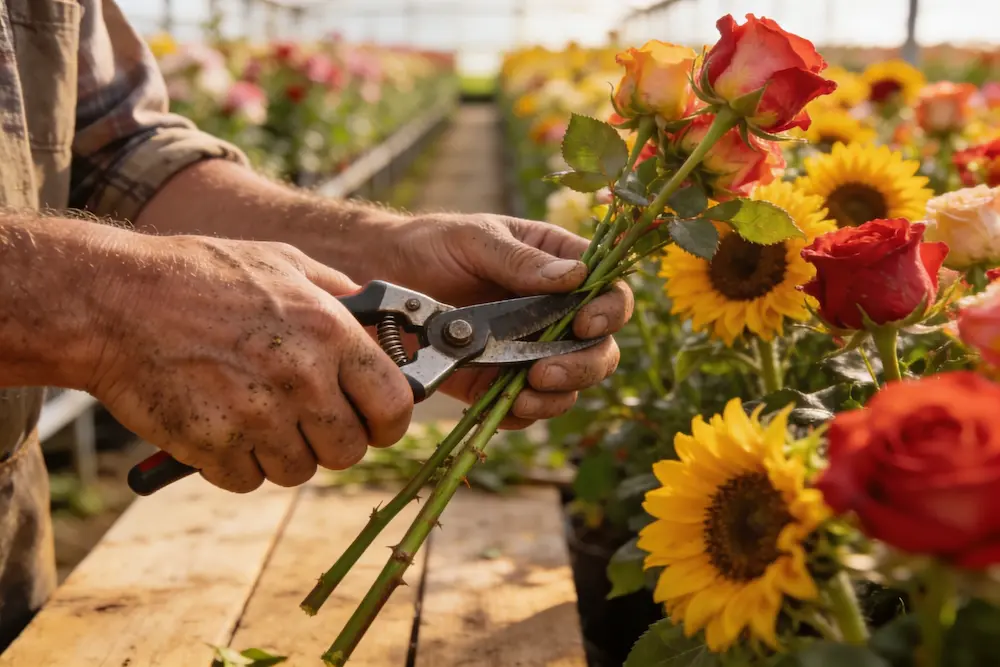
A cutting garden is one of the most genuinely pleasurable things you can create in an outdoor space. The idea is simple: a dedicated area — it can be a whole bed, a row on the allotment, or even a few pots — given over entirely to flowers grown not for display in the garden but for cutting and bringing inside. No more wilting supermarket bouquets wrapped in plastic. Just fresh, fragrant, home-grown flowers on the kitchen table from June through to the first frosts. If you’ve ever wanted to create a cutting garden in the UK, this guide will tell you exactly where to start.
The beauty of a cutting garden is that it works with any size of outdoor space. You don’t need a grand country garden or a dedicated walled enclosure — a 2m × 2m raised bed, a couple of spare vegetable rows, or a sunny patch of bare ground is enough to keep the house in flowers all summer. The only real requirements are decent soil, full sun, and a willingness to cut ruthlessly.
📖 Also read: How to Grow Sweet Peas in the UK
What Is a Cutting Garden and Why Create One?
In a conventional flower border, you think twice before cutting. Take too much and you spoil the display. A cutting garden removes that hesitation entirely — every flower in it is grown to be harvested, which means you can cut as freely as you like without guilt or restraint. In fact, the more you cut many of the best cutting flowers, the more they produce. Sweet peas stop flowering if you leave the blooms on the plant. Dahlias keep pushing out new growth as you cut back old stems. The act of cutting is the act of cultivation.
Beyond the practical pleasure, there’s a growing movement in the UK towards homegrown and locally grown flowers — driven partly by the environmental impact of imported cut flowers (most supermarket flowers are flown in from Kenya, Colombia, or the Netherlands) and partly by the simple satisfaction of growing something beautiful with your own hands. A cutting garden is the most direct expression of that impulse.
Choosing a Site for Your Cutting Garden UK
Most cutting flowers need full sun — at least six hours of direct sunlight a day. This is non-negotiable for plants like dahlias, zinnias, and cosmos, which simply won’t flower well in shade. Choose the sunniest available spot in your garden, away from the overhanging shadow of trees or buildings.
Good, free-draining soil is important too, though most cutting garden annuals aren’t especially fussy — they grow fast and hard, and as long as the soil isn’t waterlogged or bone dry, they’ll perform well. Improve heavy clay soils with plenty of organic matter before planting, and if drainage is a genuine problem, consider raised beds, which give you complete control over soil conditions and warm up faster in spring.
Grow your cutting flowers in rows rather than drifts. Rows are much easier to manage, weed, net against pests, and — crucially — harvest from. They’re not designed to look beautiful from the house; they’re a working crop, like vegetables. Some gardeners keep them on the allotment or in the vegetable garden for this reason, treating flowers as just another productive crop alongside the courgettes and beans.
📖 Also read: How to Layer Plants in a Border
The Best Flowers for a UK Cutting Garden
Sweet peas (Lathyrus odoratus) are the cornerstone of almost every UK cutting garden, and for very good reason. They’re easy to grow from seed, extraordinarily fragrant, and the more you pick them the more they flower. Sow in autumn for the earliest blooms, or in late January to April for a slightly later start. Train up a simple wigwam of bamboo canes or a length of netting, pinch out the tips when young to encourage bushy growth, and deadhead constantly — allowing even one seedpod to set will stop the whole plant flowering. There is arguably no better value cutting flower in the UK garden.
Dahlias are the other non-negotiable. From July to the first frosts, a row of dahlia tubers will produce stems that look florist-bought and last remarkably well in a vase. Choose medium-to-large flowered types rather than bedding dahlias for the best stem length, and cut them early in the morning when the blooms have just opened. Grown from tubers planted in May, they’re in flower within eight to ten weeks and barely stop until November.
Cosmos is one of the most reliable and prolific cutting garden annuals you can grow. Sow from seed in April under cover, plant out after the last frost, and it will produce a continuous supply of delicate, feathery-stemmed flowers in shades of white, pink, and deep crimson all summer. It’s fast, forgiving, and looks beautiful in a simple glass vase on its own.
Zinnias add extraordinary colour — hot oranges, deep reds, vivid pinks, and clean whites — and they’re heat-lovers that thrive in the warmth of a UK summer. Cornflowers (Centaurea cyanus) give you that perfect, intense blue that’s almost impossible to find elsewhere, sow direct in spring or autumn, and require almost no attention. Scabious, ammi (Queen Anne’s Lace), snapdragons, and stocks round out a well-stocked cutting garden with texture, filler, and fragrance.
📖 Also read: How to Grow Dahlias from Tubers — Storing, Planting, and Getting More for Free
How to Plan a Cutting Garden for Succession
The goal in any cutting garden is continuity — flowers from late spring right through to autumn, with no long gaps in supply. This requires a little planning, but it’s not complicated once you understand which plants flower when.
In the UK, sweet peas typically begin flowering in late May or June (earlier if autumn-sown) and continue until August, when the heat and drought of late summer starts to exhaust them. Dahlias take over from July, flowering through to October or November. Cosmos and zinnias bridge the gap from June onwards. For very early colour — April and May — hardy annuals like cornflowers, honesty, and ammi sown the previous autumn overwinter as small plants and flower ahead of everything else.
The Floret Flower Farm approach — developed by American grower Erin Benzakein and adopted enthusiastically by UK growers including many members of the National Cut Flower Centre — involves staggered sowings of the same variety two weeks apart, so that instead of everything peaking at once, you get a rolling wave of flowers across the whole season. It’s a simple trick that makes a significant difference to how long your cutting garden stays productive.
Soil, Feeding, and Watering Your Cutting Garden
Most annual cutting flowers prefer rich, fertile soil and reward feeding generously. Work in a good quantity of well-rotted compost or manure before planting, and feed container-grown and hungry plants like sweet peas with a potassium-rich liquid fertiliser — tomato feed works perfectly — from the moment flowering begins. This encourages more blooms rather than excessive leafy growth.
Watering consistently through dry spells is important, particularly for sweet peas, which struggle and stop flowering if they dry out at the roots. A mulch of garden compost or well-rotted bark laid around the base of the plants after planting locks in moisture and keeps weeds down through the busiest part of the season. The RHS guide to growing lathyrus and sweet peas has detailed advice on feeding, watering, and extending the flowering season.
📖 Also read: How to Grow Cosmos in the UK
How to Cut Flowers for the Vase
Technique matters more than most people realise. Cut in the early morning when the stems are fully turgid and temperatures are cool — flowers cut in the midday heat wilt quickly and don’t recover well. Use sharp, clean scissors or secateurs and cut at an angle to maximise the stem’s water intake. Immediately plunge the stems into a bucket of cool water and leave them in a cool, dark place for a couple of hours before arranging — this conditioning process, known as hardening off, extends vase life dramatically.
Strip any foliage that would sit below the waterline in the vase — rotting leaves contaminate the water and shorten vase life. Change the water every couple of days and recut the stems on a diagonal each time. Simple as it sounds, this alone can double how long your flowers last in the house.
Starting Small and Growing Into It
You don’t need a dedicated bed or a large plot to experience the pleasure of a cutting garden UK-style. Start with a single row of sweet peas up a wigwam, a pot of cosmos by the back door, and a couple of dahlia tubers in your sunniest border. That’s enough to keep a vase on the table for most of summer and give you a genuine feel for how the whole thing works.
By the following year, you’ll have a much clearer sense of which flowers you love most, how much space each one actually needs, and how to extend the season at either end. Most cutting garden devotees start modestly and find themselves quietly expanding every spring — adding a row of zinnias here, a clump of scabious there — until the whole question of where the garden ends and the cutting patch begins stops mattering entirely.
📖 Also read: How to Grow Hollyhocks in the UK — Tall, Dramatic, and Completely Hardy
Leave a Reply